
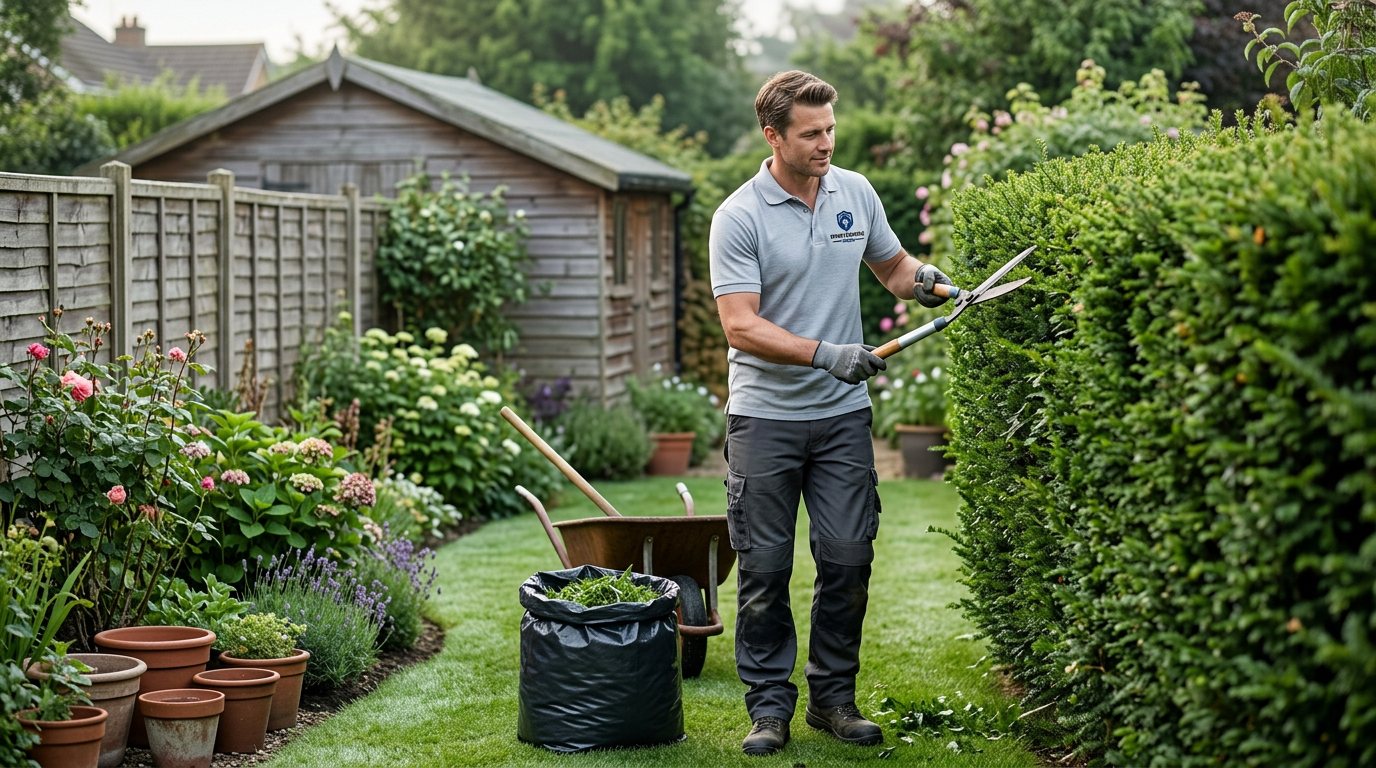
Storm-Damaged Shrubs Pruned Back to Health, Not Just Tidied Over in Dorridge
We work out which damaged shrubs are worth saving and which are not, then make clean cuts, support what is rocking and give each plant its best route back.
Booking fee plus hourly labour — the price is confirmed before any work starts.
What this costs
| Booked 14+ days ahead | £25 booking fee £85 per hour |
|---|---|
| Booked within 48 hours | £100 booking fee £65 per hour |
| Same-day call-out | £220 booking fee £45 per hour |
The booking fee secures the visit. Labour is then charged by the hour, so you only pay for the time the job actually takes.
Booking fee £25–£220
£25 + £85/hr booked 14+ days ahead, £100 + £65/hr inside 48 hours, £220 + £45/hr same day. Agreed before we arrive.
Covered under Garden Maintenance
Outdoor & Exterior › Garden Maintenance — one of 20 documented jobs in this section.
Same-day broken or damaged shrubs
Urgent jobs can often be booked for today. Ask when you book and we will confirm the slot before you pay anything.
15 service areas
Birmingham, Coventry, Dorridge and 12 more across the West Midlands.
After a storm, shrub damage is emotional as well as practical: the shrub you planted when you moved in is now splayed across the lawn with a split stem. The instinct is either to rip it out or to tie it back up and hope. Both are usually wrong. The right response depends on where the damage is, how much of the plant is left and what species it is — and that is exactly what this visit sorts out.
Assessing what the storm actually did
We look at each damaged shrub individually. A clean break of one or two branches from a healthy plant is almost always fine — shrubs carry far more growth than they need, and a tidy cut is all that is required. A split main stem is more serious: a stem that has torn part-way down the trunk rarely knits back together and usually needs cutting out entirely, sometimes taking a third or more of the plant with it. Wind-rock is the quiet one — a shrub that has rocked in the wind opens a gap at its base that lets water in and freezes in winter, loosening roots long after the storm is forgotten. And if the plant has snapped off at or below ground level, whether it regrows depends entirely on the species; some shrubs reshoot from the base with gusto, others are effectively finished.
The repair work itself
Pruning storm damage is mostly about clean cuts in the right places. Torn, splintered wood is cut back to sound growth just above a bud or side branch — a ragged tear heals badly and rots into the stem, while a clean cut closes over. Where a branch has torn away and left a snag, we cut the snag back too rather than leave it to die back and admit disease. Rocked shrubs are firmed back into the ground, the loosened soil firmed and topped up, and larger specimens staked so the roots can re-anchor without the wind doing it all again. Where a shrub has lost its balance entirely, some corrective pruning on the heavy side helps it stand straight while it regrows.
Deciding what is worth keeping
We will not pretend every damaged shrub is saveable, because that would cost you more than it is worth. An old leggy shrub that has lost its main framework may cost more in years of awkward regrowth than a new plant would, and we will say so with the numbers rather than the sentiment. Conversely, a young shrub with a snapped top often outgrows the damage within two seasons. Where the honest answer is "replace it", we will tell you, and where it is "leave it alone and let it recover", we will tell you that too — over-pruning a stressed plant is a common way to finish off what the storm started.
Timing and aftercare
Not all storm repair happens at once. Damaged wood should come off promptly, but heavy corrective pruning is often better left until the right season for the species — hard pruning in a dry summer or a hard winter does more harm than the storm did. Newly firmed and staked shrubs need checking after the next decent blow, watering through their first recovery season, and a light feed in spring rather than a heavy one. We will tell you what to watch for: wilting, dieback at the cuts, or a plant that simply does not leaf out — any of which is a sign to have us look again.
The bigger picture
If one storm has flattened half a garden, it is worth looking at why: shrubs that were never pruned catch the wind like sails, and a light annual trim prevents most of this damage recurring. We are happy to set up a seasonal pruning round that keeps shrubs compact and storm-resistant — prevention is genuinely cheaper than repair.
How to book
Book by phone or through the website, ideally with a note of how many shrubs are damaged and roughly what they are, if you know. You pay a booking fee when you book, labour is charged hourly at a rate that depends on how soon you need the visit, and the full cost is quoted and approved before we start, with any stakes, ties or replacement plants quoted separately.
How the price works
We charge a booking fee to hold your slot, then an hourly rate for the work itself. The fee changes with how soon you need us; the hourly rate changes with the slot you choose. You approve the price before we start, so there is no surprise on the invoice.
Booked 14+ days ahead
£25 booking fee
then £85 per hour of labour
Best value. Book the slot now, pay the smallest booking fee.
Booked within 48 hours
£100 booking fee
then £65 per hour of labour
For jobs that can wait a day or two but not a fortnight.
Same-day call-out
£220 booking fee
then £45 per hour of labour
Urgent problems: standing water, no heat, no power, leaks.
Book the slot
Choose the window that suits you and pay the booking fee. That holds your place in the diary.
We diagnose on site
The engineer confirms the cause and tells you what the job involves and how long it should take.
You approve, we work
Nothing goes ahead until you agree the price. Labour is then charged per hour at your slot rate.
A wet winter gale or a heavy snowfall can leave a garden of split stems, snapped branches and shrubs leaning at drunken angles, and it is genuinely hard to tell from the ground which plants will recover. Some shrubs bounce back from brutal damage; others never really do. We look at each one honestly, prune out what has to go and support what can be kept.
What our customers say about our outdoor & exterior service
4.6 out of 5 from 10 reviews
Sorted the same day
Rang in the morning and they got to us in Wolverhampton by early afternoon. Very clear about what needed doing, what it would cost and what could wait. No pressure to add extras. Exactly the sort of tradesperson you want.
Job: Uneven Shed Base
Turned up when they said
Turned up in the window they promised, walked me through the options (turns out the previous installer had left the pipework awkward to get to), then cracked on. Everything was tested before they left. No mess, no drama, no surprise on the bill.
Job: Water-Damaged Patio
Good work, poor communication
Work itself was fine and tidy. Communication beforehand was patchy — I did not get the confirmation message and had to ring to check the slot. Would still use again.
Job: Sinking Driveway
Book Broken or Damaged Shrubs
Tell us what is happening and choose a slot. If you are not sure this is the right job, use the diagnosis panel — it narrows the problem down before you book.
- Booking fee confirmed up front
- Hourly labour, agreed before work starts
- Same-day slots for urgent problems








Questions people ask about broken or damaged shrubs
Straight answers to the things customers ask most often before booking.
Should I tie a split branch back together myself?
It almost never works — a torn stem does not knit like a graze, and the tie point becomes a weak, rotting joint that fails in the next storm. It is far better to cut the broken part back cleanly to sound growth and let the shrub regrow around the loss. If you are not sure where to cut, that is a good moment to call us.
What do you check when assessing a damaged shrub?
We look at where the damage is — a side branch, a main stem, the base of the plant — whether the cuts are clean or torn, whether the shrub has rocked and loosened at its roots, and how much healthy growth is left. Species matters too, because some shrubs reshoot from the base while others do not recover from losing their framework.
Is it safe to leave a hanging broken branch in place?
No — a branch that has cracked but not fallen is held by a strip of bark and can drop without warning, onto anyone underneath or onto whatever the wind points it at. We bring it down safely rather than leave it hanging, and that is one job that should not wait regardless of the season.
Will my shrub recover from looking half-destroyed?
Often, yes — many shrubs carry spare capacity and reshoot strongly from cuts and even from the base, filling out within a couple of seasons. But it depends on the species and how much framework is left, and we will give you an honest verdict on each plant rather than a hopeful one, including when replacement is the better use of your money.
How much does it cost to repair storm-damaged shrubs?
You pay a booking fee when you book, and labour is charged hourly at a rate that depends on how soon you need the visit. The full cost of the work is quoted and approved before we start, and any stakes, ties, compost or replacement plants are quoted separately on top of the labour.
Need broken or damaged shrubs sorted in Dorridge?
Book a slot in the diary and pay only the booking fee up front. We confirm the rest before we start.