
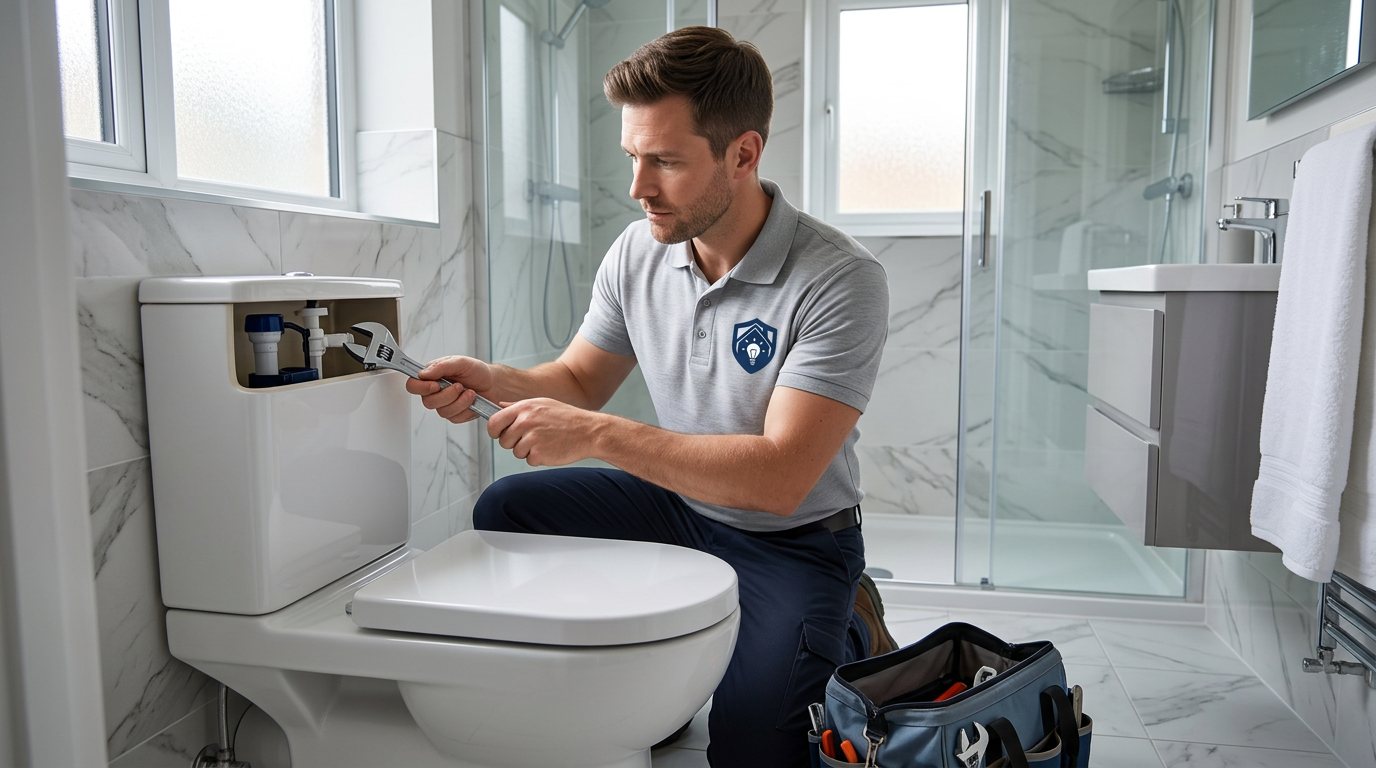
Water at the foot of the toilet? Find the leak before it spreads in Wolverhampton
We check the seal, pan connection and supply fittings, then explain the repair needed to leave the toilet stable and dry.
Booking fee plus hourly labour — the price is confirmed before any work starts.
What this costs
| Booked 14+ days ahead | £25 booking fee £85 per hour |
|---|---|
| Booked within 48 hours | £100 booking fee £65 per hour |
| Same-day call-out | £220 booking fee £45 per hour |
The booking fee secures the visit. Labour is then charged by the hour, so you only pay for the time the job actually takes.
Booking fee £25–£220
£25 + £85/hr booked 14+ days ahead, £100 + £65/hr inside 48 hours, £220 + £45/hr same day. Agreed before we arrive.
Covered under Toilet
Plumbing › Toilet — one of 18 documented jobs in this section.
Same-day leaking toilet base repair
Urgent jobs can often be booked for today. Ask when you book and we will confirm the slot before you pay anything.
15 service areas
Birmingham, Coventry, Dorridge and 12 more across the West Midlands.
Causes of a leak at the toilet base
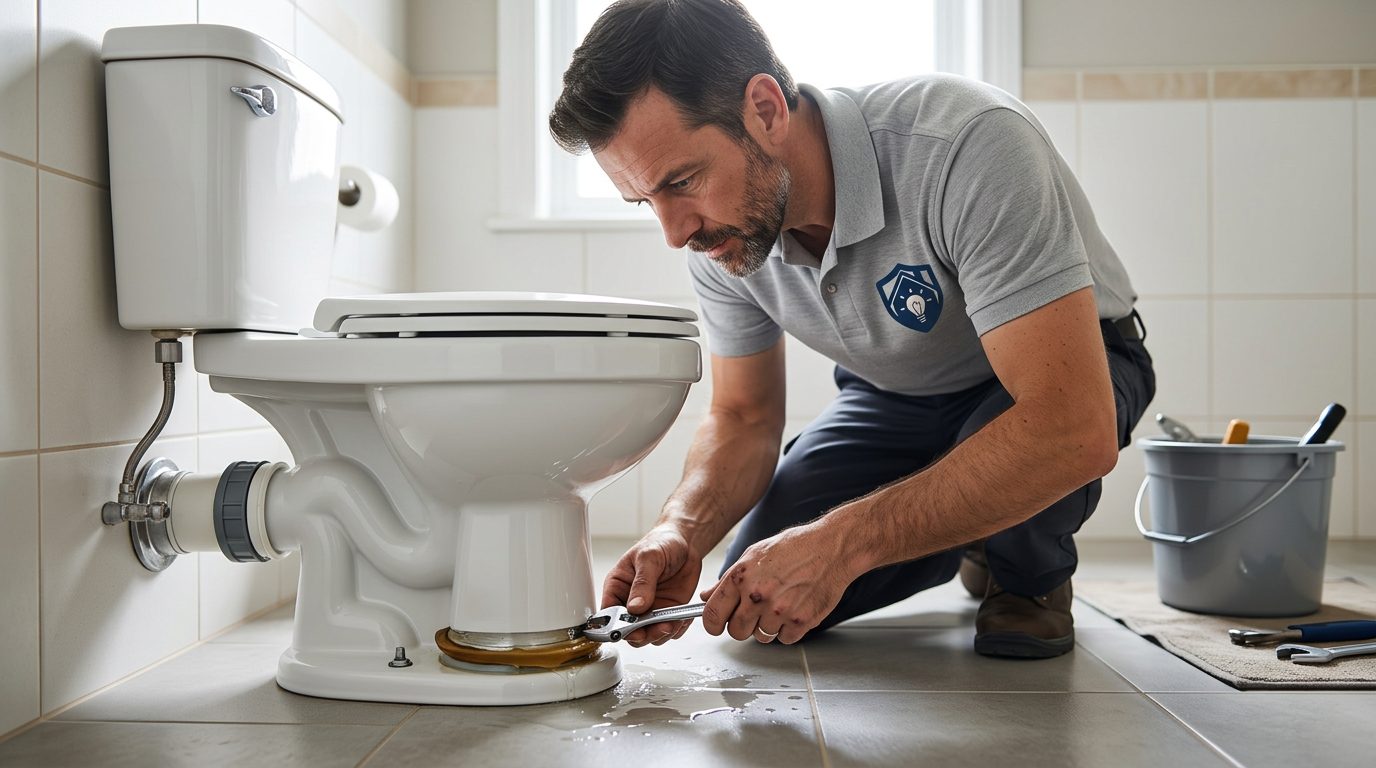
Water around the foot of a toilet can have several causes. The seal between the pan and waste connection may have failed, or the pan connector may be loose, split or incorrectly seated. A leak can appear when the toilet is flushed because wastewater escapes only while it is moving through that joint. A rocking toilet can put strain on the seal and connection, so movement should not be ignored.
The water may also come from a cistern connection, inlet hose, supply valve or condensation and then run down the outside of the pan. A nearby basin or bath leak can travel along the floor and collect at the toilet, making the source less obvious. The visible puddle is not enough to identify the fault, so the area and the timing of the leak need to be checked.
Why it can worsen
Repeated flushing through a failed waste seal can release more water under or around the toilet. Even a small leak can dampen flooring, affect the subfloor or reach a ceiling below. Moisture hidden under a pedestal or flooring may remain after the visible water has been wiped up. If the pan is loose, continued movement can worsen the seal or connector and make the toilet unstable.
The water may contain waste if it is escaping from the soil connection, so treat the area carefully. Avoid sealing around the base as a quick fix before the source is identified. Surface sealant can conceal a continuing leak and make it harder to see where water is coming from. Stop using the toilet if a flush causes water to appear, and arrange an inspection.
How we diagnose the leak
A Maintenance Men plumber will ask whether the leak appears after flushing, whether the pan rocks and whether there is water around the cistern, inlet or nearby fixtures. We dry and inspect accessible areas, check the visible supply connections and look for signs of water tracking down from above. Where appropriate, we observe a controlled flush to see whether leakage starts at the waste connection.
The check helps separate a leaking toilet base fix from a supply-side leak or water coming from another fitting. If the pan must be moved to examine the seal or connector, the plumber will explain this first. We also consider whether the floor or the toilet’s fixing points show movement or damage, since those can affect how a lasting repair should be carried out.
How we fix it
The repair depends on the source. A failed or incorrectly seated seal may need replacing, while a damaged or loose pan connector may need refitting or replacement. The plumber may need to remove and reset the toilet to access the joint. If supply-side fittings are leaking instead, those connections or components are dealt with as appropriate. We do not assume that applying sealant around the outside will solve a leak beneath the pan.
After the repair, we test the relevant connections and flush the toilet to check that no water escapes. We will explain if movement, floor damage or another underlying issue needs further attention. This is the entry’s stated time and price; confirm the job scope before work begins, particularly if the toilet or floor needs additional work.
Prevention after the repair
Avoid leaning or rocking on the toilet, and do not use the pan as a step. If you notice movement, a new smell, damp flooring or water after flushing, arrange a check rather than waiting for a larger puddle. Keep the floor around the base visible so a small change is easier to spot.
Wipe up water and note when it returns, but do not rely on drying alone. Check whether the cistern or supply pipe is also damp, and mention any nearby leaks to the plumber. Do not apply new sealant over a suspected leak without first confirming the source; concealment can delay the right repair.
When to call a plumber
Call if water reappears after flushing, the toilet moves, the floor feels soft or swollen, or you notice a persistent damp smell near the pan. Stop using the toilet if wastewater may be escaping at the base. If the leak is coming from a supply connection and water is continuing to run, use an accessible isolation valve only if it operates safely, then arrange help. Mention any ceiling below the bathroom or signs of damp in adjacent rooms.
Book a call-out
Maintenance Men can inspect the base, visible pipework and supply fittings to find where the water is escaping. Tell us when the leak appears and whether the toilet feels loose. We will explain the repair and test the area after the work. Contact us to book a call-out and help protect the floor from further water.
How the price works
We charge a booking fee to hold your slot, then an hourly rate for the work itself. The fee changes with how soon you need us; the hourly rate changes with the slot you choose. You approve the price before we start, so there is no surprise on the invoice.
Booked 14+ days ahead
£25 booking fee
then £85 per hour of labour
Best value. Book the slot now, pay the smallest booking fee.
Booked within 48 hours
£100 booking fee
then £65 per hour of labour
For jobs that can wait a day or two but not a fortnight.
Same-day call-out
£220 booking fee
then £45 per hour of labour
Urgent problems: standing water, no heat, no power, leaks.
Book the slot
Choose the window that suits you and pay the booking fee. That holds your place in the diary.
We diagnose on site
The engineer confirms the cause and tells you what the job involves and how long it should take.
You approve, we work
Nothing goes ahead until you agree the price. Labour is then charged per hour at your slot rate.
Water pooling around the foot of a toilet may come from a failed seal, a loose or damaged pan connector, or water running down from another fitting. Cleaning up without locating the source can leave hidden moisture beneath the flooring. Maintenance Men will trace where the water appears, inspect the visible connections and explain the repair before starting. If the leak is active, avoid using the toilet where possible and keep the area dry and clear for inspection.
What our customers say about this job
5 out of 5 from 1 reviews
Would use again
Third time we have used Maintenance Men, and the same experience each time: agreed price, proper explanation, job done in one visit. The hourly rate is fair for the standard of work.
Job: Leaking Toilet Base Repair
Book Leaking Toilet Base Repair
Tell us what is happening and choose a slot. If you are not sure this is the right job, use the diagnosis panel — it narrows the problem down before you book.
- Booking fee confirmed up front
- Hourly labour, agreed before work starts
- Same-day slots for urgent problems








Questions people ask about leaking toilet base repair
Straight answers to the things customers ask most often before booking.
Why does water appear around the toilet only after flushing?
That pattern can point to a leak at the waste seal or pan connector, but water from another fitting can also run down and collect there. An inspection can trace the source before repair.
Can I seal around the toilet base myself?
Adding sealant may hide water escaping from the waste joint without fixing it. Have the source checked first, especially if the floor becomes wet after a flush.
Is it safe to keep using a toilet that rocks?
A moving pan can put strain on its seal and connector, and may become less stable. Avoid using it where possible and arrange an inspection rather than tightening fixings without checking the cause.
Could the water be coming from the cistern instead?
Yes. A supply hose, valve or cistern connection can leak and the water may run down to the floor. The plumber will check those visible parts as well as the base.
How is the work priced?
You pay a booking fee when you book, and labour is charged hourly at a rate that depends on how quickly you need us. The full cost of the work is quoted before we start, so you approve it before any tools come out.
Need leaking toilet base repair sorted in Wolverhampton?
Book a slot in the diary and pay only the booking fee up front. We confirm the rest before we start.