
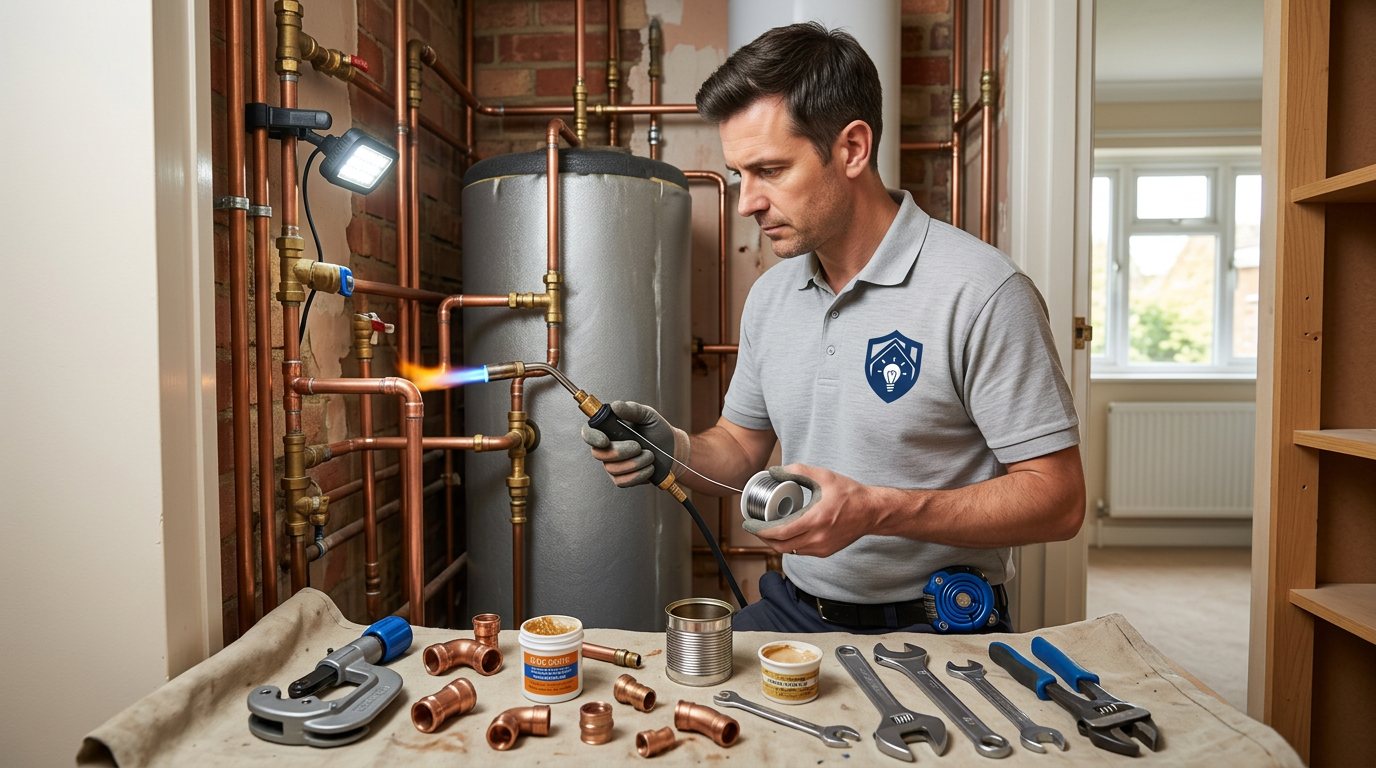
Corroded pipework? Replace the failing sections before they burst in Wolverhampton
Thin, crusted or discoloured pipe is a warning. We assess the run, replace what is spent and restore clean, full-pressure water.
Booking fee plus hourly labour — the price is confirmed before any work starts.
What this costs
| Booked 14+ days ahead | £25 booking fee £85 per hour |
|---|---|
| Booked within 48 hours | £100 booking fee £65 per hour |
| Same-day call-out | £220 booking fee £45 per hour |
The booking fee secures the visit. Labour is then charged by the hour, so you only pay for the time the job actually takes.
Booking fee £25–£220
£25 + £85/hr booked 14+ days ahead, £100 + £65/hr inside 48 hours, £220 + £45/hr same day. Agreed before we arrive.
Covered under Pipework
Plumbing › Pipework — one of 16 documented jobs in this section.
Same-day corroded pipework repair
Urgent jobs can often be booked for today. Ask when you book and we will confirm the slot before you pay anything.
15 service areas
Birmingham, Coventry, Dorridge and 12 more across the West Midlands.
What corrosion actually is
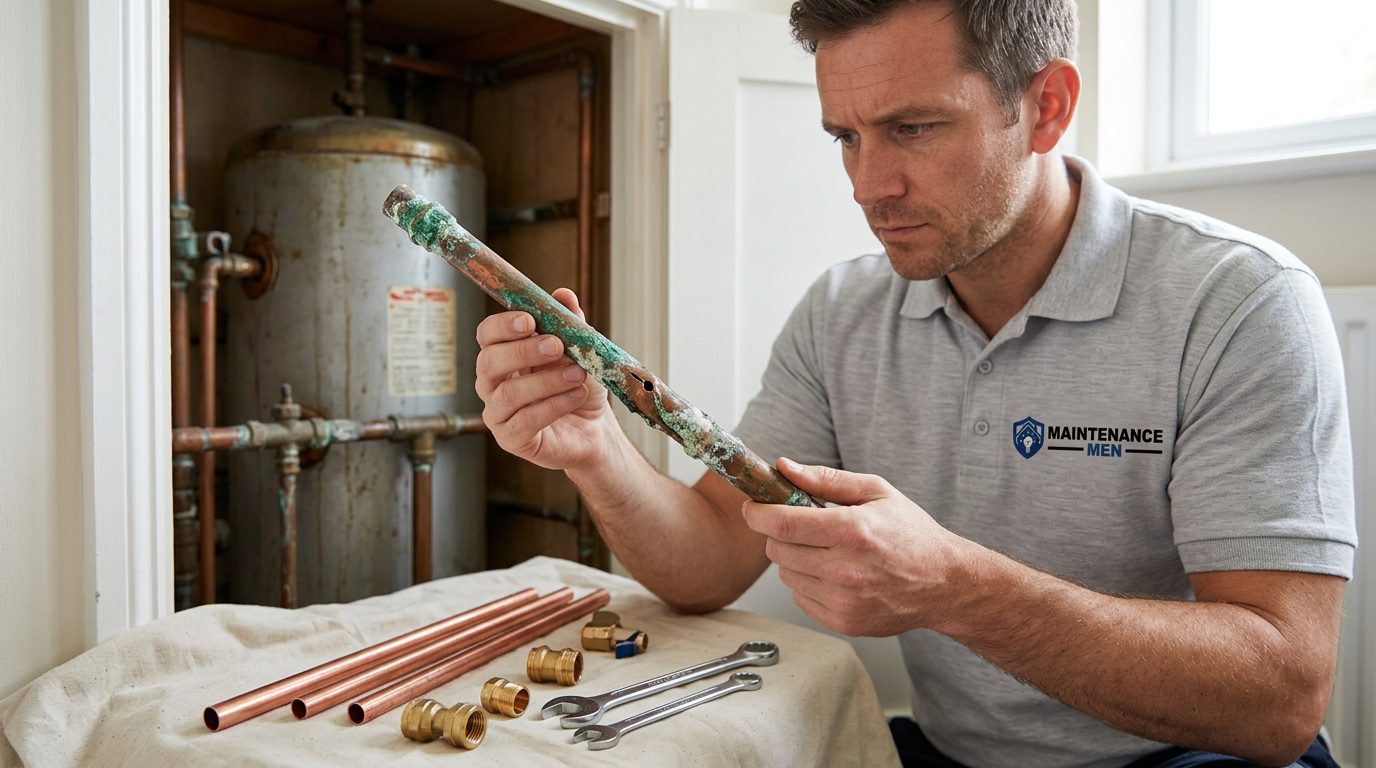
Copper corrodes from the inside. Water with the wrong pH, high chloride levels or a stray electrical current will eat into the wall of the pipe until it is tissue-thin, and the first sign is often a pinhole leak rather than a visible stain. The green crust you see on the outside is usually the result of a slow weep reacting with air, not the cause. Steel pipe rusts from within and closes up as the rust builds, which shows as falling pressure and brown water. Plastic pipe does not corrode, but it degrades: it goes brittle with heat and UV, and older grey polybutylene has a poor reputation at fittings. Galvanised pipe in older properties is often furred almost solid in the middle. None of this is visible from the outside until something fails.
Why corroded pipework gets worse
Corrosion is a one-way process. The wall thickness only decreases, and once pinholes begin they tend to multiply along the same run, because the water chemistry and the pipe condition that caused the first one are still there. Flow drops as the bore narrows, so showers weaken and combi boilers struggle to meet demand. Rust and corrosion debris travel, blocking aerators, valves and heat exchangers downstream, which turns a pipe problem into an appliance problem. Disturbing a corroded run, for example when fitting a new tap or appliance, frequently triggers the next leak because the pipe cannot take the movement. The cost curve is simple: one planned replacement is cheaper than three emergency repairs and the damage that comes with them.
How we assess the pipework
We look at the pipe's age, material and appearance, then check what the water is doing: pressure at the furthest outlet, flow rate, and whether the water runs clear after standing. Green or white crusting at joints, pitting on the surface and a thin, soft feel where the pipe has been scraped all point the same way. We check the earth bonding, because a live earth on a corroded pipe accelerates the problem and is a safety matter. Where the pipe is concealed, we inspect at accessible points and use pressure testing to establish whether a run is losing water. The output is a straightforward plan: which sections need replacing now, which can wait, and what that involves in terms of access.
How we replace it
The supply is isolated and the run drained. We cut out the corroded sections back to sound pipe or, where the whole leg is spent, replace the run from the isolation valve to the outlet. New pipe is sized to suit the demand it serves, routed to avoid the conditions that caused the failure, and clipped and sleeved properly where it passes through walls and joists. Fittings are matched to the material, and any transition between copper and plastic is made with the correct fitting rather than an improvised one. On heating circuits we add inhibitor at the correct strength after refilling. Then the system is flushed, pressure tested and run at working temperature, with flow checked at the furthest outlet. Access openings are left neat and ready for making good.
Preventing a repeat
Get the water chemistry right: if corrosion has been a recurring problem, ask for a water test and consider a phosphate dosing unit or a scale reducer as appropriate. Keep inhibitor in any heating system and check its strength every few years. Make sure the property's earthing and bonding are correct, particularly where pipework has been altered. Avoid disturbing old pipe unnecessarily, and support new runs so they do not flex. If a property has original thin-wall copper or galvanised supply pipe, plan replacement room by room rather than waiting for failures. Lagging cold pipe reduces condensation, which is what makes the outside of a pipe look wet and corrode from without.
When to call us
Call if you have had two or more pinhole leaks on the same run, if cold water runs brown or cloudy when first turned on, if pressure at upstairs taps has dropped noticeably, or if you can see green crusting or white deposits at joints. Call immediately if a corroded pipe is leaking or weeping, or if you can smell gas near pipework, which is a separate emergency for the gas network. Surface discolouration alone can be assessed on a booked visit.
Book a call-out
Send us photographs of the pipework and a note of what the water is doing; that is often enough for us to advise whether an assessment visit or a replacement is the right next step. If the pipework is behind boxed-in sections or under flooring, we will be clear about what needs opening and why. Book a visit and we will tell you honestly which sections need renewing now and which can safely wait.
How the price works
We charge a booking fee to hold your slot, then an hourly rate for the work itself. The fee changes with how soon you need us; the hourly rate changes with the slot you choose. You approve the price before we start, so there is no surprise on the invoice.
Booked 14+ days ahead
£25 booking fee
then £85 per hour of labour
Best value. Book the slot now, pay the smallest booking fee.
Booked within 48 hours
£100 booking fee
then £65 per hour of labour
For jobs that can wait a day or two but not a fortnight.
Same-day call-out
£220 booking fee
then £45 per hour of labour
Urgent problems: standing water, no heat, no power, leaks.
Book the slot
Choose the window that suits you and pay the booking fee. That holds your place in the diary.
We diagnose on site
The engineer confirms the cause and tells you what the job involves and how long it should take.
You approve, we work
Nothing goes ahead until you agree the price. Labour is then charged per hour at your slot rate.
Corrosion rarely announces itself. It shows up as green crusting on copper, rusty water from a cold tap, pressure that fades when two taps run, or a pinhole leak that appears from nowhere. Replacing the affected runs is usually cheaper than repeated repairs. We assess the pipework, renew what is spent and test the result.
What our customers say about our plumbing service
4.7 out of 5 from 11 reviews
Second time we have used them
What I appreciated was being told what was actually wrong before anyone started. Sorted in under 32 minutes and the invoice matched the quote to the penny.
Job: Loose Pipe Connections Repair
Worth the booking fee
Booked the £220 booking-fee slot on Tuesday and got a message confirming the time the same morning. The cause was explained, the price agreed before any work started, and the job was done in about 75 minutes. Clean and tidy when they left.
Job: Hidden Pipe Leak Repair
Turned up when they said
Turned up in the window they promised, walked me through the options (turns out the part had to be sourced locally), then cracked on. Everything was tested before they left. No mess, no drama, no surprise on the bill.
Job: Central Heating Leak Repair
Book Corroded Pipework Repair
Tell us what is happening and choose a slot. If you are not sure this is the right job, use the diagnosis panel — it narrows the problem down before you book.
- Booking fee confirmed up front
- Hourly labour, agreed before work starts
- Same-day slots for urgent problems


Questions people ask about corroded pipework repair
Straight answers to the things customers ask most often before booking.
How do I know if my pipes are actually corroded?
Look for green or white crusting at joints, pitting on the pipe surface, brown water when a tap is first opened and a noticeable drop in pressure at upstairs outlets. Scraping a small area to bright metal shows whether the wall is thinning. If you are unsure, an assessment visit will confirm it.
Do you have to replace all the pipework at once?
No, and that is rarely the best value. We replace the sections that are failing or at the end of their life and leave sound runs alone, unless access makes doing a whole leg at once cheaper. You get a clear list of what is urgent and what can wait.
Will new pipework improve my water pressure?
Replacing a furred or narrowed run usually restores flow to what the supply can deliver, which often feels like a significant improvement at taps and showers. It will not raise the incoming mains pressure itself; if that is the limit, a pressure check will show it and we will say so.
Is brown water always a sign of corroded pipes?
Not always. It can follow work on the mains supply, a drained system or a rarely used tap. If it clears after running the tap for a minute and does not return, the pipe is probably fine. If it comes back every time the tap has stood, corrosion or a rusty tank is the likely cause.
How is the work priced?
You pay a booking fee when you book, and labour is charged hourly at a rate that depends on how quickly you need us. The full cost of the work is quoted before we start, so you approve it before any tools come out.
Need corroded pipework repair sorted in Wolverhampton?
Book a slot in the diary and pay only the booking fee up front. We confirm the rest before we start.