
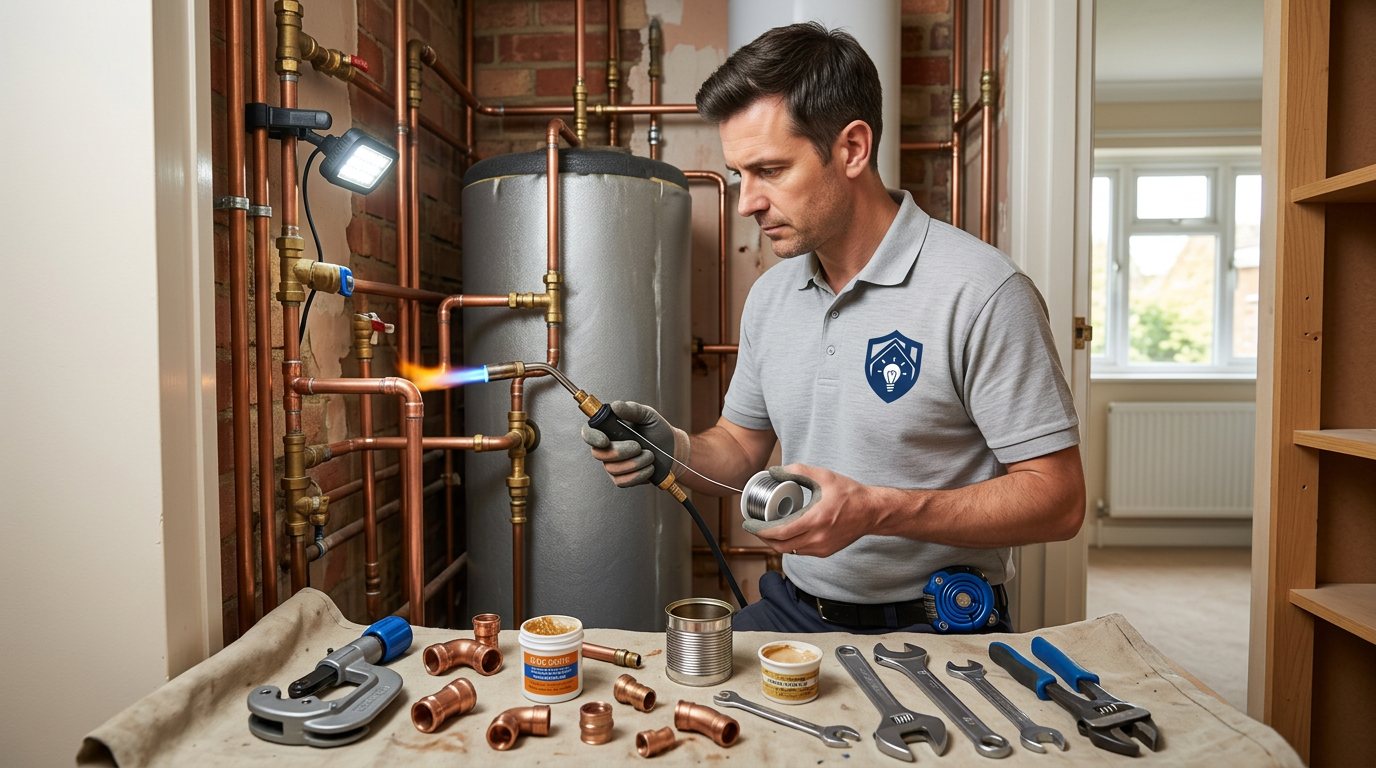
Sputtering taps and uneven flow? We clear trapped air from your pipework in West Bromwich
Trapped air causes coughing taps, splashing and noisy draws. We purge it properly and check why it got in.
Booking fee plus hourly labour — the price is confirmed before any work starts.
What this costs
| Booked 14+ days ahead | £25 booking fee £85 per hour |
|---|---|
| Booked within 48 hours | £100 booking fee £65 per hour |
| Same-day call-out | £220 booking fee £45 per hour |
The booking fee secures the visit. Labour is then charged by the hour, so you only pay for the time the job actually takes.
Booking fee £25–£220
£25 + £85/hr booked 14+ days ahead, £100 + £65/hr inside 48 hours, £220 + £45/hr same day. Agreed before we arrive.
Covered under Pipework
Plumbing › Pipework — one of 16 documented jobs in this section.
Same-day air in pipes fix
Urgent jobs can often be booked for today. Ask when you book and we will confirm the slot before you pay anything.
15 service areas
Birmingham, Coventry, Dorridge and 12 more across the West Midlands.
What trapped air actually is
Pipework is meant to be full of water. When air in water pipes goes unnoticed, it collects at high points and in the tops of horizontal runs, then travels to the nearest outlet as a bubble. That is why the symptom appears at one tap and not another, or why a tap coughs for a few seconds before running smoothly. Air can enter after the mains has been turned off and back on, after a drain-down for other work, when a pump or unvented cylinder has been replaced, when a shower or mixer has been fitted, or when a pinhole leak draws air in as water passes. On a gravity system, a blocked or badly routed vent pipe can also let air in continuously.
Why it is worth sorting out
Air in the pipes is usually more than a noise. It makes flow uneven, which is irritating in a shower and can make a combi boiler misbehave: boilers rely on steady water pressure, and trapped air can trigger low-pressure faults or noisy operation. Air also accelerates corrosion inside steel components and can leave a pump running dry for short bursts, which shortens its life. If the air is being drawn in through a small leak, the leak is the real issue, and it will not fix itself.
How we diagnose it
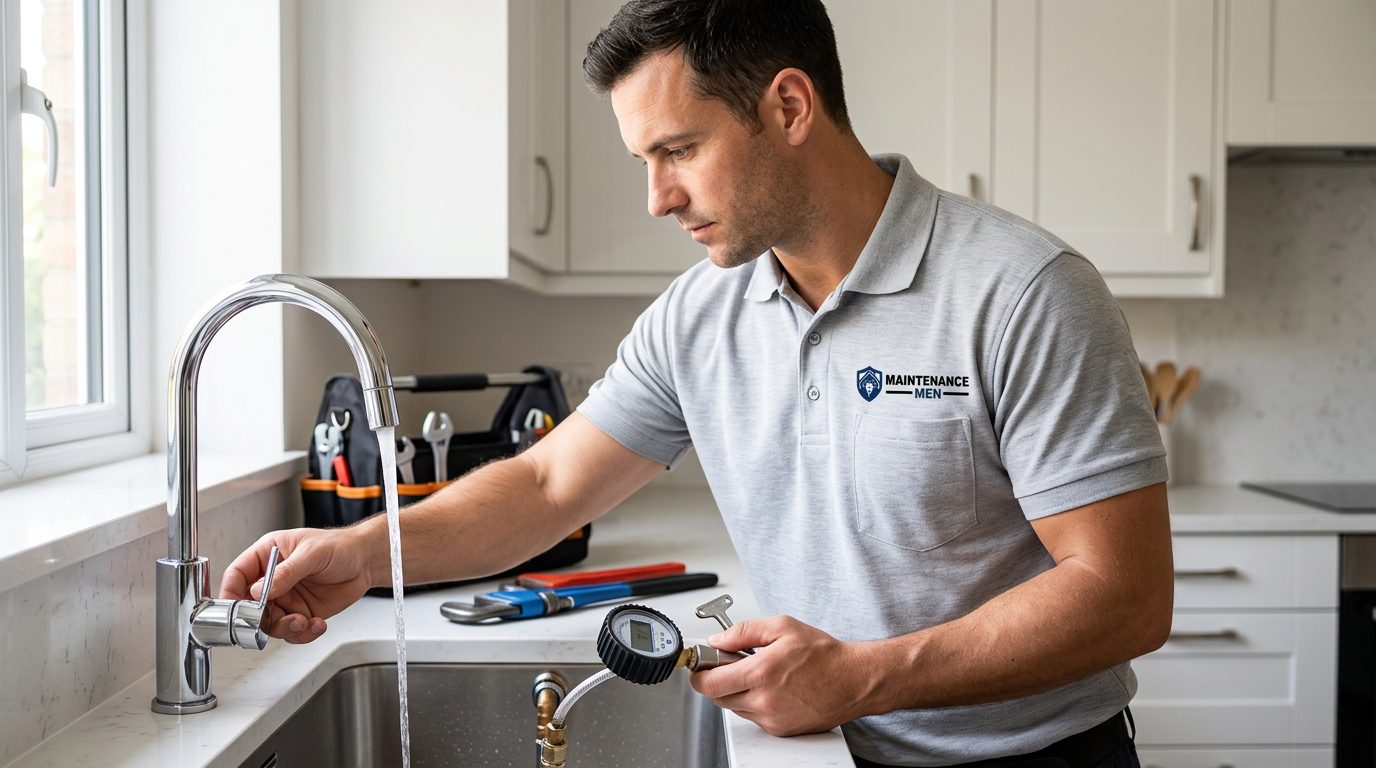
We start by asking when it began and what changed — a mains outage, new boiler, new shower, recent work on the street. Then we test each outlet individually to map where the air is sitting, listen at the pipework for the characteristic hiss and gurgle, and check the pressure at a gauge if one is fitted. On gravity systems we inspect the cold water tank, its ball valve and the vent arrangement; on pressurised systems we check the cylinder and any automatic air vents. If air is being drawn in rather than simply trapped, we pressure-test the pipework to find the entry point.
How we fix it
The purge itself is simple but has to be done in the right order. We open outlets from the lowest point upwards, run them until the spluttering stops, and close them in sequence so air is pushed out rather than shuffled around the system. On a gravity-fed system we may need to clear a blocked vent or correct a pipe run that traps air at a high point. Where an automatic air vent is fitted, we check it is working and not scaled shut. If our testing shows air entering through a joint or a pinhole, we repair that first — otherwise the purge would only buy you a few weeks. Finally we run every outlet and check the flow is steady before we leave.
Keeping air out
A few practical habits help. After any drain-down or mains interruption, run the cold taps at the lowest point in the house first, then work upwards. Keep the loft tank covered and lagged, and have the ball valve checked annually so it does not draw air as it refills. If your system has manual vents on radiators or high pipework, learn where they are. And if you hear spluttering return within days of a purge, treat it as a sign of an entry point rather than a nuisance to live with.
When to call us
Call if the spluttering persists after you have run the taps for a few minutes, if it keeps coming back, if a boiler shows a low-pressure or ignition fault alongside it, or if the noise is accompanied by any sign of a leak — damp patches, a water meter that ticks over with everything off, or a drop in pressure on a gauge. Those point to air being drawn in, which needs a proper repair.
Book a call-out
Have ready the rough timing of when it began, which outlets are affected and anything that changed in the system beforehand. That information usually decides whether we are purging trapped air or hunting for the point where it is getting in.
How the price works
We charge a booking fee to hold your slot, then an hourly rate for the work itself. The fee changes with how soon you need us; the hourly rate changes with the slot you choose. You approve the price before we start, so there is no surprise on the invoice.
Booked 14+ days ahead
£25 booking fee
then £85 per hour of labour
Best value. Book the slot now, pay the smallest booking fee.
Booked within 48 hours
£100 booking fee
then £65 per hour of labour
For jobs that can wait a day or two but not a fortnight.
Same-day call-out
£220 booking fee
then £45 per hour of labour
Urgent problems: standing water, no heat, no power, leaks.
Book the slot
Choose the window that suits you and pay the booking fee. That holds your place in the diary.
We diagnose on site
The engineer confirms the cause and tells you what the job involves and how long it should take.
You approve, we work
Nothing goes ahead until you agree the price. Labour is then charged per hour at your slot rate.
Air trapped in pipework shows up as spitting, spluttering taps, a splashing first draw in the morning, or water that runs unevenly and then settles. It usually follows a mains interruption, a drain-down, a pump or cylinder change, or a small leak drawing air in.
What our customers say about our plumbing service
4.7 out of 5 from 11 reviews
Second time we have used them
What I appreciated was being told what was actually wrong before anyone started. Sorted in under 32 minutes and the invoice matched the quote to the penny.
Job: Loose Pipe Connections Repair
Worth the booking fee
Booked the £220 booking-fee slot on Tuesday and got a message confirming the time the same morning. The cause was explained, the price agreed before any work started, and the job was done in about 75 minutes. Clean and tidy when they left.
Job: Hidden Pipe Leak Repair
Turned up when they said
Turned up in the window they promised, walked me through the options (turns out the part had to be sourced locally), then cracked on. Everything was tested before they left. No mess, no drama, no surprise on the bill.
Job: Central Heating Leak Repair
Book Air in Pipes Fix
Tell us what is happening and choose a slot. If you are not sure this is the right job, use the diagnosis panel — it narrows the problem down before you book.
- Booking fee confirmed up front
- Hourly labour, agreed before work starts
- Same-day slots for urgent problems




Questions people ask about air in pipes fix
Straight answers to the things customers ask most often before booking.
Is air in the pipes dangerous?
It is not usually dangerous in itself, but it should not be ignored. Trapped air makes a combi boiler run unevenly, can shorten the life of a pump, and speeds up corrosion in steel parts. It can also be a symptom of a small leak drawing air into the system, which is worth finding.
Can I clear trapped air myself?
Sometimes. Running the coldest tap at the lowest point in the house for a few minutes, then working upwards through the outlets, clears simple cases after a mains interruption. If the spluttering returns within a day or two, stop repeating it and have the system checked for an entry point.
Why does only one tap splutter?
Air gathers at the highest point of the pipe run feeding that outlet, so one tap can cough while others run normally. It often follows a partial drain-down or a newly fitted mixer. We test each outlet to map where the air is sitting rather than purging the whole system blindly.
Will a new boiler cause air in the pipes?
A boiler change involves draining and refilling, so some air is normal immediately afterwards and should clear as the system is commissioned and vented. If spluttering continues beyond the first few days, or the boiler keeps losing pressure, the system needs checking rather than repeated bleeding.
How is the work priced?
You pay a booking fee when you book, and labour is charged hourly at a rate that depends on how quickly you need us. The full cost of the work is quoted before we start, so you approve it before any tools come out.
Need air in pipes fix sorted in West Bromwich?
Book a slot in the diary and pay only the booking fee up front. We confirm the rest before we start.