
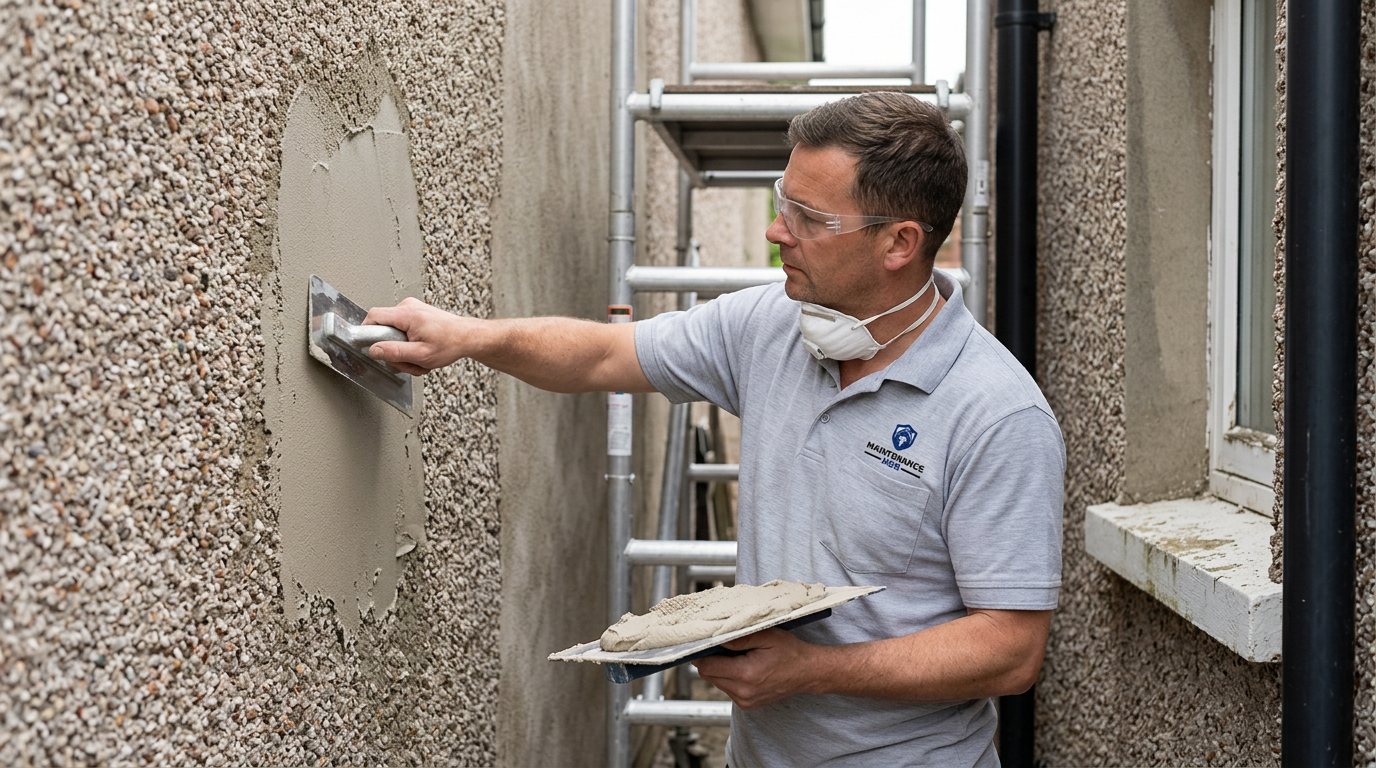
Penetrating Damp? We'll Find the Leak and Dry Your Walls Out in West Bromwich
We trace water entering through the wall from outside, repair the defect that's letting it in, and make good the damage inside.
Booking fee plus hourly labour — the price is confirmed before any work starts.
What this costs
| Booked 14+ days ahead | £25 booking fee £85 per hour |
|---|---|
| Booked within 48 hours | £100 booking fee £65 per hour |
| Same-day call-out | £220 booking fee £45 per hour |
The booking fee secures the visit. Labour is then charged by the hour, so you only pay for the time the job actually takes.
Booking fee £25–£220
£25 + £85/hr booked 14+ days ahead, £100 + £65/hr inside 48 hours, £220 + £45/hr same day. Agreed before we arrive.
Covered under Walls & Rendering
Outdoor & Exterior › Walls & Rendering — one of 20 documented jobs in this section.
Same-day penetrating damp
Urgent jobs can often be booked for today. Ask when you book and we will confirm the slot before you pay anything.
15 service areas
Birmingham, Coventry, Dorridge and 12 more across the West Midlands.
Penetrating damp is water that gets through the building's outer skin and shows up inside. Unlike rising damp, it can appear at any height, it is usually worse on the weather side of the house, and it comes and goes with the rain. Because the entry point is often some distance from the stain, tracing it properly is the difference between a fix and another wet winter. This page explains how water gets in, how we find it, and how it is repaired.
How water gets through a wall
Wind-driven rain is the driving force — the West Midlands gets plenty of it, and walls facing the prevailing weather take the worst. Water finds every weakness: cracked or porous mortar joints, hairline cracks in render, failed seals around window and door frames, cracked sills, damaged brick faces, faulty flashing where a roof or chimney meets the wall, and holes left by old fixings or removed aerials. A blocked gutter overflowing down one elevation soaks a wall for months and reads indoors as a mysterious stain.
Inside, the signs are damp patches that grow during wet weather and shrink in dry spells, often dark-ringed, at any height on the wall or on ceilings near external walls. Persistent moisture leads to mould and damaged plaster.
How we trace the entry point
We start with the weather: which side were you on when the stain appeared, and how quickly after rain? We inspect that elevation from roofline to ground — roof coverings, flashings, gutters, downpipes, sills, frames, render, pointing and brickwork — looking for the paths water would take. Where a fault is suspected but not obvious, hose testing an area can confirm the route. We also check inside the cavity or at the matching point, and we rule out the other explanations — condensation and plumbing leaks — so the repair targets the real cause.
Repairs that actually stop it
The defect comes first: repointing failed joints, sealing or renewing render cracks, replacing cracked sills, renewing seals and flashings, clearing or repairing gutters. On walls that have become porous with age, a water-repellent masonry treatment may be recommended for exposed elevations, and we will explain honestly what it can and can't achieve — it helps sound walls shed rain, but it will not rescue a wall whose joints or render need physical repair.
Once the entry point is closed, the inside is made good: damaged plaster cut back and reinstated, surfaces dried and redecorated. Walls take time to dry — weeks for a badly soaked wall — so expect improvement to be gradual rather than instant, and don't redecorate too soon.
Scope and honest limits
Some moisture problems come from above the wall — roofs, chimneys and flashings that need roofing-specialist attention or safe access we would arrange rather than improvise. Where that is the case we say so and refer appropriately. We cannot guarantee that a repaired wall will never dampen again, particularly in extreme weather, but a properly traced and repaired defect should end the routine staining you are seeing now.
Aftercare
Keep gutters and downpipes clear and check them after storms. Watch the repaired area through a winter: a patch that reappears in the same shape tells us the route wasn't fully closed, and we would rather know and re-check than leave you guessing.
Booking your visit
Book through maintenance-men.com or by phone. You pay a booking fee when you book, and labour is charged hourly at a rate that depends on how soon you need the visit. The full cost is quoted and approved before work starts, with parts and materials quoted separately. When you book, tell us where the stains are, which wall, and how they behave with the weather — that history is half the diagnosis.
How the price works
We charge a booking fee to hold your slot, then an hourly rate for the work itself. The fee changes with how soon you need us; the hourly rate changes with the slot you choose. You approve the price before we start, so there is no surprise on the invoice.
Booked 14+ days ahead
£25 booking fee
then £85 per hour of labour
Best value. Book the slot now, pay the smallest booking fee.
Booked within 48 hours
£100 booking fee
then £65 per hour of labour
For jobs that can wait a day or two but not a fortnight.
Same-day call-out
£220 booking fee
then £45 per hour of labour
Urgent problems: standing water, no heat, no power, leaks.
Book the slot
Choose the window that suits you and pay the booking fee. That holds your place in the diary.
We diagnose on site
The engineer confirms the cause and tells you what the job involves and how long it should take.
You approve, we work
Nothing goes ahead until you agree the price. Labour is then charged per hour at your slot rate.
Damp patches that appear after rain, grow with the weather and dry out in between usually mean water is coming through the wall from outside. Our visit follows the water to its entry point, repairs the defect, and restores the wall surfaces — indoors and out — so the problem stops repeating.
What our customers say about our outdoor & exterior service
4.6 out of 5 from 10 reviews
Sorted the same day
Rang in the morning and they got to us in Wolverhampton by early afternoon. Very clear about what needed doing, what it would cost and what could wait. No pressure to add extras. Exactly the sort of tradesperson you want.
Job: Uneven Shed Base
Turned up when they said
Turned up in the window they promised, walked me through the options (turns out the previous installer had left the pipework awkward to get to), then cracked on. Everything was tested before they left. No mess, no drama, no surprise on the bill.
Job: Water-Damaged Patio
Good work, poor communication
Work itself was fine and tidy. Communication beforehand was patchy — I did not get the confirmation message and had to ring to check the slot. Would still use again.
Job: Sinking Driveway
Book Penetrating Damp
Tell us what is happening and choose a slot. If you are not sure this is the right job, use the diagnosis panel — it narrows the problem down before you book.
- Booking fee confirmed up front
- Hourly labour, agreed before work starts
- Same-day slots for urgent problems








Questions people ask about penetrating damp
Straight answers to the things customers ask most often before booking.
Can I stop penetrating damp myself with sealant?
Smearing sealant over the indoor stain traps moisture and can worsen mould, and it doesn't touch the entry point outside. The useful DIY is investigative: note when stains appear, which wall, and how fast they dry. If you can safely check gutters from the ground and spot an overflow, that observation helps us enormously before we arrive.
What do you check when tracing penetrating damp?
We inspect the affected elevation from roofline to ground — gutters, flashings, sills, frames, render, pointing and brickwork — looking for water paths, and we correlate the stain's behaviour with rainfall. Where a fault isn't obvious, hose testing confirms the route. We also rule out condensation and plumbing leaks so the repair is aimed at the real cause.
Is penetrating damp dangerous for my home?
Left alone it damages plaster and decoration, rots skirtings and floor structures near the wall, and supports mould growth indoors. It also keeps masonry saturated, which accelerates frost damage outside. It's not usually an emergency unless water is pouring in, but the longer the route stays open, the larger the eventual repair.
The stain is high on the wall near the ceiling — could it still be penetrating damp?
Yes — damp at that height often traces to a roof, chimney or flashing defect above, or a leaking gutter soaking down. Some of that work needs roof access or a roofing specialist, and we will say so honestly and refer where appropriate. We won't guess at a high-level defect from a ladder we shouldn't be on.
How is penetrating damp work charged?
You pay a booking fee when you book, and labour is charged hourly at a rate that depends on how soon you need the visit. The full cost of the work is quoted and approved before we start, with parts and materials quoted separately. Tracing and repair are usually one planned visit; if the trace points to roofing or specialist work, that is quoted separately.
Need penetrating damp sorted in West Bromwich?
Book a slot in the diary and pay only the booking fee up front. We confirm the rest before we start.