
Flat Wheelchair Tyre? Pumped, Patched or Replaced Properly in Warwick
We find why a wheelchair tyre went down — puncture, valve or worn tube — and repair or replace it so the chair rolls easily again.
Booking fee plus hourly labour — the price is confirmed before any work starts.
What this costs
| Booked 14+ days ahead | £25 booking fee £85 per hour |
|---|---|
| Booked within 48 hours | £100 booking fee £65 per hour |
| Same-day call-out | £220 booking fee £45 per hour |
The booking fee secures the visit. Labour is then charged by the hour, so you only pay for the time the job actually takes.
Booking fee £25–£220
£25 + £85/hr booked 14+ days ahead, £100 + £65/hr inside 48 hours, £220 + £45/hr same day. Agreed before we arrive.
Covered under Wheelchairs & Accessories
Mobility & Accessibility › Wheelchairs & Accessories — one of 23 documented jobs in this section.
Same-day flat wheelchair tyre
Urgent jobs can often be booked for today. Ask when you book and we will confirm the slot before you pay anything.
15 service areas
Birmingham, Coventry, Dorridge and 12 more across the West Midlands.
A flat tyre on a wheelchair is disproportionately disruptive. The chair pulls to one side, the push rim feels twice as heavy, and on a powered model the motor works harder and the range shrinks. The temptation is to pump it up and carry on, but a tyre that went down once will go down again unless the cause is found. This page covers the common reasons wheelchair tyres lose air, what we do about them, and when a puncture is actually a symptom of something else.
Why wheelchair tyres go flat
The obvious cause is a puncture — a thorn, a drawing pin, a shard of glass picked up on the pavement or, very commonly, indoors, where drawing pins and staples live on carpets. Punctures can be slow, so a tyre that softens over a day or two rather than overnight still counts.
The valve is the next suspect. A worn or damaged valve loses air slowly and can be hard to spot, and on smaller casters the tubes and valves are fiddly in a way that frustrates home repairs. Tubes can also fail where they have been pinched during a previous fitting, or simply perish with age.
Beyond tubes and valves, the rim itself can be the problem: a spoke that has worked loose or broken, a rim tape that has shifted and lets the tube sit on a spoke hole, or corrosion on an older rim that abrades the tube from inside. And a tyre that has come adrift from the rim, or one worn thin enough that anything sharp goes straight through, will keep puncturing no matter how many tubes are fitted.
What we do on a visit
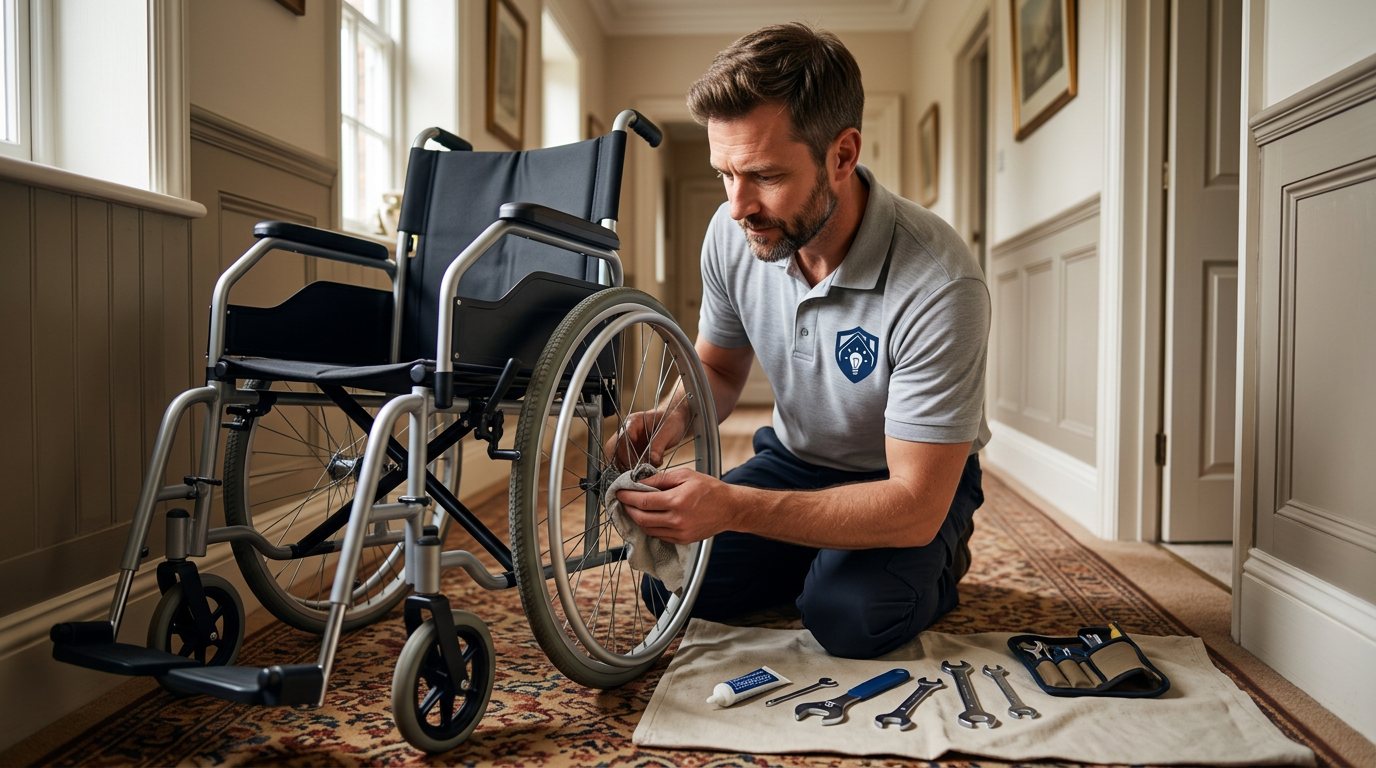
We take the wheel off properly, remove the tyre and tube, and find the actual cause — pumping the tyre in a bath of water to locate the leak, checking the inside of the tyre for the offending object, inspecting the rim and rim tape, and checking the valve. Then we fix what we found: a patched or new tube, a new valve, fresh rim tape, or a new tyre if the old one is worn or repeatedly punctured. Where solid or puncture-proof tyre options exist for your model, we can discuss those as a way of ending flat-tyre Mondays altogether.
We finish by refitting the wheel correctly, checking that it spins true and that the brake clears the tyre, and setting the pressure to what the sidewall specifies — because under-inflated tyres are both harder work and more vulnerable to pinch punctures.
DIY territory, honestly assessed
Tyre inflation is straightforwardly user territory: keep a suitable pump to hand and check pressures regularly, because soft tyres cause more problems than they solve. Patching a tube yourself is reasonable if you are confident and have the kit — it is the same job as a bicycle wheel, though wheelchair access is sometimes tighter. What we would steer most people away from is repeated roadside re-inflation of a tyre that keeps going down; each cycle risks a pinch or a valve failure, and finding the cause properly is usually quicker than living with it.
When it is more than a tyre
If a wheel keeps puncturing, or the wheel wobbles or pulls, the cause may be the rim, spokes or bearings rather than the tyre, and we will say so during the diagnosis. Frame damage near the wheel fixings changes the conversation too — a bent fork or drop-out needs proper assessment before any wheel is trusted on it, and we would rather flag that honestly than fit a new tube to a chair with a deeper problem.
Aftercare
Check tyre pressures weekly with the pump you keep by the chair, sweep the usual routes occasionally, and replace tyres once the tread is visibly worn or the sidewalls crack. Keep the spare tube size noted somewhere — it makes any future repair faster.
Booking
Tell us the make and model of the chair, which tyre is affected, whether it went down suddenly or slowly, and roughly how old the tyres are. You pay a booking fee when you book, labour is hourly at a rate depending on how soon you need us, and the full cost — including any tube, tyre or valve — is quoted and approved before the work starts.
How the price works
We charge a booking fee to hold your slot, then an hourly rate for the work itself. The fee changes with how soon you need us; the hourly rate changes with the slot you choose. You approve the price before we start, so there is no surprise on the invoice.
Booked 14+ days ahead
£25 booking fee
then £85 per hour of labour
Best value. Book the slot now, pay the smallest booking fee.
Booked within 48 hours
£100 booking fee
then £65 per hour of labour
For jobs that can wait a day or two but not a fortnight.
Same-day call-out
£220 booking fee
then £45 per hour of labour
Urgent problems: standing water, no heat, no power, leaks.
Book the slot
Choose the window that suits you and pay the booking fee. That holds your place in the diary.
We diagnose on site
The engineer confirms the cause and tells you what the job involves and how long it should take.
You approve, we work
Nothing goes ahead until you agree the price. Labour is then charged per hour at your slot rate.
A flat tyre turns an easy-push wheelchair into hard work within minutes, and on a powered chair it drags the range down too. We diagnose why the tyre went flat rather than just pumping it up and hoping, then repair or replace what is needed. It is a small job done properly, with the cost agreed before we start.
What our customers say about our mobility & accessibility service
4.5 out of 5 from 8 reviews
Proper job, no upselling
Turned up in the window they promised, walked me through the options (turns out the old fitting was seized and needed careful removal), then cracked on. Everything was tested before they left. No mess, no drama, no surprise on the bill.
Job: Loose or Faulty Brakes
Fine in the end
The problem is fixed, which is the main thing, and the engineer clearly knew what they were doing. It took a fair bit longer than the estimate on the phone and I had to ask twice for a breakdown of the hours.
Job: Stair Lift Service
Would use again
What I appreciated was being told what was actually wrong before anyone started. Sorted in under 70 minutes and the invoice matched the quote to the penny.
Job: Control Panel Fault
Book Flat Wheelchair Tyre
Tell us what is happening and choose a slot. If you are not sure this is the right job, use the diagnosis panel — it narrows the problem down before you book.
- Booking fee confirmed up front
- Hourly labour, agreed before work starts
- Same-day slots for urgent problems


Questions people ask about flat wheelchair tyre
Straight answers to the things customers ask most often before booking.
Should I just pump the tyre up and keep using the chair?
Pumping it up gets you mobile for the moment, which is fair enough, but a tyre that went flat once will go flat again. Check the pressure daily and book a proper repair, because repeated re-inflation risks pinching the tube and turning a simple puncture into a bigger job.
What do you actually check for a flat tyre?
We remove the wheel, locate the leak, and inspect the tube, valve, tyre interior, rim and rim tape to find the true cause. Then we patch or replace as needed, refit the wheel, confirm it spins true and the brake clears, and set the pressure to the manufacturer's figure.
Are there tyres that never go flat?
Solid and puncture-proof tyre options exist for many wheelchair models, and they eliminate punctures at the cost of a slightly firmer ride. We can discuss whether a suitable option exists for your chair — we will not claim it suits everyone, only that it ends flats.
The wheel keeps going down and it wobbles too — is that still a tyre job?
Possibly not. A wobbling wheel can point to loose spokes, a damaged rim or a bearing problem, and repeated punctures can follow from a rim fault. We diagnose the wheel as a whole and quote accordingly rather than fitting another tube to a deeper problem.
What will the visit cost?
You pay a booking fee when you book, and labour is charged hourly at a rate that depends on how soon you need us. The full cost of the repair — with any tube, tyre or valve quoted separately — is approved before we begin, so there are no surprises.
Need flat wheelchair tyre sorted in Warwick?
Book a slot in the diary and pay only the booking fee up front. We confirm the rest before we start.