
Fuse or RCD Tripping When the Fan Runs? Stop Resetting and Diagnose in Warwick
Repeated tripping means a real fault – moisture, damaged insulation or a failing motor – and we find it with proper testing.
Booking fee plus hourly labour — the price is confirmed before any work starts.
What this costs
| Booked 14+ days ahead | £25 booking fee £85 per hour |
|---|---|
| Booked within 48 hours | £100 booking fee £65 per hour |
| Same-day call-out | £220 booking fee £45 per hour |
The booking fee secures the visit. Labour is then charged by the hour, so you only pay for the time the job actually takes.
Booking fee £25–£220
£25 + £85/hr booked 14+ days ahead, £100 + £65/hr inside 48 hours, £220 + £45/hr same day. Agreed before we arrive.
Covered under Extractor Fan
Home Appliances › Extractor Fan — one of 21 documented jobs in this section.
Same-day fuse tripping with fan
Urgent jobs can often be booked for today. Ask when you book and we will confirm the slot before you pay anything.
15 service areas
Birmingham, Coventry, Dorridge and 12 more across the West Midlands.
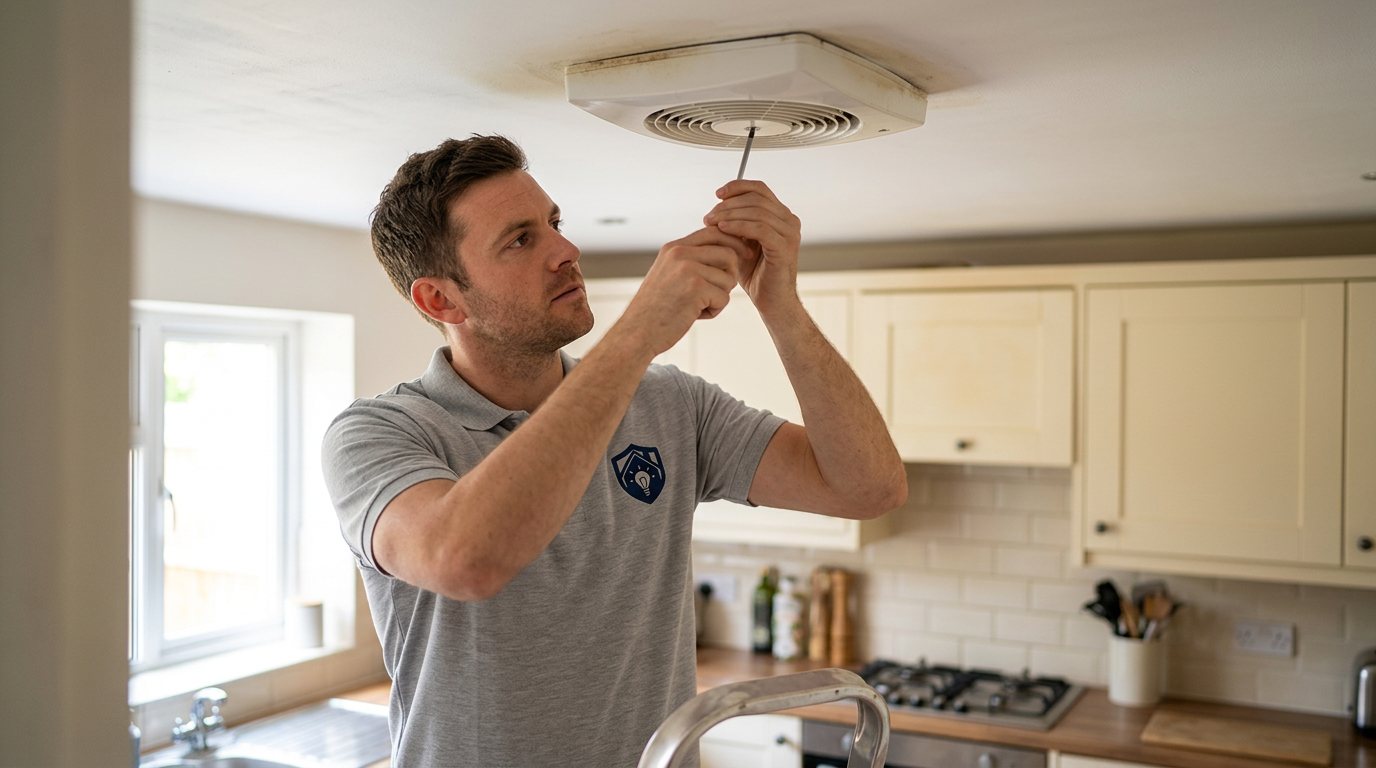
When a protective device trips repeatedly in connection with an extractor fan, the temptation is to keep resetting it and hope it settles. Don't. A breaker or RCD exists to interrupt a fault, and repeated tripping means the fault is still there. This is one fan problem where the diagnosis genuinely matters for safety, not just convenience.
What tripping usually means
The pattern of tripping tells us a lot. An RCD (or RCBO) tripping when the fan runs typically points to earth leakage: moisture getting inside the fan or its wiring, insulation that has degraded in the damp bathroom environment, a motor winding breaking down, or a connection that has corroded until it leaks current to earth. A breaker tripping without RCD involvement more often means overcurrent – a motor on the point of seizing, an impeller jammed solid, or a short circuit. And a device that trips even with the fan switched off points to wiring or connection faults rather than the fan itself. Each pattern leads the diagnosis differently, which is why "the fuse keeps tripping" needs proper investigation, not a guess.
Immediate steps before we arrive
Leave the tripped device off. Don't keep resetting it to test whether it happens again – you already know it does. Switch the fan off at its isolator. If you notice any burning smell, scorch marks, melted plastic or warmth around the fan, switch plate or ceiling, don't use the circuit at all and describe what you've seen when booking. Repeated resetting of a genuinely faulted circuit is how small faults become dangerous ones.
How we diagnose a tripping fan circuit
Our engineer uses proper insulation and earth-leakage test instruments, not guesswork. We isolate the fan from the circuit and test whether the tripping stops – which cleanly separates a fan fault from a wiring fault. We test the fan's motor and internal insulation, examine terminations for moisture and corrosion, check the duct and external route for water ingress (rain finding its way down a duct into a fan is a classic cause), and test the circuit's wiring where the fault points that way. We also verify the protective device itself is appropriate for the circuit.
Typical causes and fixes
Moisture ingress from a leaky duct or roof is fixed by sealing or correcting the duct route and drying or replacing the affected connections. Corroded terminations are cleaned and re-terminated properly. A fan whose motor insulation has broken down needs replacing – we'll say so plainly and quote a suitable replacement with fitting separately. Wiring faults in accessible sections are repaired to current standards. In every case you get a clear explanation of the cause and a quote before work proceeds.
Why not to DIY this one
Diagnosing earth leakage and insulation faults requires insulation resistance testers and the knowledge to interpret them safely. Working on a circuit that trips means working with live testing on a known-faulty installation – genuinely not a homeowner task. This is a diagnosis to book, not to bodge.
If more than one fan is involved
One further note for households with several fans: if more than one fan has tripped the circuit at different times, mention that too. Shared circuits mean a fault in one fan's wiring can affect others, and that history shapes how we test the circuit as a whole rather than isolating a single unit.
Booking your diagnosis
Contact us with the room, whether the RCD or a plain breaker trips, whether it trips with the fan off, and anything you've noticed – smells, damp, recent leaks or decorating. Same-day visits may be available. We'll test properly, explain the fault, and quote the repair for your approval.
How the price works
We charge a booking fee to hold your slot, then an hourly rate for the work itself. The fee changes with how soon you need us; the hourly rate changes with the slot you choose. You approve the price before we start, so there is no surprise on the invoice.
Booked 14+ days ahead
£25 booking fee
then £85 per hour of labour
Best value. Book the slot now, pay the smallest booking fee.
Booked within 48 hours
£100 booking fee
then £65 per hour of labour
For jobs that can wait a day or two but not a fortnight.
Same-day call-out
£220 booking fee
then £45 per hour of labour
Urgent problems: standing water, no heat, no power, leaks.
Book the slot
Choose the window that suits you and pay the booking fee. That holds your place in the diary.
We diagnose on site
The engineer confirms the cause and tells you what the job involves and how long it should take.
You approve, we work
Nothing goes ahead until you agree the price. Labour is then charged per hour at your slot rate.
A breaker or RCD that trips whenever the extractor fan runs is telling you something important: there's a fault in the fan or its circuit, and repeated resetting just re-energises it. Our engineer tests the fan and its supply properly to find the cause – which is often repairable – and we quote any work before starting.
What our customers say about our home appliances service
4.8 out of 5 from 14 reviews
Exactly what was quoted
What I appreciated was being told what was actually wrong before anyone started. Sorted in under 27 minutes and the invoice matched the quote to the penny.
Job: Tumble Dryer Not Starting Cycle
Good job, slightly late
Solid work. Hourly rate feels fair for the amount of work involved and everything was tested before they left. Would book again.
Job: Toaster Not Working
No mess left behind
Really straightforward. It had been bothering us for weeks; diagnosed properly, fixed the same visit, and the price was exactly what was explained when booking. Can not fault it.
Job: Microwave Button Repair
Book Fuse Tripping with Fan
Tell us what is happening and choose a slot. If you are not sure this is the right job, use the diagnosis panel — it narrows the problem down before you book.
- Booking fee confirmed up front
- Hourly labour, agreed before work starts
- Same-day slots for urgent problems






Questions people ask about fuse tripping with fan
Straight answers to the things customers ask most often before booking.
The fan trips the RCD every time – can I just keep resetting it?
Please don't. Repeated tripping means a real fault – commonly moisture ingress, degraded insulation or a failing motor winding – and each reset re-energises it. Leave the device off and get the circuit properly tested. Continuing to reset a faulted circuit is how minor faults become hazardous ones.
Does it matter whether the RCD trips or a plain breaker trips?
Yes, it shapes the diagnosis considerably. RCD tripping points towards earth leakage – moisture or insulation breakdown – while a plain breaker tripping suggests overcurrent, such as a seizing motor or a short. Tripping even with the fan switched off points towards the wiring rather than the fan. Tell us which when booking.
Can water getting into the fan cause tripping?
Very commonly, yes. Rain or condensation finding its way down the duct into the fan, or a roof leak above the fan position, causes exactly this symptom. If we find moisture ingress, we correct the duct or leak route, dry and properly re-terminate the affected connections, and re-test the circuit before declaring it sound.
Will the fan need replacing if it keeps tripping?
Not necessarily – moisture and corroded connections are repairable without a new fan. But if our insulation testing shows the motor windings have broken down, replacement is the safe and honest answer, and we'll quote a suitable fan with fitting separately for your approval before ordering anything.
What does this diagnosis cost?
You pay a booking fee when booking, and the hourly labour rate depends on how soon you need the visit. Electrical tripping diagnosis needs proper test instruments and time, and the engineer will quote the repair – labour plus parts – in full for your approval before any work starts.
Need fuse tripping with fan sorted in Warwick?
Book a slot in the diary and pay only the booking fee up front. We confirm the rest before we start.