
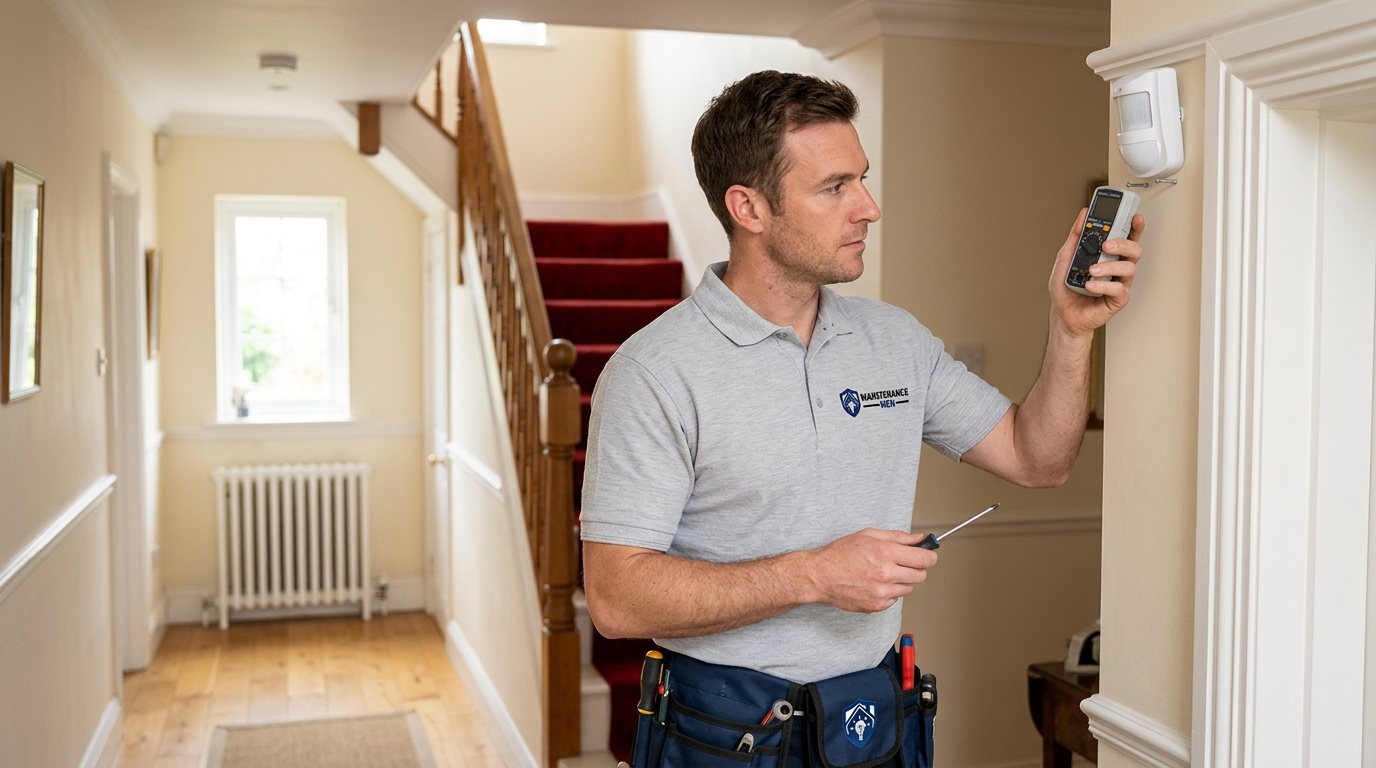
Motion Sensor Battery Failure? A Fresh Cell and a Proper Check in Sutton Coldfield
We replace failed sensor batteries correctly, check the contacts and confirm the sensor is actually working again rather than just quiet again.
Booking fee plus hourly labour — the price is confirmed before any work starts.
What this costs
| Booked 14+ days ahead | £25 booking fee £85 per hour |
|---|---|
| Booked within 48 hours | £100 booking fee £65 per hour |
| Same-day call-out | £220 booking fee £45 per hour |
The booking fee secures the visit. Labour is then charged by the hour, so you only pay for the time the job actually takes.
Booking fee £25–£220
£25 + £85/hr booked 14+ days ahead, £100 + £65/hr inside 48 hours, £220 + £45/hr same day. Agreed before we arrive.
Covered under Sensors & Detectors
Security & CCTV › Sensors & Detectors — one of 22 documented jobs in this section.
Same-day motion sensor battery failure
Urgent jobs can often be booked for today. Ask when you book and we will confirm the slot before you pay anything.
15 service areas
Birmingham, Coventry, Dorridge and 12 more across the West Midlands.
Battery failure is the everyday reality of wireless security sensors. A typical motion sensor battery lasts a long time, but not forever, and when it dies the sensor gives no obvious warning until the zone shows as missing on the panel or an alarm test fails. Some sensors do warn you — a low-battery chirp or a panel notification — but many homeowners only discover the failure when something goes wrong or the alarm refuses to set. The good news is that this is one of the friendliest faults in the category: it is usually quick to put right, and battery replacement on most sensors is genuinely user-serviceable. The catch is doing it properly, because a battery swapped carelessly can leave behind corrosion, a bad contact or an untested sensor.
How batteries fail in sensors
There are several failure modes, and they behave differently. A battery can simply reach the end of its life after years of service, which is normal and expected. It can drain early if the sensor is working harder than it should — an out-of-alignment sensor that constantly re-detects movement, a radio link struggling over a long distance, or a sensor left awake by a fault all chew through cells faster. It can leak, where an old cell corrodes and deposits conductive or insulating debris on the contacts, so a fresh battery will not make the sensor work until the contacts are cleaned. And it can be the wrong battery in the first place — a cell substituted with a lookalike of the wrong chemistry or capacity that runs down quickly or, occasionally, damages the sensor. Each of these needs a slightly different response, which is why a flat sensor battery is worth a proper check rather than a blind swap.
Doing it yourself, safely
If your sensor's manual describes battery replacement — most do — then changing the battery yourself is reasonable and honest DIY: open the sensor as the manual describes, remove the old cell, fit the correct type, and run the panel's walk test afterwards so you know the sensor is live again. What we would gently steer you away from is forcing a sealed case open, substituting an unverified battery type, or ignoring corrosion on the contacts rather than cleaning it. If the sensor is wired or mains-fed rather than battery-powered, battery-swap logic does not apply and the power side is engineer territory. If the sensor refuses to work with a known-good new battery, that points to contacts, tamper switch or internal failure — which is our kind of problem.
What our visit covers
We bring the correct cells for your sensor models, replace them cleanly, clean any contact corrosion, check the battery compartment and seals, and confirm the sensor is reporting properly to the panel with a walk test. While we are there it is sensible to check the batteries in your other sensors too, because they are usually installed at the same time and die at similar ages — a five-minute check now saves a repeat call later. If we find a sensor that drains batteries abnormally fast, we will diagnose that rather than leave you with a sensor that eats a cell a month, and quote any repair or replacement separately before you approve anything.
Booking a battery visit
Phone or use the website and tell us the make and model of the sensors if you know it, whether the panel is showing a low-battery or fault indication, and when the batteries were last changed. You pay a booking fee when you book, labour is charged hourly at a rate that depends on how soon you need the visit, and the full cost is quoted and approved before work starts, with batteries and any parts quoted separately.
How the price works
We charge a booking fee to hold your slot, then an hourly rate for the work itself. The fee changes with how soon you need us; the hourly rate changes with the slot you choose. You approve the price before we start, so there is no surprise on the invoice.
Booked 14+ days ahead
£25 booking fee
then £85 per hour of labour
Best value. Book the slot now, pay the smallest booking fee.
Booked within 48 hours
£100 booking fee
then £65 per hour of labour
For jobs that can wait a day or two but not a fortnight.
Same-day call-out
£220 booking fee
then £45 per hour of labour
Urgent problems: standing water, no heat, no power, leaks.
Book the slot
Choose the window that suits you and pay the booking fee. That holds your place in the diary.
We diagnose on site
The engineer confirms the cause and tells you what the job involves and how long it should take.
You approve, we work
Nothing goes ahead until you agree the price. Labour is then charged per hour at your slot rate.
A dead battery is the most common reason a motion sensor stops working, and it is also the most easily made-worse fix — wrong battery type, poor contact or an untested sensor can leave you no better off. We bring the right cells, fit them properly and prove the sensor is back in service before we leave.
What our customers say about our Security & CCTV service
5 out of 5 from 7 reviews
Would use again
Third time we have used Maintenance Men, and the same experience each time: agreed price, proper explanation, job done in one visit. The hourly rate is fair for the standard of work.
Job: CCTV Installation
Second time we have used them
I had put off sorting this for months because I expected a runaround. Quoted the booking fee plus hourly rate upfront, stuck to it, and actually found the underlying cause rather than just clearing the symptom. Worked neatly and hoovered up afterwards.
Job: Backup Battery Fault
Exactly what was quoted
What I appreciated was being told what was actually wrong before anyone started. Sorted in under 56 minutes and the invoice matched the quote to the penny.
Job: Alarm Repair Service
Book Motion Sensor Battery Failure
Tell us what is happening and choose a slot. If you are not sure this is the right job, use the diagnosis panel — it narrows the problem down before you book.
- Booking fee confirmed up front
- Hourly labour, agreed before work starts
- Same-day slots for urgent problems






Questions people ask about motion sensor battery failure
Straight answers to the things customers ask most often before booking.
Can I replace a motion sensor battery myself?
Yes — on most wireless sensors the manufacturer's manual describes battery replacement as a user task, and doing it yourself is perfectly reasonable. Just use the correct battery type, clean any corrosion you can see, and run the panel's walk test afterwards. If the sensor still will not work with a fresh battery, book us.
What do you do beyond swapping the battery?
We fit the correct cells, clean the contacts, check for corrosion damage and leakage, test whether the sensor is drawing power normally, and run a walk test to confirm the panel sees the sensor properly. If batteries are draining unusually fast we diagnose why rather than leaving the fault to repeat.
Are there any risks in leaving a flat battery in place?
A flat sensor battery leaves a gap in your alarm cover, and old leaking cells can corrode the contacts and damage the sensor if left for months. A sensor that works on mains power but has a backup battery can also fail silently, so it is worth having any persistent low-battery warning checked rather than ignored.
Which battery does my sensor need?
It depends entirely on the make and model — sensors use a range of cell types, and using a lookalike of the wrong chemistry can cause poor life or faults. If you can read the model from the sensor or its manual when you book, we will bring the right batteries with us so the job is done in one visit.
How much does a battery replacement visit cost?
You pay a booking fee when you book, and labour is charged hourly at a rate that depends on how soon you need us. The full cost of the work is quoted and approved before anything starts, and the batteries themselves are quoted separately so you can see exactly what they cost.
Need motion sensor battery failure sorted in Sutton Coldfield?
Book a slot in the diary and pay only the booking fee up front. We confirm the rest before we start.