
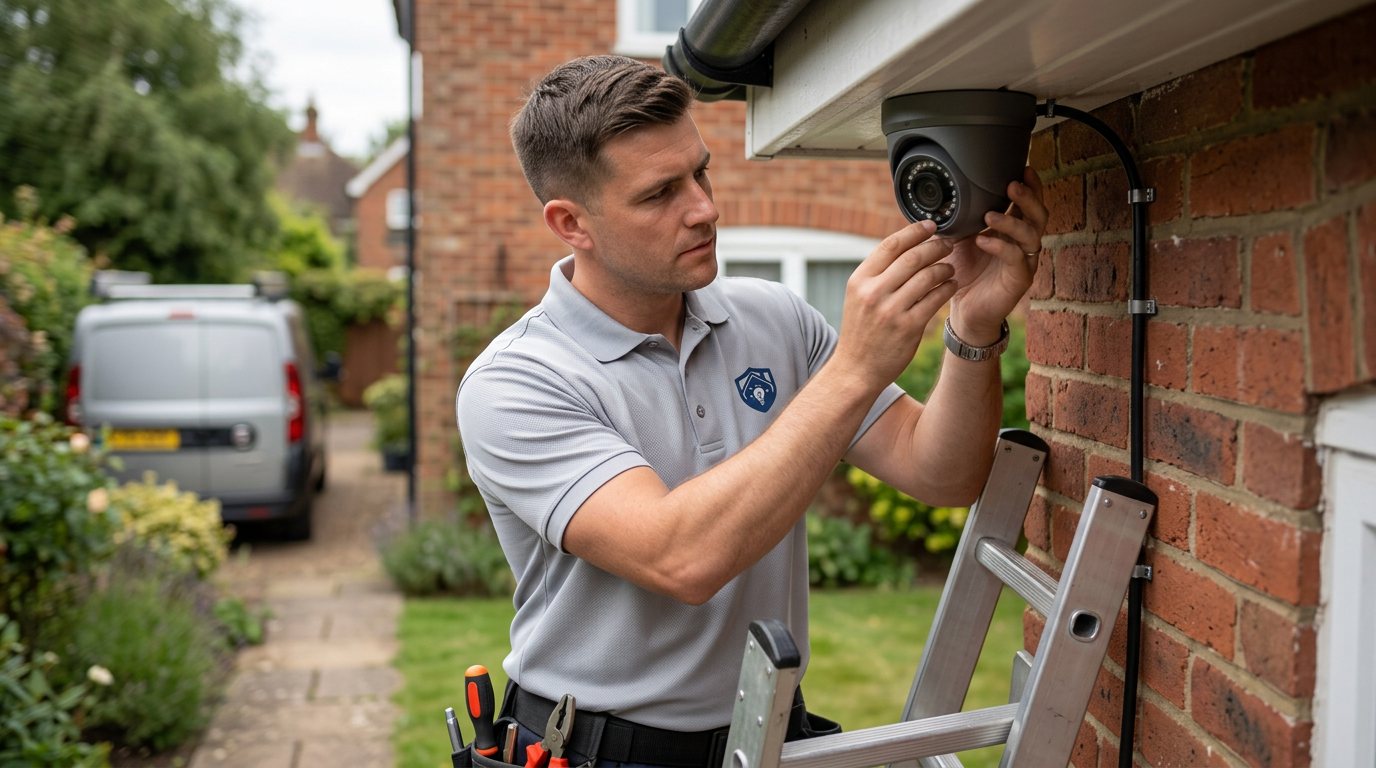
When Night Vision Fails, Your Coverage Shouldn't Go Dark With It in Solihull
We diagnose why cameras go black or hazy after dark and restore their night performance properly.
Booking fee plus hourly labour — the price is confirmed before any work starts.
What this costs
| Booked 14+ days ahead | £25 booking fee £85 per hour |
|---|---|
| Booked within 48 hours | £100 booking fee £65 per hour |
| Same-day call-out | £220 booking fee £45 per hour |
The booking fee secures the visit. Labour is then charged by the hour, so you only pay for the time the job actually takes.
Booking fee £25–£220
£25 + £85/hr booked 14+ days ahead, £100 + £65/hr inside 48 hours, £220 + £45/hr same day. Agreed before we arrive.
Covered under CCTV Systems
Security & CCTV › CCTV Systems — one of 20 documented jobs in this section.
Same-day night vision not working
Urgent jobs can often be booked for today. Ask when you book and we will confirm the slot before you pay anything.
15 service areas
Birmingham, Coventry, Dorridge and 12 more across the West Midlands.
Night vision failure is the fault that makes homeowners feel most exposed, because cameras that record happily all day can show a black rectangle, a white haze or a washed-out grey mush the moment darkness falls. Since the hours of darkness are when you most want footage, this is not a fault to live with. The encouraging part is that night vision problems usually have identifiable causes, and many are fixable without replacing the camera.
How night vision works, and how it fails
Most home cameras see in the dark using infrared illuminators — small LEDs around the lens that flood the scene with light the human eye cannot see. When night falls the camera cuts its IR filter in and the LEDs switch on. Failures happen at every link in that chain: the LEDs themselves dim or die with age, a weakening power supply may run the camera by day but not sustain the extra load of infrared at night, and the mechanical IR filter can stick so the camera never switches between day and night modes. External causes mimic hardware faults remarkably well — dirt, spider webs and moisture in front of the lens glow brightly under infrared and produce a white haze or a picture that looks fogged. Reflections also matter: an infrared camera aimed through glass or too close to a wall or soffit bounces its own light back and blinds itself. Finally, incorrect settings such as night mode thresholds or exposure can leave a camera that is technically illuminating the scene but displaying nothing useful.
How we diagnose it
Our engineer assesses the camera in the dark, which is the only honest way to test night performance. We watch the switch from day to night mode, check whether the infrared LEDs are actually lighting (they glow faintly red to a camera phone), and examine the image for the haze patterns that indicate dirt, moisture or reflection rather than hardware failure. We test the power supply under the extra load that night mode brings, since a supply that sags after dark is a classic culprit. We then review the camera's night settings, exposure and the positioning that might cause reflections. The outcome is a clear statement of what is wrong, not a guess.
Fixes and honest limits
Cleaning the lens and housing, clearing cobwebs, repositioning a camera that is reflecting into itself, and correcting night settings are all visit work. Replacement power supplies or failed infrared hardware are quoted as parts before fitting. If the illuminator or sensor has genuinely failed, replacement is the realistic answer and we will say so. It is also honest to set expectations: infrared lighting gives monochrome pictures and a limited effective range, and distance, weather and the surfaces in view all affect what is readable at night. We will tell you what your camera can realistically achieve in its position rather than promising more than the physics allows.
Recording responsibly after dark
Night footage is still personal data, and the system owner remains responsible for using it lawfully and considerately. Infrared light travels and illuminates beyond what you may intend, so a camera reaching a neighbour's windows or garden at night deserves particular care; avoid unnecessarily covering public space, retain footage for a sensible period and share clips only appropriately — for example with the police if they request them. We configure the equipment and will flag placements that reach beyond your boundary, though we do not provide legal advice.
Aftercare
After the fix, check the camera's night picture over the first few evenings and after the first heavy rain. A regular lens wipe every few months prevents the dirt and web build-up that causes most night haze. If night performance degrades gradually again, that pattern is useful information — it usually points to a power supply or illuminator ageing rather than dirt.
When to call us
Book when you first notice the night picture failing rather than after weeks of dark footage, and tell us whether it affects one camera or several, what the picture shows after dark, and whether the camera switches modes at all. You pay a booking fee when you book, labour is charged hourly at a rate that depends on how soon you need the visit, and the full cost is quoted and approved before work starts, with parts quoted separately.
How the price works
We charge a booking fee to hold your slot, then an hourly rate for the work itself. The fee changes with how soon you need us; the hourly rate changes with the slot you choose. You approve the price before we start, so there is no surprise on the invoice.
Booked 14+ days ahead
£25 booking fee
then £85 per hour of labour
Best value. Book the slot now, pay the smallest booking fee.
Booked within 48 hours
£100 booking fee
then £65 per hour of labour
For jobs that can wait a day or two but not a fortnight.
Same-day call-out
£220 booking fee
then £45 per hour of labour
Urgent problems: standing water, no heat, no power, leaks.
Book the slot
Choose the window that suits you and pay the booking fee. That holds your place in the diary.
We diagnose on site
The engineer confirms the cause and tells you what the job involves and how long it should take.
You approve, we work
Nothing goes ahead until you agree the price. Labour is then charged per hour at your slot rate.
A camera that works perfectly by day and shows nothing after dark is a familiar and unsettling CCTV fault. Night-time is when you most need coverage, so night vision failure deserves prompt, proper diagnosis. Our engineer checks the infrared hardware, its power supply, the lens and the camera settings to find exactly what is failing after sunset.
What our customers say about our Security & CCTV service
5 out of 5 from 7 reviews
Would use again
Third time we have used Maintenance Men, and the same experience each time: agreed price, proper explanation, job done in one visit. The hourly rate is fair for the standard of work.
Job: CCTV Installation
Second time we have used them
I had put off sorting this for months because I expected a runaround. Quoted the booking fee plus hourly rate upfront, stuck to it, and actually found the underlying cause rather than just clearing the symptom. Worked neatly and hoovered up afterwards.
Job: Backup Battery Fault
Exactly what was quoted
What I appreciated was being told what was actually wrong before anyone started. Sorted in under 56 minutes and the invoice matched the quote to the penny.
Job: Alarm Repair Service
Book Night Vision Not Working
Tell us what is happening and choose a slot. If you are not sure this is the right job, use the diagnosis panel — it narrows the problem down before you book.
- Booking fee confirmed up front
- Hourly labour, agreed before work starts
- Same-day slots for urgent problems




Questions people ask about night vision not working
Straight answers to the things customers ask most often before booking.
Is there anything I can check myself for night vision problems?
Yes — gently cleaning the outer lens with a soft cloth is safe and fixes a surprising number of night haze problems, and looking at the camera after dark with a phone camera will show whether the infrared LEDs are faintly glowing. Do not open the housing or adjust internal settings, which is engineer work.
What do you check when night vision has failed?
We observe the day-to-night mode switch, confirm the infrared LEDs are lighting, look at the image for haze patterns caused by dirt, moisture or reflections, and test the power supply under night-mode load. We also review night settings and positioning before recommending any replacement.
My camera looks at my neighbour's drive — is that a problem?
Cameras should cover your own property and avoid unnecessarily filming neighbours' homes or public space, because recordings are personal data for which the owner is responsible. We can discuss adjusting the angle or coverage during the visit, though specific legal questions are not something we advise on.
Why does the picture look grey and flat at night?
That is normal for infrared night vision — without visible colour light, infrared cameras produce monochrome images, and effective range is limited by the strength of the illuminators. We will check that the greyness is not caused by a fault, and tell you honestly what detail your setup can resolve at the distances you care about.
How is the cost calculated?
You pay a booking fee when you book. Labour is charged hourly at a rate that depends on how soon you need the visit. The full cost is quoted and approved before work starts; parts are quoted separately.
Need night vision not working sorted in Solihull?
Book a slot in the diary and pay only the booking fee up front. We confirm the rest before we start.