
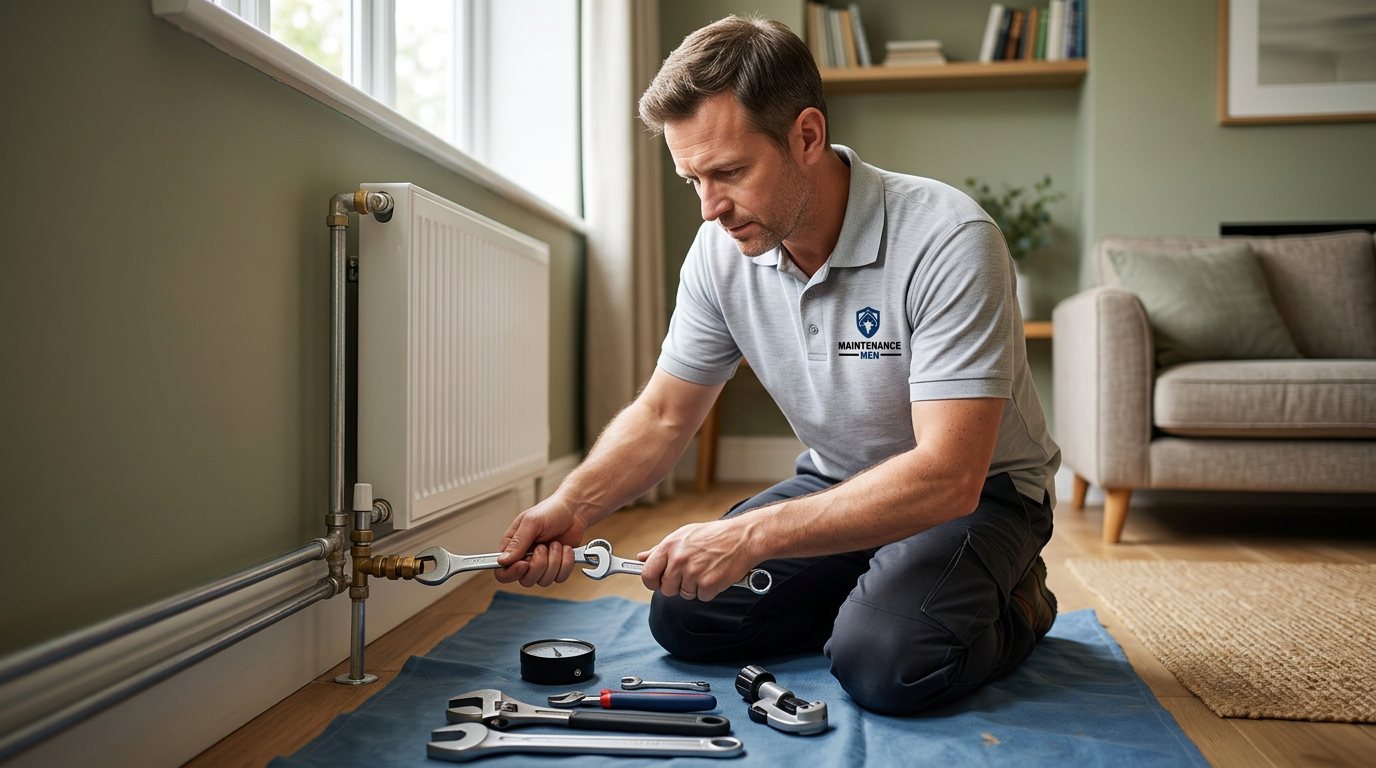
Low Boiler Pressure Explained, Traced and Put Right Properly in Solihull
We check the gauge, filling loop, expansion vessel and visible pipework to establish why pressure has fallen, then refill or repair as the system allows.
Booking fee plus hourly labour — the price is confirmed before any work starts.
What this costs
| Booked 14+ days ahead | £25 booking fee £85 per hour |
|---|---|
| Booked within 48 hours | £100 booking fee £65 per hour |
| Same-day call-out | £220 booking fee £45 per hour |
The booking fee secures the visit. Labour is then charged by the hour, so you only pay for the time the job actually takes.
Booking fee £25–£220
£25 + £85/hr booked 14+ days ahead, £100 + £65/hr inside 48 hours, £220 + £45/hr same day. Agreed before we arrive.
Covered under Pipework & Pressure
Heating & Radiators › Pipework & Pressure — one of 19 documented jobs in this section.
Same-day low boiler pressure
Urgent jobs can often be booked for today. Ask when you book and we will confirm the slot before you pay anything.
15 service areas
Birmingham, Coventry, Dorridge and 12 more across the West Midlands.
What Low Pressure Actually Means
A sealed heating system holds a fixed amount of water at a pressure the manufacturer specifies, typically between one and one and a half bar when the system is cold. The gauge is not measuring how much water is in your radiators in any vague sense; it is showing the pressure that water exerts on the sealed circuit. When that figure falls below the minimum, most modern boilers refuse to fire, and some show a fault code alongside a flashing pressure symbol. The boiler is protecting itself, because running a heat exchanger with too little water can cause it to overheat.
So low pressure is a symptom, not a fault in its own right. The useful question is where the water went. Sometimes the answer is innocent: a radiator was bled last autumn and never topped up, or a small amount was lost during a repair and the system was not refilled afterwards. More often there is a genuine loss that will continue until it is found.
The Usual Causes
- A weeping joint or valve. Compression nuts, radiator valve tails and older soldered joints can seep slowly for months without leaving a visible puddle, because the water evaporates or runs under a floor.
- A failed pressure relief valve. If the valve does not reseat, water escapes through the discharge pipe outside and the gauge drops steadily.
- A punctured expansion vessel. The vessel absorbs expansion as water heats. When its internal diaphragm fails, pressure swings wildly and the relief valve often discharges.
- A leaking boiler component. Internal seals, diverter valves and heat exchanger connections can lose water inside the casing, which often shows as a drip or corrosion rather than a flood.
Repressurising Safely
Many combi boilers have a filling loop: a short braided hose, or a built-in key or lever, that connects the mains supply to the heating circuit. If your boiler manual describes the procedure, topping up is a reasonable homeowner task. The sequence is to connect or open the loop slowly, watch the gauge, and stop at the cold pressure printed in the manual rather than at the top of the green band. Overfilling creates its own problems, and a system filled to two and a half bar cold will discharge through the relief valve as soon as it heats.
Two cautions matter. Avoid adding water to a hot system, because the reading will mislead you. And do not keep topping up week after week: fresh water introduces oxygen and scale, shortening the life of pumps, valves and radiators.
When Topping Up Is Not the Answer
If the gauge will not hold its reading for more than a few days, if you can see water near a radiator valve, if the discharge pipe outside is wet, or if pressure climbs towards the red zone when the heating runs, the system needs proper diagnosis rather than another top-up. The same applies if the boiler will not fire even at the correct pressure, which points to a separate fault such as a seized pump or a pressure sensor that has drifted.
What We Do on the Visit
We begin by confirming the gauge reading against a second point if one is available, then check the filling loop for a passing valve that is quietly letting mains water into the circuit. We inspect visible pipework, radiator valves and the boiler's connections for staining, corrosion or drips, and look at the relief valve discharge outlet for signs of recent flow. Where a system boiler and separate vessel are fitted, we test the expansion vessel charge. If nothing is visible, we discuss the likely locations of a hidden leak and the options for tracing it, which may involve isolating sections of the circuit to see which one loses pressure.
Repairs, Parts and Honest Limits
Once the cause is identified, repairs might be as simple as replacing a radiator valve tail or reseating a compression joint, or as involved as replacing an expansion vessel, relief valve or a section of corroded pipe. Parts are identified and quoted separately, and we confirm model compatibility before ordering. Some hidden leaks under solid floors cannot be repaired without lifting the floor, and we will say so before any work starts rather than after. Where the fault sits on the gas side of a boiler, we stop at the limits of our competence and recommend a Gas Safe registered engineer; Maintenance Men does not carry out gas work.
Book a Pressure Check
Tell us your boiler make and model, the gauge reading when cold and when hot, whether you have topped up recently, and anything you have noticed near radiators or the discharge pipe outside. We cover the West Midlands and can often attend at short notice, though we do not promise same-day slots. The booking fee is paid when you book, the hourly labour rate depends on how soon you need us, and you approve a full quote before work begins.
How the price works
We charge a booking fee to hold your slot, then an hourly rate for the work itself. The fee changes with how soon you need us; the hourly rate changes with the slot you choose. You approve the price before we start, so there is no surprise on the invoice.
Booked 14+ days ahead
£25 booking fee
then £85 per hour of labour
Best value. Book the slot now, pay the smallest booking fee.
Booked within 48 hours
£100 booking fee
then £65 per hour of labour
For jobs that can wait a day or two but not a fortnight.
Same-day call-out
£220 booking fee
then £45 per hour of labour
Urgent problems: standing water, no heat, no power, leaks.
Book the slot
Choose the window that suits you and pay the booking fee. That holds your place in the diary.
We diagnose on site
The engineer confirms the cause and tells you what the job involves and how long it should take.
You approve, we work
Nothing goes ahead until you agree the price. Labour is then charged per hour at your slot rate.
A pressure gauge sitting near zero is one of the most common reasons a boiler stops heating, and it usually looks more alarming than it is. Low pressure normally means the sealed system has lost water somewhere, or that it was never refilled properly after work. We will establish which, refill the system to the maker's figure where that is safe, and investigate the underlying loss rather than simply topping it up and leaving.
What our customers say about our heating & radiators service
5 out of 5 from 10 reviews
Fast, tidy and friendly
Booked the £220 booking-fee slot on Tuesday and got a message confirming the time the same morning. The cause was explained, the price agreed before any work started, and the job was done in about 46 minutes. Clean and tidy when they left.
Job: No Heating from Boiler
Turned up when they said
What I appreciated was being told what was actually wrong before anyone started. Sorted in under 46 minutes and the invoice matched the quote to the penny.
Job: Expansion Vessel Fault
Exactly what was quoted
I had put off sorting this for months because I expected a runaround. Quoted the booking fee plus hourly rate upfront, stuck to it, and actually found the underlying cause rather than just clearing the symptom. Worked neatly and hoovered up afterwards.
Job: Airlock in Hot Water System
Book Low Boiler Pressure
Tell us what is happening and choose a slot. If you are not sure this is the right job, use the diagnosis panel — it narrows the problem down before you book.
- Booking fee confirmed up front
- Hourly labour, agreed before work starts
- Same-day slots for urgent problems




Questions people ask about low boiler pressure
Straight answers to the things customers ask most often before booking.
Can I top up my boiler pressure myself?
Yes, if your manual describes a filling loop and you are comfortable using it. Open the loop slowly, watch the gauge, and stop at the cold pressure stated in the manual. If you are unsure where the loop is or the gauge will not hold, book a visit rather than guessing.
What do you check on a low pressure call-out?
We verify the gauge reading, inspect the filling loop for a passing valve, check radiator valves and visible pipework for weeps, look at the relief valve discharge, and test the expansion vessel where one is accessible. If nothing shows, we discuss tracing a hidden leak.
Is low pressure dangerous?
Low pressure is not usually a danger in itself, because the boiler locks out rather than running dry. The risk is to the boiler and pump if it is ignored or repeatedly topped up. If pressure is very high instead, or water is discharging, switch the heating off and arrange a visit.
Why does the pressure drop again after I top it up?
Because water is still escaping somewhere, or because trapped air is being released as the system heats and settles. One top-up after bleeding is normal; a drop every few days is not. That pattern usually points to a valve, the relief valve, the expansion vessel or a hidden pipe leak.
How much does a boiler pressure visit cost?
You pay the booking fee when you book, and the hourly labour rate depends on how soon you need the visit. We confirm the full cost and you approve it before any work starts. Any parts, such as a valve or expansion vessel, are identified and quoted separately.
Need low boiler pressure sorted in Solihull?
Book a slot in the diary and pay only the booking fee up front. We confirm the rest before we start.