
Boiler Making Loud Noise? We'll Trace the Sound to Its Source in Solihull
Banging, humming, gurgling or rattling — we identify which component is complaining, quieten it with the right repair, and refer gas-side noise to a Gas Safe engineer.
Booking fee plus hourly labour — the price is confirmed before any work starts.
What this costs
| Booked 14+ days ahead | £25 booking fee £85 per hour |
|---|---|
| Booked within 48 hours | £100 booking fee £65 per hour |
| Same-day call-out | £220 booking fee £45 per hour |
The booking fee secures the visit. Labour is then charged by the hour, so you only pay for the time the job actually takes.
Booking fee £25–£220
£25 + £85/hr booked 14+ days ahead, £100 + £65/hr inside 48 hours, £220 + £45/hr same day. Agreed before we arrive.
Covered under Boilers
Heating & Radiators › Boilers — one of 22 documented jobs in this section.
Same-day boiler making loud noise
Urgent jobs can often be booked for today. Ask when you book and we will confirm the slot before you pay anything.
15 service areas
Birmingham, Coventry, Dorridge and 12 more across the West Midlands.
What Different Noises Mean
Learning which noise is which helps you describe the fault — and helps us arrive prepared:
- Banging or knocking from the boiler — often overheating: water is not carrying heat away fast enough, so it boils locally. Restricted circulation, a failing pump, closed valves or sludge are the usual drivers. It can also be pipes knocking as they expand against fixings.
- Gurgling or trickling — air in the system or a struggling condensate drain. Bleeding radiators often quiets this one.
- Humming or droning that grows — a pump bearing on the way out, or a motorised valve actuator whining as it struggles. Both are replaceable components on our side.
- Rattling or scraping — a loose fan or component inside the boiler. A fan is an electrical component, but much of what surrounds it is gas-side, so this one is diagnosed carefully within safe limits.
- Whistling or kettle-like noise — limescale or sludge on the heat exchanger causing local boiling, known as kettling, which has its own dedicated repair approach.
- Banging pipes around the house — loose pipe runs, water hammer or fast-closing valves rather than the boiler itself.
Why Noise Should Not Be Ignored
Noise is early warning, and acting on it is cheap compared with the alternative. A pump that hums today seizes next month; overheating caused by restricted circulation stresses the heat exchanger every run; kettling builds up scale until the exchanger's efficiency collapses. And some noises indicate a boiler working against a blockage, which is exactly the condition that trips overheat protection or shortens component life. The repair is almost always smaller when the noise is young.
How We Trace the Sound
We listen first — with the heating running, and with hot water only if it is a combi, because noise that appears on one function and not the other is a strong clue. We check circulation by feeling the flow and return pipework, test the pump for bearing noise and correct speed, exercise motorised valves, and bleed air from the system. If kettling is suspected we assess scale and sludge indicators, and check system water quality. We never open the boiler casing or touch gas components — we are not Gas Safe registered and never carry out gas work; where a noise clearly originates from gas-side parts such as the burner, gas valve or flue, we diagnose only as far as is safe and then refer.
Repairs That Quiet Things Down
Most noisy-boiler repairs are within our scope: replacing worn pumps and their mounts, replacing motorised valve actuators, bleeding and balancing radiators, securing loose pipe runs so expansion no longer knocks, descaling where hard water has built up, and power-flushing systems whose sludge is causing local boiling. Where the sound points to the fan assembly or anything on the gas side, we explain our findings and recommend one of the trusted Gas Safe registered engineers we work closely with, passing on our notes so their diagnosis starts ahead of where ours finished.
Preventing Noisy Returns
Sludge and scale are behind a lot of boiler noise, so keeping the system clean is the best prevention: inhibitor levels checked after any system work, a power flush where water tests dirty, and a magnetic filter fitted where recurring debris is an issue. In hard-water West Midlands postcodes, a scale reducer is worth considering on a combi boiler. We will advise on what applies to your system rather than selling you everything.
Booking a Noise Diagnosis
Tell us your boiler's make and model, describe the noise and when it happens — on heating, hot water or both — and mention any error codes. Same-day attendance may be available but is never guaranteed. A booking fee is paid when you book, labour is charged hourly at a rate depending on how soon you need us, and the full cost is quoted and approved before work starts. Parts are quoted separately. We cover the West Midlands.
How the price works
We charge a booking fee to hold your slot, then an hourly rate for the work itself. The fee changes with how soon you need us; the hourly rate changes with the slot you choose. You approve the price before we start, so there is no surprise on the invoice.
Booked 14+ days ahead
£25 booking fee
then £85 per hour of labour
Best value. Book the slot now, pay the smallest booking fee.
Booked within 48 hours
£100 booking fee
then £65 per hour of labour
For jobs that can wait a day or two but not a fortnight.
Same-day call-out
£220 booking fee
then £45 per hour of labour
Urgent problems: standing water, no heat, no power, leaks.
Book the slot
Choose the window that suits you and pay the booking fee. That holds your place in the diary.
We diagnose on site
The engineer confirms the cause and tells you what the job involves and how long it should take.
You approve, we work
Nothing goes ahead until you agree the price. Labour is then charged per hour at your slot rate.
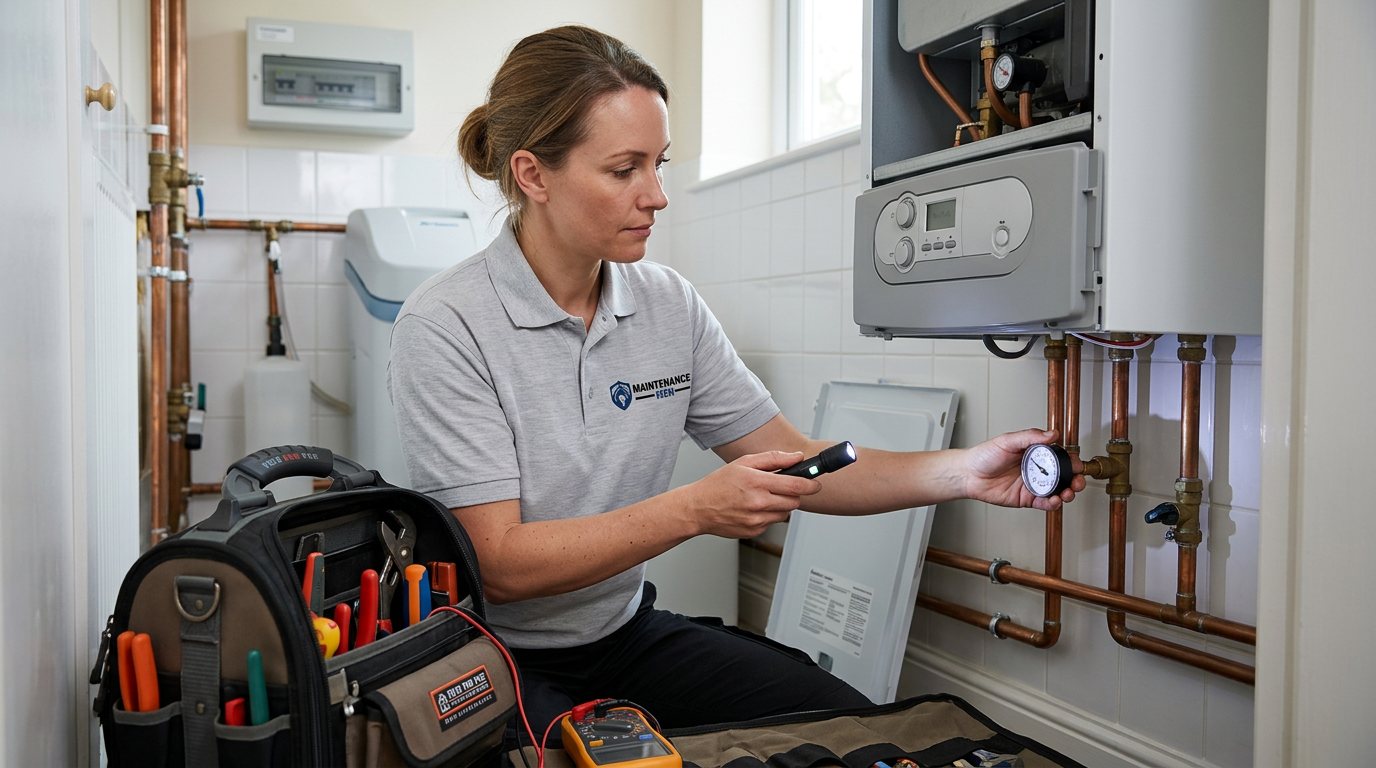
Boilers are usually heard only faintly, so a sudden bang, drone or rattle from the airing cupboard is understandably alarming. Noise is a symptom, not a fault in itself — pumps, valves, pipework and expanding components all sound different, and the sound points to the cause. We will trace it, repair the water-side and electrical sources we find, and refer anything gas-side to a trusted Gas Safe registered engineer we work closely with.
What our customers say about our heating & radiators service
5 out of 5 from 10 reviews
Fast, tidy and friendly
Booked the £220 booking-fee slot on Tuesday and got a message confirming the time the same morning. The cause was explained, the price agreed before any work started, and the job was done in about 46 minutes. Clean and tidy when they left.
Job: No Heating from Boiler
Turned up when they said
What I appreciated was being told what was actually wrong before anyone started. Sorted in under 46 minutes and the invoice matched the quote to the penny.
Job: Expansion Vessel Fault
Exactly what was quoted
I had put off sorting this for months because I expected a runaround. Quoted the booking fee plus hourly rate upfront, stuck to it, and actually found the underlying cause rather than just clearing the symptom. Worked neatly and hoovered up afterwards.
Job: Airlock in Hot Water System
Book Boiler Making Loud Noise
Tell us what is happening and choose a slot. If you are not sure this is the right job, use the diagnosis panel — it narrows the problem down before you book.
- Booking fee confirmed up front
- Hourly labour, agreed before work starts
- Same-day slots for urgent problems




Questions people ask about boiler making loud noise
Straight answers to the things customers ask most often before booking.
Is a noisy boiler dangerous?
Most boiler noise signals a mechanical or circulation problem rather than immediate danger, and safety limits will shut the boiler down if it truly overheats. But loud banging with the boiler tripping off, or any noise accompanied by a gas smell, needs prompt attention — and a gas smell means calling the National Gas Emergency Service on 0800 111 999 from outside.
Can I bleed a noisy radiator myself?
Yes, with the system off and cooled: open the bleed valve with a cloth ready and close it when water, not air, runs steadily. Check the boiler pressure afterwards and top up if it has fallen. Gurgling often stops after bleeding — but if noise returns quickly, something is feeding air into the system and that needs diagnosing.
What is kettling and can you fix it?
Kettling is a kettle-like rumbling caused by scale or sludge on the heat exchanger making water boil locally. The fix is restoring clean circulation — a power flush, descaling where appropriate, and correcting any flow restriction. The underlying water quality matters too, or the scale builds back.
What if the noise is coming from inside the boiler case?
We never open the boiler casing. Some internal components sit on the water side, but the fan, burner, gas valve and flue areas are gas-side and we do not touch them. If our checks point inside the case, we explain what the evidence indicates and refer you to a trusted Gas Safe registered engineer we work closely with.
What will diagnosing and fixing the noise cost?
You pay a booking fee when you book, and the hourly labour rate depends on how soon you need the visit. The full cost of the agreed work is quoted and approved before we start. Parts such as pumps, valve actuators or filters are identified and quoted separately, so you decide before anything is ordered.
Need boiler making loud noise sorted in Solihull?
Book a slot in the diary and pay only the booking fee up front. We confirm the rest before we start.