
Weakened Fixing Holes Repaired Properly Before Anything Goes Back Up in Solihull
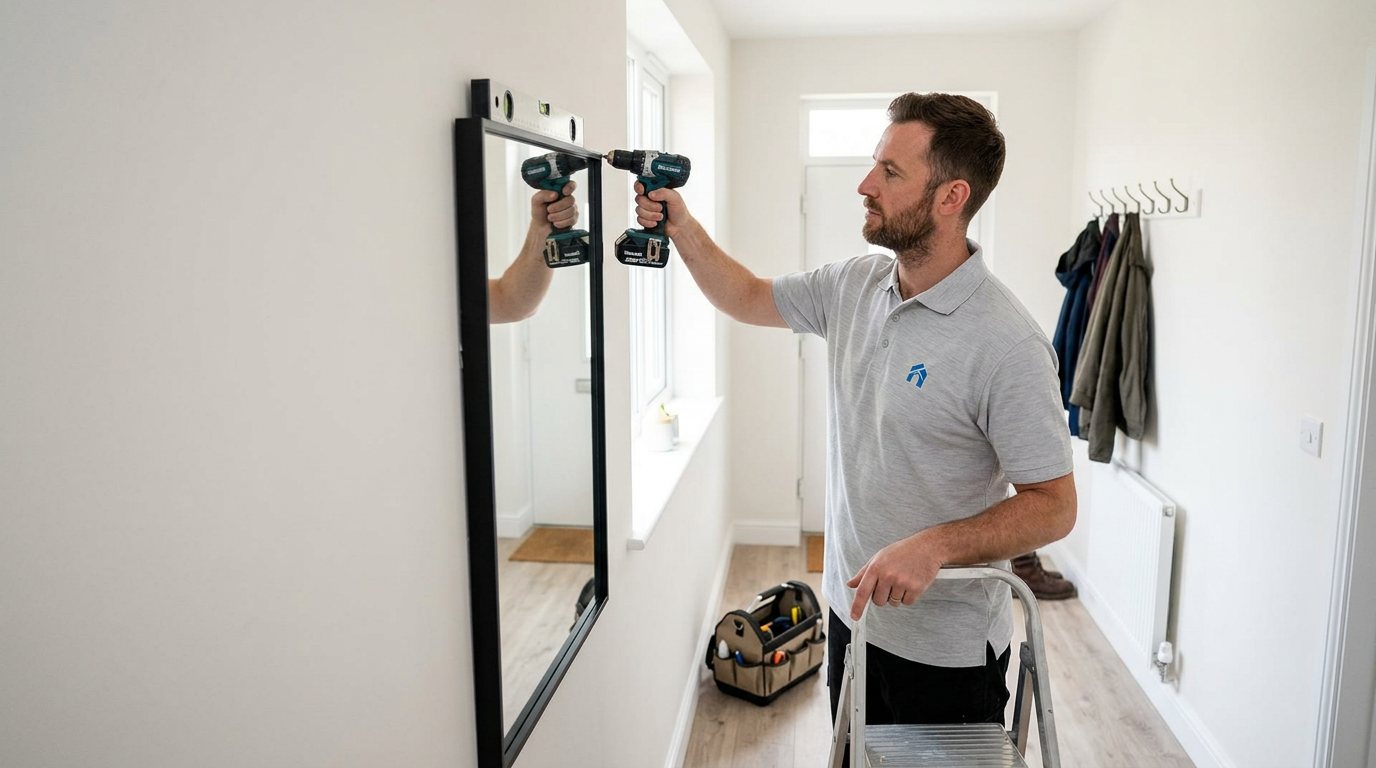
We rebuild fixing points that have torn out, spun or crumbled, so the next thing you hang has solid ground beneath it.
Booking fee plus hourly labour — the price is confirmed before any work starts.
What this costs
| Booked 14+ days ahead | £25 booking fee £85 per hour |
|---|---|
| Booked within 48 hours | £100 booking fee £65 per hour |
| Same-day call-out | £220 booking fee £45 per hour |
The booking fee secures the visit. Labour is then charged by the hour, so you only pay for the time the job actually takes.
Booking fee £25–£220
£25 + £85/hr booked 14+ days ahead, £100 + £65/hr inside 48 hours, £220 + £45/hr same day. Agreed before we arrive.
Covered under Hanging & Installation
Handyman › Hanging & Installation — one of 31 documented jobs in this section.
Same-day wall fixing repair
Urgent jobs can often be booked for today. Ask when you book and we will confirm the slot before you pay anything.
15 service areas
Birmingham, Coventry, Dorridge and 12 more across the West Midlands.
The hole is the problem, not the fixing
Here is the pattern that repeats in half the homes we visit: a shelf or bracket pulls loose, someone buys stronger screws, refixes into the same hole, and watches it fail again. The reason is simple — when a fixing fails, the hole is damaged along with it. The plug has enlarged the hole by spinning, the plaster around it has crumbled, or the plasterboard's face has torn so there is nothing left for the fixing to bite. The screw was never the weak point; the ground around it was. Repairing that ground is the actual job.
Reading what kind of failure you have
Different failures need different repairs, so we start by identifying yours. A spun plug in a drilled hole has simply worn the hole oversize — the surrounding material may be sound. A plug pulled out of masonry can take a cone of plaster with it, leaving a ragged recess. A torn plasterboard fixing is the messiest: the paper face has broken up, and the cavity behind is often enlarged beyond what a filler can convincingly repair. And around any of them, hairline cracks can radiate where the fixing worked under load, which need the loose material cut back before anything is filled. We assess each point individually, because one wall can contain three different kinds of damage.
Rebuilding each fixing point
The repair follows the diagnosis. An oversize hole in sound material can often be re-drilled to a standard size and re-plugged; where the enlargement is too much, we fill the old hole completely, let it cure, and drill fresh alongside — filling and immediately refixing into unset filler is how a patch fails, so we respect curing time. In masonry with crumbled local plaster, loose material is cut back to solid ground, filled, and allowed to set before refixing. In plasterboard, a torn fixing hole usually needs the damaged area opened, the cavity properly filled or the point reinforced so the face is solid again — a smear of filler over a torn face cracks out the first time anything leans on it. For fixings that will carry real load, we sometimes fit into a completely fresh position as the more reliable option, and make good the old holes instead; that decision is made with you, not for you.
What we will tell you honestly
A repair visit is bounded, and we are clear about its edges. Local fixing-point damage — holes, small craters, hairline cracks — is squarely our work. Widespread failed plaster, damp, structural movement or anything that suggests the wall's problems go deeper than its fixings is specialist territory, and we will say so rather than fill over the top of it. And decoration has its own boundary: repairs are filled and sanded ready for paint, but paint matching is imperfect on some walls, and a full repaint is a decorating decision agreed separately.
Preparing for the visit
Clear the wall and the area beneath it, and if there is a shelf, bracket or fitting waiting to go back up, have it available — we can often plan the refixing around the repair during the same visit, provided we are not fixing into uncured filler. Tell us what was fixed where and what happened when it failed; a story like "the top plug spun but the bottom held" narrows the diagnosis before we have even taken a look.
Aftercare
Let repairs cure fully before loading them — we will tell you how long for the products used, because fixing into a part-cured fill is the commonest way a good repair is spoilt. Once refitted, load the fitting sensibly and give it a check after a few weeks. A properly rebuilt fixing point should outlast the fitting above it.
Booking
A repair visit typically covers several fixing points within the booked time; extensive damage makes it longer, and we will scope that before starting. Same-day slots may be available if you call early. The booking fee is paid when you book, the hourly labour rate depends on how soon you need us, and the full cost is quoted and approved before any work begins — filler, patching materials or new fixings, if needed, are quoted separately.
How the price works
We charge a booking fee to hold your slot, then an hourly rate for the work itself. The fee changes with how soon you need us; the hourly rate changes with the slot you choose. You approve the price before we start, so there is no surprise on the invoice.
Booked 14+ days ahead
£25 booking fee
then £85 per hour of labour
Best value. Book the slot now, pay the smallest booking fee.
Booked within 48 hours
£100 booking fee
then £65 per hour of labour
For jobs that can wait a day or two but not a fortnight.
Same-day call-out
£220 booking fee
then £45 per hour of labour
Urgent problems: standing water, no heat, no power, leaks.
Book the slot
Choose the window that suits you and pay the booking fee. That holds your place in the diary.
We diagnose on site
The engineer confirms the cause and tells you what the job involves and how long it should take.
You approve, we work
Nothing goes ahead until you agree the price. Labour is then charged per hour at your slot rate.
When a fixing fails, the hole it leaves behind is rarely fit to be used again — the plug spins, the plasterboard has torn, the plaster around the anchor has turned to dust. Refixing into that damaged ground is why the same shelf falls down twice. We rebuild failed fixing points properly, so the next fitting goes into a wall that can actually hold it.
What our customers say about our handyman service
5 out of 5 from 8 reviews
Fast, tidy and friendly
Booked the £100 booking-fee slot on Saturday and got a message confirming the time the same morning. The cause was explained, the price agreed before any work started, and the job was done in about 77 minutes. Clean and tidy when they left.
Job: Heavy Picture Wall Mounting
Exactly what was quoted
Third time we have used Maintenance Men, and the same experience each time: agreed price, proper explanation, job done in one visit. The hourly rate is fair for the standard of work.
Job: Plaster Wall Repair
Worth the booking fee
Booked online, paid the booking fee, and the engineer rang ahead. Job done in about 43 minutes, plus straightforward advice on stopping it happening again. Will use them for the rest of the house now.
Job: Soundbar Installation
Book Wall Fixing Repair
Tell us what is happening and choose a slot. If you are not sure this is the right job, use the diagnosis panel — it narrows the problem down before you book.
- Booking fee confirmed up front
- Hourly labour, agreed before work starts
- Same-day slots for urgent problems





Questions people ask about wall fixing repair
Straight answers to the things customers ask most often before booking.
Why does my fixing keep failing even with stronger screws?
Because the hole, not the screw, is what failed. A plug that has spun enlarges the hole, crumbled plaster leaves nothing to grip, and a torn plasterboard face has lost the material the fixing bites into — a stronger screw in damaged ground fails the same way. The repair is rebuilding the ground: filling and curing, re-drilling fresh, or moving the fixing point to sound material.
What do you inspect on a repair visit?
Each failed fixing point, individually — whether the hole is simply oversize, whether plaster has crumbled around it, whether plasterboard has torn, and whether cracks radiate from the fixing. We then match the repair to the failure: re-drill and re-plug, fill and cure before refixing, reinforce, or move the fixing to fresh ground and make good the old holes.
Can I fill the hole myself and just re-drill into it?
You can, and it sometimes works — but the usual mistake is refixing into filler before it has fully cured, which gives you a fixing seated in unset material that works loose within weeks. Filler also shrinks slightly as it dries, so a hole filled flush today can need a second pass before it is solid. Done patiently it is a fair DIY job; done quickly it is the same failure again.
Should I have the shelf or bracket refitted in the same visit?
Often yes, but never into uncured filler. If the repair can be done without the refixing depending on fresh fill — a fresh position, or existing sound ground — we will fix it in the same appointment. Where the refixing must wait for curing, we schedule a short return visit rather than compromise the fixing, and we will tell you which applies before you book.
What does fixing-point repair cost?
You pay a booking fee when you book, and the hourly labour rate depends on how quickly you need the visit, with more notice usually meaning a lower rate. We quote the full cost of the repair before starting and you approve it. Any filler, patching materials or replacement fixings required are identified and quoted separately.
Need wall fixing repair sorted in Solihull?
Book a slot in the diary and pay only the booking fee up front. We confirm the rest before we start.