
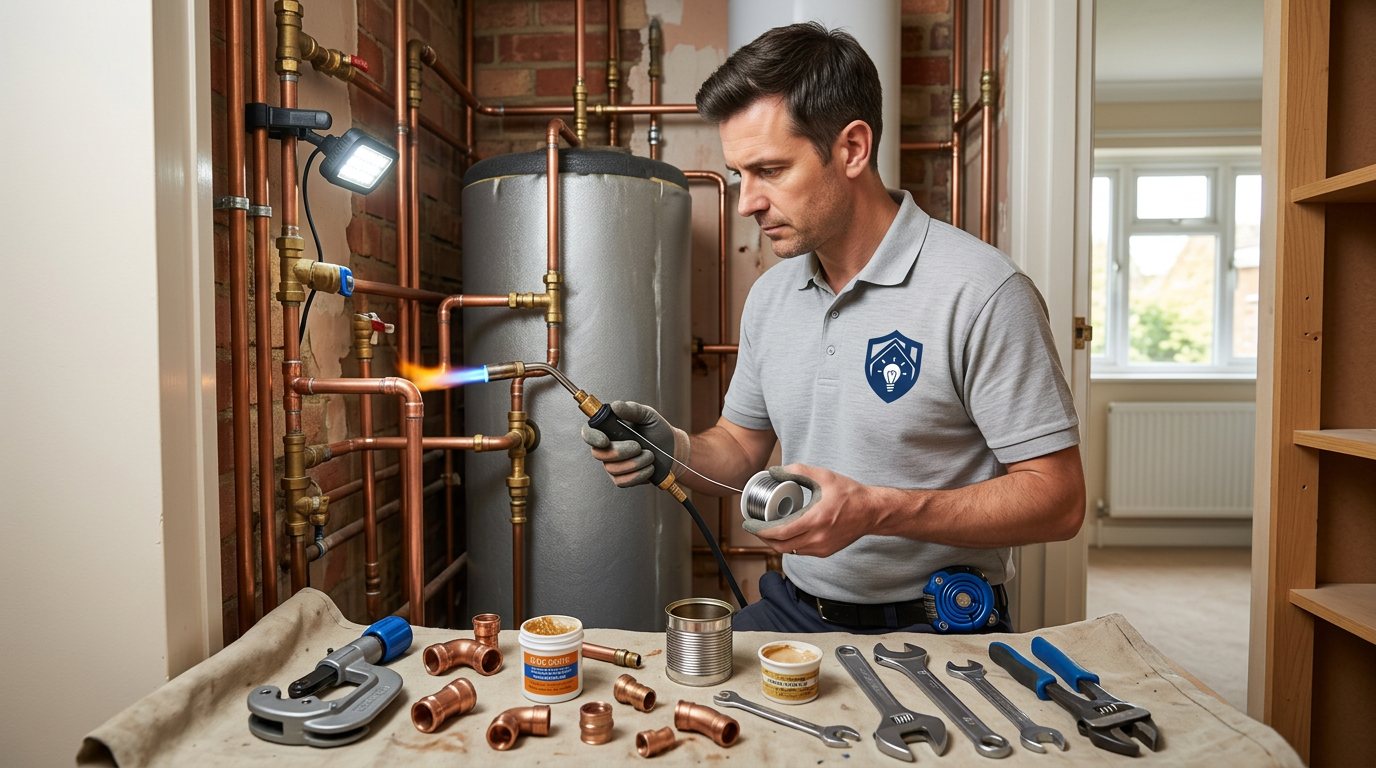
Leaking pipe joint? We remake the connection properly, not just tighten it in Smethwick
Drips at elbows, tees and compression fittings are usually a sign of wear or poor assembly. We identify the joint and remake it to last.
Booking fee plus hourly labour — the price is confirmed before any work starts.
What this costs
| Booked 14+ days ahead | £25 booking fee £85 per hour |
|---|---|
| Booked within 48 hours | £100 booking fee £65 per hour |
| Same-day call-out | £220 booking fee £45 per hour |
The booking fee secures the visit. Labour is then charged by the hour, so you only pay for the time the job actually takes.
Booking fee £25–£220
£25 + £85/hr booked 14+ days ahead, £100 + £65/hr inside 48 hours, £220 + £45/hr same day. Agreed before we arrive.
Covered under Pipework
Plumbing › Pipework — one of 16 documented jobs in this section.
Same-day leaking pipe joint repair
Urgent jobs can often be booked for today. Ask when you book and we will confirm the slot before you pay anything.
15 service areas
Birmingham, Coventry, Dorridge and 12 more across the West Midlands.
Why joints leak
Every joint is a compromise between two materials trying to be watertight, and each type fails in its own way. Compression fittings rely on an olive being crushed evenly onto a clean pipe; a scored pipe, an overtightened nut or a cheap olive will weep. Soldered joints fail when the pipe was wet, dirty or overheated, leaving a void in the solder that holds for months and then does not. Push-fit fittings leak when the pipe was not cut square, was not pushed fully home, or has no insert, so the plastic pipe slowly creeps out under pressure. Threaded joints on older steel pipe corrode and weep at the root of the thread. Add movement, vibration from a pump, or the expansion and contraction of hot water, and a joint that was marginal from day one will start to show.
Why a dripping joint is not a small problem
A drip is small only while it is visible. Water from a joint under a sink runs along the pipe or the back of the cabinet and rots the carcass from underneath, where you will not see it until the board swells. On a heating circuit, a weeping joint loses pressure, so the boiler cycles, radiators go cold at the top and the system pulls in fresh water that adds air and corrosion. Behind a wall or under a floor, a joint that drips steadily will saturate plaster and timber over weeks. Tightening a leaking compression nut often distorts the olive further, turning a weep into a spray. Left alone, a joint that weeps under a pressurised system rarely improves.
How we find the joint at fault
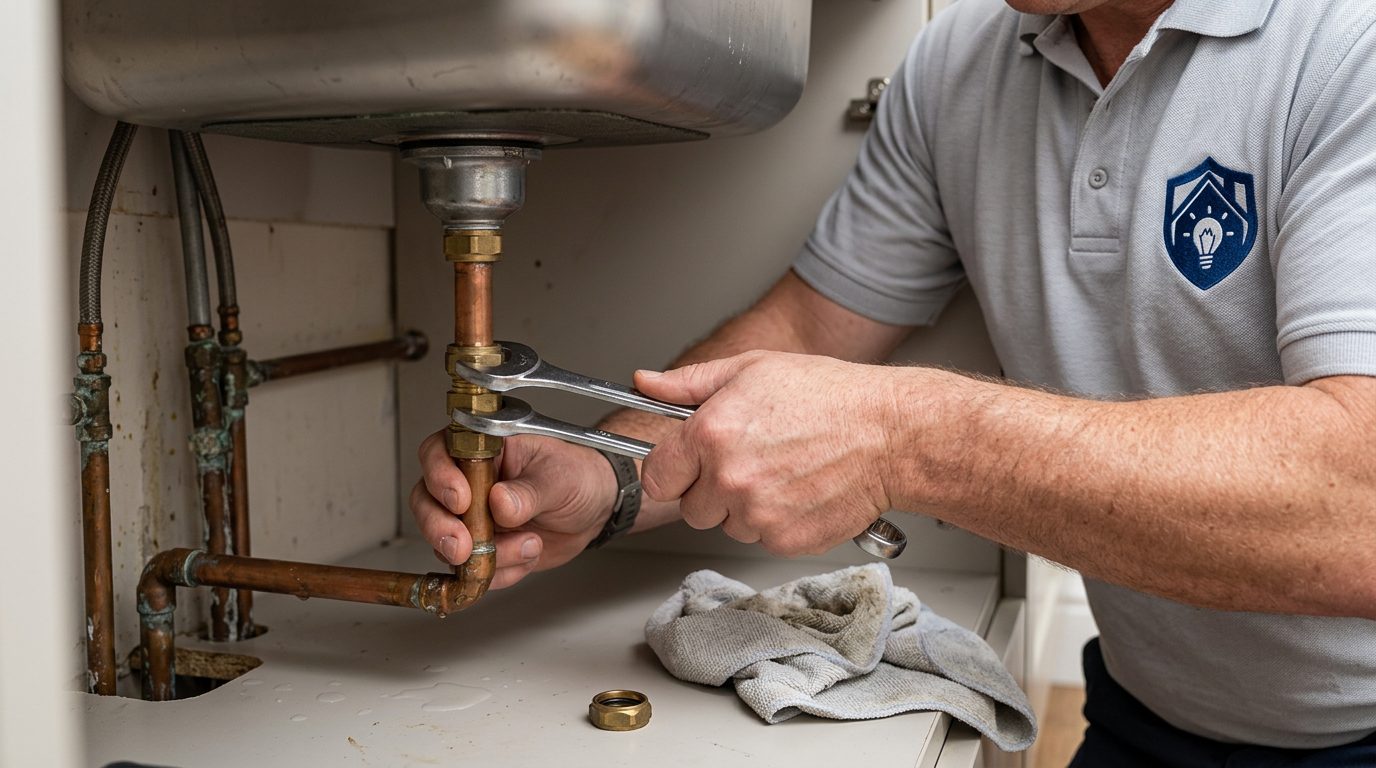
We dry the area and watch, because a drip rarely falls from where it starts. Water tracks along the underside of a pipe and appears at the lowest point, so we follow the line of the pipe rather than the drip. We check the obvious suspects first: taps and their tails, appliance connections, radiator valves, pump connections and any recently disturbed pipework. Where the joint is hidden, we isolate sections and pressure test, or use moisture readings to narrow the area before opening anything. We check the joint type and the condition of the pipe at that point, because that determines whether remaking it will hold or whether the pipe needs renewing around it.
How we remake the joint
The section is isolated and drained. We cut back and clean the pipe properly, removing old jointing compound, scale and any burr, and check it is round and unscored. The old olive, washer or fitting is discarded rather than reused, because a crushed olive will not seal twice. Compression joints get a new olive and are tightened to the right point rather than as hard as possible. Soldered joints are remade dry with the correct flux and enough heat. Push-fit gets a square cut, a proper insert and a full push home, with the grab ring checked. Threaded joints are remade with appropriate tape or paste. Then the joint is tested under working pressure, with hot water run through where relevant, and the area left dry.
Keeping joints sound
Support pipework so joints are not carrying weight or strain, and clip runs at sensible intervals. Avoid mixing fitting types on one connection, and do not reuse olives or washers after a disturbance. If you drain the system for any reason, refill slowly and check every joint afterwards. Keep inhibitor in heating systems at the right strength, because corrosion inside the pipe is what eventually kills threaded and soldered joints. When you have work done, ask for the joints to be tested before the pipework is boxed in, and photograph them while they are accessible.
When to call us
Call if a joint is dripping rather than damp, if it is on a heating circuit and the pressure keeps dropping, if the pipe shows green crusting or white scale at the joint, or if the joint is behind a wall, under a floor or above a ceiling. Call also if you have already tightened it once and it still weeps, or if the pipe is old steel and the thread is corroded. A joint that is merely damp with no drip can usually be booked in rather than treated as an emergency.
Book a call-out
Describe where the joint is and what it connects, and send a photo if it is easy to reach; that helps us arrive with the right fittings. If opening a wall or floor is needed, or the surrounding pipe turns out to be too far gone to remake, we will explain the options and price before going ahead. Book a leaking pipe joint repair and we will stop the drip at the source.
How the price works
We charge a booking fee to hold your slot, then an hourly rate for the work itself. The fee changes with how soon you need us; the hourly rate changes with the slot you choose. You approve the price before we start, so there is no surprise on the invoice.
Booked 14+ days ahead
£25 booking fee
then £85 per hour of labour
Best value. Book the slot now, pay the smallest booking fee.
Booked within 48 hours
£100 booking fee
then £65 per hour of labour
For jobs that can wait a day or two but not a fortnight.
Same-day call-out
£220 booking fee
then £45 per hour of labour
Urgent problems: standing water, no heat, no power, leaks.
Book the slot
Choose the window that suits you and pay the booking fee. That holds your place in the diary.
We diagnose on site
The engineer confirms the cause and tells you what the job involves and how long it should take.
You approve, we work
Nothing goes ahead until you agree the price. Labour is then charged per hour at your slot rate.
A joint that drips is telling you something: an olive that has crushed unevenly, a soldered elbow that never took, a plastic fitting missing its insert, or corrosion eating the thread. Tightening it further often makes it worse. We identify the joint, remake the connection with new components and test it.
What our customers say about our plumbing service
4.7 out of 5 from 11 reviews
Second time we have used them
What I appreciated was being told what was actually wrong before anyone started. Sorted in under 32 minutes and the invoice matched the quote to the penny.
Job: Loose Pipe Connections Repair
Worth the booking fee
Booked the £220 booking-fee slot on Tuesday and got a message confirming the time the same morning. The cause was explained, the price agreed before any work started, and the job was done in about 75 minutes. Clean and tidy when they left.
Job: Hidden Pipe Leak Repair
Turned up when they said
Turned up in the window they promised, walked me through the options (turns out the part had to be sourced locally), then cracked on. Everything was tested before they left. No mess, no drama, no surprise on the bill.
Job: Central Heating Leak Repair
Book Leaking Pipe Joint Repair
Tell us what is happening and choose a slot. If you are not sure this is the right job, use the diagnosis panel — it narrows the problem down before you book.
- Booking fee confirmed up front
- Hourly labour, agreed before work starts
- Same-day slots for urgent problems






Questions people ask about leaking pipe joint repair
Straight answers to the things customers ask most often before booking.
Can I just tighten the nut to stop it leaking?
You can try a quarter turn, and on a slightly loose compression nut that sometimes helps. Stop there, though. Overtightening crushes the olive into the pipe and can split it, which turns a weep into a leak that needs the section replacing.
Why does the joint only leak when the heating is on?
Heat makes pipework expand, and a joint that is marginal when cold can open slightly as the pipe grows and the pressure rises. That pattern usually points to a compression joint that was never quite tight enough, or an old soldered joint with a partial void. It will not fix itself.
Do you replace the whole pipe or just the joint?
Just the joint where the pipe either side is sound; that is the cheaper and less invasive answer. If the pipe is thin, distorted or corroded at the joint, we renew a short section so the new connection has something solid to grip.
How soon can you attend a leaking joint?
Joints that are dripping onto ceilings, near electrics or on a heating system that keeps losing pressure get priority and we aim to attend the same day. A slow weep into a bucket can usually be booked into the next available slot, and we will advise which it is when you call.
Will the repair need the system draining?
On a heating or hot water circuit, yes, at least down to the level of the joint. On a cold supply, isolating the leg is usually enough. We tell you before starting, and where a drain-down is needed we check the joints and inhibitor while the system is open.
Need leaking pipe joint repair sorted in Smethwick?
Book a slot in the diary and pay only the booking fee up front. We confirm the rest before we start.