
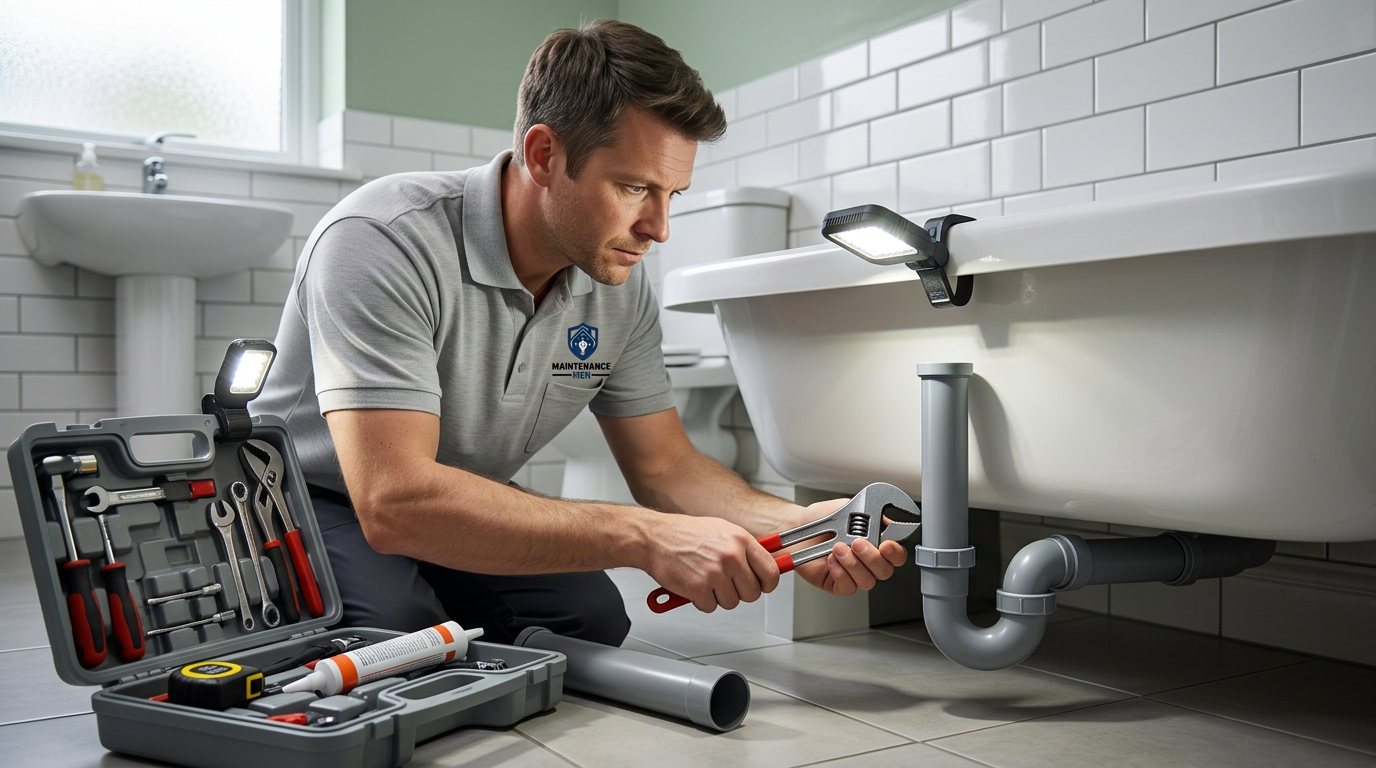
Cracked bath surface repair that seals the damage and stops water reaching the floor in Smethwick
A two-hour repair for cracks, chips and star fractures in acrylic or enamel — assessed for structural risk before anything is filled.
Booking fee plus hourly labour — the price is confirmed before any work starts.
What this costs
| Booked 14+ days ahead | £25 booking fee £85 per hour |
|---|---|
| Booked within 48 hours | £100 booking fee £65 per hour |
| Same-day call-out | £220 booking fee £45 per hour |
The booking fee secures the visit. Labour is then charged by the hour, so you only pay for the time the job actually takes.
Booking fee £25–£220
£25 + £85/hr booked 14+ days ahead, £100 + £65/hr inside 48 hours, £220 + £45/hr same day. Agreed before we arrive.
Covered under Bath
Plumbing › Bath — one of 17 documented jobs in this section.
Same-day cracked bath repair
Urgent jobs can often be booked for today. Ask when you book and we will confirm the slot before you pay anything.
15 service areas
Birmingham, Coventry, Dorridge and 12 more across the West Midlands.
Most cracks in a bath start small and get steadily worse. A hairline near the waste, a star chip where something was dropped, a split along the curve where the shell flexes — none of them look serious on day one, and all of them let water through within a few months.
What causes a cracked bath surface
- Impact. Dropped bottles, tools, a shower head or a heavy ornament. Enamel chips; acrylic cracks in a star pattern from the point of impact.
- Flexing. An acrylic bath on an inadequate base bends underfoot. The shell is designed to move a little, but repeated flexing at the same point fatigues the material and a crack opens along the stress line.
- Heat stress. Very hot water against a cold surface, repeated over years, can craze the top layer and lead to cracking.
- Over-tightened fittings. Waste and overflow fittings cranked down too hard crack the surrounding surface from the hole outward.
- Chemical damage. Harsh cleaners and some drain products degrade the surface layer, leaving it brittle.
- Age. Enamel and acrylic both lose flexibility over time, and old repairs fail before the bath does.
Why a crack gets worse
A crack is a stress concentration. Every time the bath is filled, the weight of the water pushes down; every time someone stands in it, the shell deflects. The crack opens and closes a fraction of a millimetre with each cycle, and water gets in. On an acrylic bath, water between the layers causes the damage to spread.
The consequences are not just cosmetic. Water passing through a crack lands on the floor, the joists and the ceiling below — the same path a waste leak takes, but harder to trace because the water appears some distance from the visible damage. On a bath with a structural crack, there is also a genuine safety question about whether the shell will take weight.
How we assess the damage
We look at three things: where the crack is, how deep it goes, and whether the bath moves.
A crack running from the waste or overflow hole, or one that extends across the base, is a structural concern. A crack that closes when the bath is empty and opens when it is filled tells us the shell is flexing and the repair needs reinforcement behind it, not just filler in front. We also check underneath, through the panel, for water staining and for the condition of the base and support.
We are straightforward about the outcome. Some cracks can be repaired properly. Some baths are beyond economic repair, and telling you that is more useful than selling you a repair that fails in six months.
How we carry out the repair
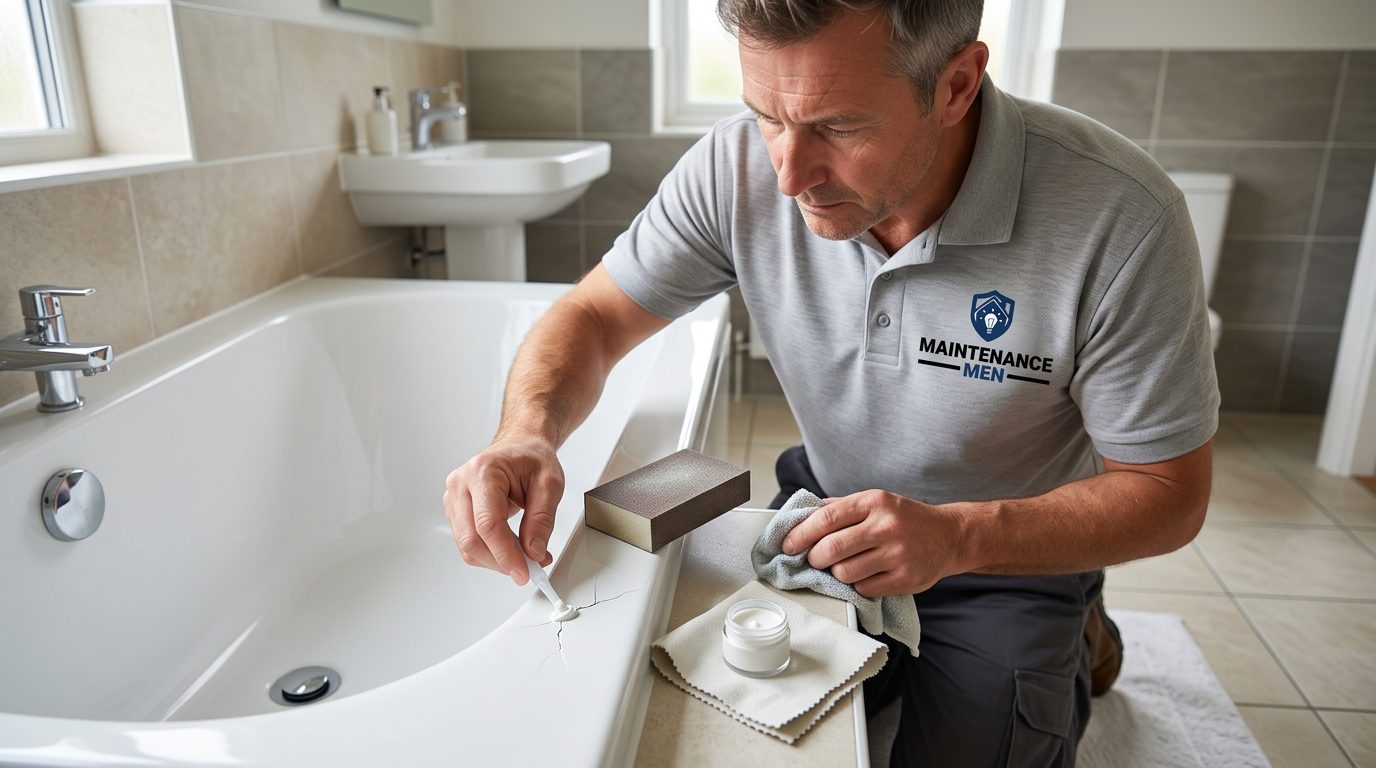
For a repairable crack, the area is cleaned and dried thoroughly — filler will not bond to damp. The crack is opened slightly along its length so the repair material goes into it rather than sitting on top, then filled with a two-part acrylic or enamel repair compound matched to the bath.
Where the shell is flexing, we reinforce from underneath: the base is cleaned, the crack is backed with a suitable patch or reinforcement, and the bath's support is improved so the movement that caused the crack is reduced. That step is what separates a repair that lasts from one that reappears.
The repair is then smoothed, flatted and polished back to match the surrounding surface, and the bath is filled and left to stand so we can confirm it is watertight under load. Where the damage sits close to the waste or overflow, we reseat those fittings with new seals while we are in there.
If we find on arrival that the damage is structural enough to make repair unwise, we will tell you and quote for replacement instead — you will not be charged for a repair we do not do.
Preventing further damage
- Use a bath mat and avoid standing directly on the base where you can
- Do not drop heavy items into the bath; store bottles on a shelf, not the rim
- Clean with non-abrasive products and avoid harsh chemicals on the surface
- Fix a flexing bath before it cracks — support is cheaper than repair
- Deal with a chip early, before it becomes a crack
When to call us
Call as soon as you notice a crack, chip or star fracture, particularly if it is near the waste or overflow. Also call if the bath flexes noticeably, if you can feel movement underfoot, or if water is appearing below the bath with no obvious waste leak. A crack that has been filled once and has reopened needs the cause addressed, not another layer of filler.
If you are looking for cracked bath surface repair rather than a cosmetic patch, that is the distinction we work to.
Book a bath surface repair
Book a call-out and we will confirm a time.
How the price works
We charge a booking fee to hold your slot, then an hourly rate for the work itself. The fee changes with how soon you need us; the hourly rate changes with the slot you choose. You approve the price before we start, so there is no surprise on the invoice.
Booked 14+ days ahead
£25 booking fee
then £85 per hour of labour
Best value. Book the slot now, pay the smallest booking fee.
Booked within 48 hours
£100 booking fee
then £65 per hour of labour
For jobs that can wait a day or two but not a fortnight.
Same-day call-out
£220 booking fee
then £45 per hour of labour
Urgent problems: standing water, no heat, no power, leaks.
Book the slot
Choose the window that suits you and pay the booking fee. That holds your place in the diary.
We diagnose on site
The engineer confirms the cause and tells you what the job involves and how long it should take.
You approve, we work
Nothing goes ahead until you agree the price. Labour is then charged per hour at your slot rate.
A crack in a bath is not only a cosmetic problem. It is a route for water into the floor structure, and on an acrylic bath it is a point where the shell can flex and spread. We assess whether the damage is surface-only or structural, then repair and reinforce it so the bath is watertight and safe to stand in.
What our customers say about our plumbing service
4.7 out of 5 from 11 reviews
Second time we have used them
What I appreciated was being told what was actually wrong before anyone started. Sorted in under 32 minutes and the invoice matched the quote to the penny.
Job: Loose Pipe Connections Repair
Worth the booking fee
Booked the £220 booking-fee slot on Tuesday and got a message confirming the time the same morning. The cause was explained, the price agreed before any work started, and the job was done in about 75 minutes. Clean and tidy when they left.
Job: Hidden Pipe Leak Repair
Turned up when they said
Turned up in the window they promised, walked me through the options (turns out the part had to be sourced locally), then cracked on. Everything was tested before they left. No mess, no drama, no surprise on the bill.
Job: Central Heating Leak Repair
Book Cracked Bath Repair
Tell us what is happening and choose a slot. If you are not sure this is the right job, use the diagnosis panel — it narrows the problem down before you book.
- Booking fee confirmed up front
- Hourly labour, agreed before work starts
- Same-day slots for urgent problems








Questions people ask about cracked bath repair
Straight answers to the things customers ask most often before booking.
Can a cracked bath be repaired, or does it have to be replaced?
It depends on where the crack is and how deep it goes. Surface cracks and chips can usually be repaired properly. A crack running from the waste hole, or one that opens when the bath is filled, points to a structural problem, and replacement is often the better spend. We assess and tell you honestly.
Will the repair be watertight?
Yes, if it is done properly. The crack is opened along its length so the repair compound goes into it rather than sitting on the surface, and where the shell flexes we reinforce from underneath. We then fill the bath and leave it standing to confirm nothing seeps before we finish.
Will I be able to see where the repair was?
On a white bath, a good repair is hard to spot from standing height, though it will not be invisible under close inspection. On coloured or heavily worn baths the match is less exact, and we will say so before starting rather than promise a flawless finish.
How soon can the bath be used after repair?
The bath is filled and tested on the day, but the repair compound needs its full curing time before normal use. We leave the specific timing with you, usually around 24 hours. Avoid hot water and cleaning products on the repaired area until then.
Is it safe to stand in a repaired bath?
If the repair has been reinforced and the base is properly supported, yes. If the shell was flexing badly enough to crack, the support underneath matters as much as the repair itself. Where we think the bath will not take weight safely, we will recommend replacement instead of a repair.
Need cracked bath repair sorted in Smethwick?
Book a slot in the diary and pay only the booking fee up front. We confirm the rest before we start.