
Garden Flooding? Let's Find Out Where the Water Goes in Smethwick
We assess your garden's surface water, test how the ground drains, and explain honestly what a soakaway or land drainage can and cannot fix.
Booking fee plus hourly labour — the price is confirmed before any work starts.
What this costs
| Booked 14+ days ahead | £25 booking fee £85 per hour |
|---|---|
| Booked within 48 hours | £100 booking fee £65 per hour |
| Same-day call-out | £220 booking fee £45 per hour |
The booking fee secures the visit. Labour is then charged by the hour, so you only pay for the time the job actually takes.
Booking fee £25–£220
£25 + £85/hr booked 14+ days ahead, £100 + £65/hr inside 48 hours, £220 + £45/hr same day. Agreed before we arrive.
Covered under Soakaways & Surface Water
Drainage › Soakaways & Surface Water — one of 20 documented jobs in this section.
Same-day garden flooding
Urgent jobs can often be booked for today. Ask when you book and we will confirm the slot before you pay anything.
15 service areas
Birmingham, Coventry, Dorridge and 12 more across the West Midlands.
Standing water in a garden is one of those problems that people often live with for years, assuming nothing can be done. Sometimes that is true, and sometimes it is not — the difference usually comes down to understanding the ground you have.
What causes a garden to flood
Garden flooding is normally surface water that has nowhere to go. The common causes are compacted or clay-heavy soil that absorbs water very slowly, a high water table that leaves little room for rain to soak in, ground levels that slope towards your property or trap water in a hollow, and roofs and paved areas discharging more water onto the garden than the soil can cope with. In the West Midlands, clay soils are widespread, and heavy, slow-draining ground is one of the most frequent reasons a lawn stays wet long after the rain stops.
It is worth knowing that some flooding is not really about your garden at all. Water can arrive from a neighbour's higher ground, from a highway that sheds water towards your boundary, from a ditch or stream that backs up, or from land drainage that has silted up beyond your property. Those situations involve other people's land or the council's highways, and they change what any single fix can achieve.
How we assess the problem
We start by walking the garden with you, ideally when it is wet, because the pattern of standing water tells us a lot. We look at where puddles form and how long they last, dig trial holes to see how quickly water drains away and what the soil profile is like, check levels and falls across the garden, and trace where roofs, drive and path water currently goes. If there is an existing soakaway, gully or land drain, we locate and check it — many older ones are silted, broken or simply too small for modern roof areas.
What we are working out is this: is the water coming from above (rainfall with nowhere to go), from the side (neighbouring ground or highway), or from below (a high water table)? Each answer points to a different solution, and one of them may not be fixable by work in your garden alone.
The realistic options
If the ground drains, just too slowly, and the water is roof or paving runoff with nowhere to go, a properly sized soakaway in a suitable spot often works well. The sizing matters: a soakaway is calculated from roof and paved area, not guessed, and an undersized one simply fills up and overflows.
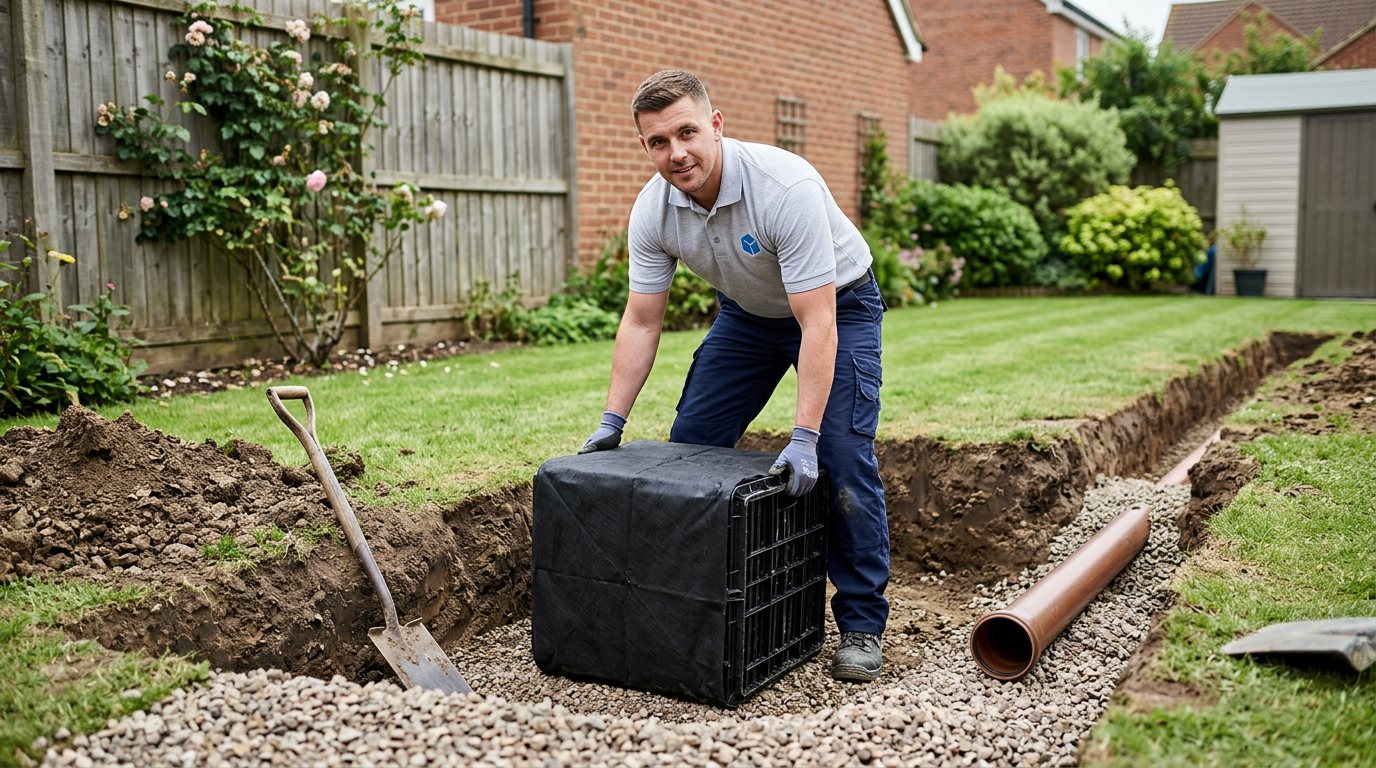
If the soil is heavy clay or the water table is high, a soakaway can be worse than useless — you would be digging a pit into ground that will not accept water. In those cases land drainage (a network of perforated pipes in gravel trenches, sometimes called a French drain) can move water to a better outfall, such as an existing drainage run or a lower point in the garden. Where there is genuinely no outfall, a pump-backed system is sometimes the honest answer.
If the water is arriving from a highway, a watercourse or neighbouring land, work on your plot may only reduce the symptoms. We will say so plainly, and where a gully or sewer on the highway is involved we help establish who is responsible, though we cannot guarantee adoption status — highway drainage generally sits with the council or water company.
What a soakaway will and will not do
No drainage work guarantees a dry garden. A well-designed soakaway or land drain will handle a design amount of rainfall and improve conditions dramatically, but extreme weather, saturated ground over successive wet months, and water arriving from outside your boundary can still leave wet patches. Ground conditions decide what is achievable, and we would rather set honest expectations than sell a solution that disappoints.
How the work is quoted
Assessment and small remedial work sit within our standard visit. Larger works — a new soakaway, a land drainage network, re-levelling — are quoted projects: we survey, price the full job including materials and waste removal, and nothing starts until you approve the quote. If the weather makes groundworks impractical, we say so and rebook rather than work wet ground into a mess.
Aftercare
Soakaways benefit from occasional checks: roof gutters still need cleaning so debris does not wash down, silt traps need emptying, and the area above a soakaway should not be paved over or driven on. Land drains can silt up over years; keeping an eye on how quickly the garden recovers after rain tells you whether the system is still working.
If your garden floods, book a visit and tell us how long the water stands, whether it happens every rainfall or only in extremes, and roughly where it collects. If you know where downpipes and existing drains discharge, that information saves time on the first visit.
How the price works
We charge a booking fee to hold your slot, then an hourly rate for the work itself. The fee changes with how soon you need us; the hourly rate changes with the slot you choose. You approve the price before we start, so there is no surprise on the invoice.
Booked 14+ days ahead
£25 booking fee
then £85 per hour of labour
Best value. Book the slot now, pay the smallest booking fee.
Booked within 48 hours
£100 booking fee
then £65 per hour of labour
For jobs that can wait a day or two but not a fortnight.
Same-day call-out
£220 booking fee
then £45 per hour of labour
Urgent problems: standing water, no heat, no power, leaks.
Book the slot
Choose the window that suits you and pay the booking fee. That holds your place in the diary.
We diagnose on site
The engineer confirms the cause and tells you what the job involves and how long it should take.
You approve, we work
Nothing goes ahead until you agree the price. Labour is then charged per hour at your slot rate.
A garden that turns to a pond every wet week is miserable, and it can damage lawns, beds and paths. Our visit is about understanding your ground first: where the water sits, how deep it is, and what route it might realistically take. Only then do we talk about solutions, because in drainage the ground decides the answer, not the other way round.
What our customers say about this job
5 out of 5 from 1 reviews
Fixed it properly, not just patched
Third time we have used Maintenance Men, and the same experience each time: agreed price, proper explanation, job done in one visit. The hourly rate is fair for the standard of work.
Job: Garden Flooding
Book Garden Flooding
Tell us what is happening and choose a slot. If you are not sure this is the right job, use the diagnosis panel — it narrows the problem down before you book.
- Booking fee confirmed up front
- Hourly labour, agreed before work starts
- Same-day slots for urgent problems



Questions people ask about garden flooding
Straight answers to the things customers ask most often before booking.
Could I deal with garden flooding myself?
Some things are reasonable DIY: aerating compacted lawn, keeping gutters clear, and digging a small trial hole to see how your soil drains. Digging soakaways or land drains properly is heavier work involving correct sizing, gradients and safe excavation, and getting it wrong can make flooding worse, so most people have it assessed and done professionally.
What do you actually check on a flooding assessment visit?
We walk the garden with you, look at where and how long water stands, dig trial holes to test drainage and soil, check levels and falls, and trace where roof and paved water currently discharges. If an existing soakaway or land drain is present we locate and inspect it. From that we explain which solution fits your ground, or tell you honestly if none will fully fix it.
Are there situations where you would tell me not to bother?
Yes, and we do. If water arrives from a highway, a watercourse or neighbouring higher ground, work within your garden may only soften the problem. If the soil is impermeable clay with a high water table and no usable outfall, a soakaway is the wrong tool. We would rather give you that answer up front than install something that cannot work.
Will a soakaway get rid of every puddle in my garden?
No, and we will not promise a permanently dry garden. A correctly sized soakaway or land drain handles a design amount of rainfall and will transform badly affected ground, but extreme storms, weeks of saturated weather and water arriving from beyond your boundary can still leave wet areas. Ground conditions set the limit of what any solution achieves.
How does pricing work for this kind of visit?
You pay a booking fee when you book, and labour is charged hourly at a rate that depends on how soon you need us to attend. The full cost of any work we recommend is quoted before we start, so you approve it first, and any parts or materials are quoted separately. Bigger projects like new soakaways or land drainage are quoted after a survey.
Need garden flooding sorted in Smethwick?
Book a slot in the diary and pay only the booking fee up front. We confirm the rest before we start.