
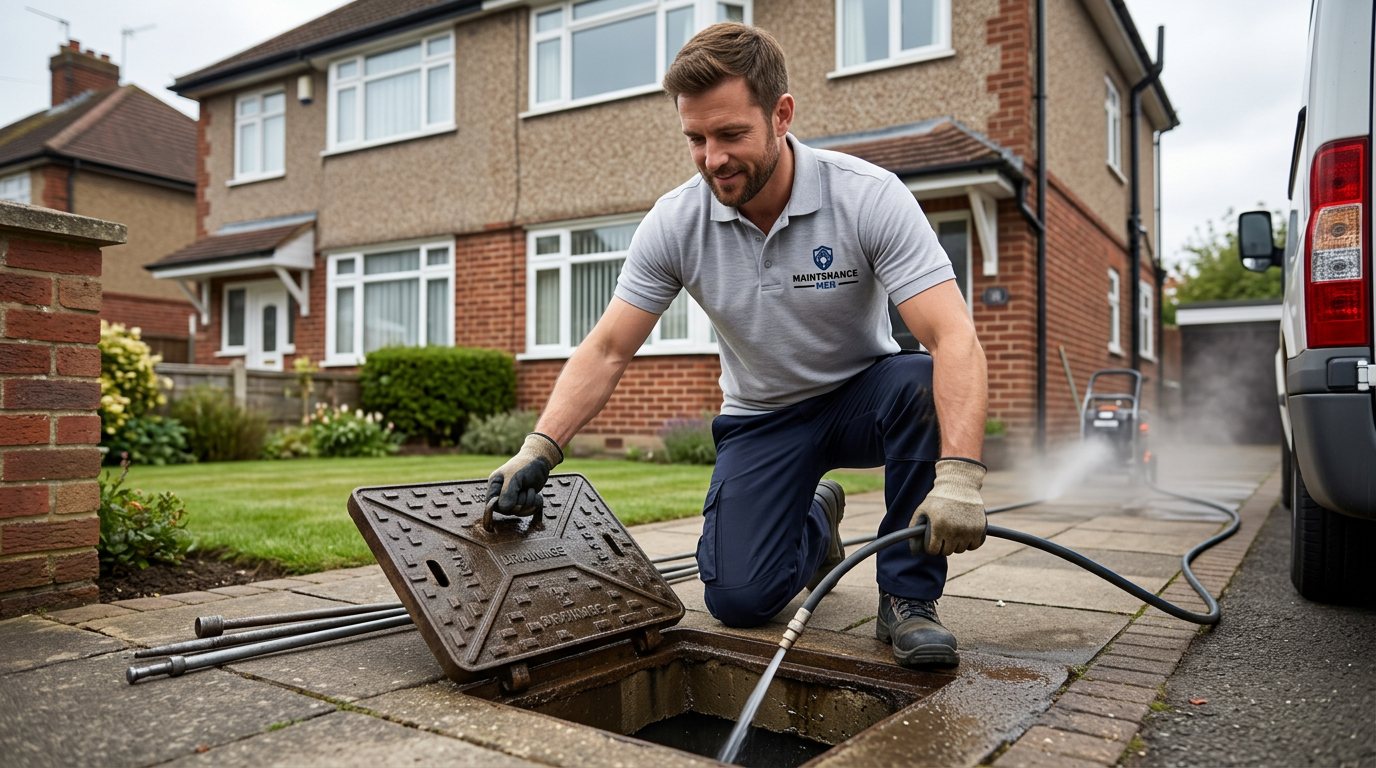
Drain System Flooded? We Get the Water Moving Again Safely in Smethwick
We assess how far the flooding has spread, clear the blocked run and check the chambers, so you know what has been done and what still needs attention.
Booking fee plus hourly labour — the price is confirmed before any work starts.
What this costs
| Booked 14+ days ahead | £25 booking fee £85 per hour |
|---|---|
| Booked within 48 hours | £100 booking fee £65 per hour |
| Same-day call-out | £220 booking fee £45 per hour |
The booking fee secures the visit. Labour is then charged by the hour, so you only pay for the time the job actually takes.
Booking fee £25–£220
£25 + £85/hr booked 14+ days ahead, £100 + £65/hr inside 48 hours, £220 + £45/hr same day. Agreed before we arrive.
Covered under Blocked Drains
Drainage › Blocked Drains — one of 14 documented jobs in this section.
Same-day flooded drain system
Urgent jobs can often be booked for today. Ask when you book and we will confirm the slot before you pay anything.
15 service areas
Birmingham, Coventry, Dorridge and 12 more across the West Midlands.
A flooded drain system is usually a combination of problems rather than one: a blockage somewhere down the run, a chamber or gully that cannot take the volume, and sometimes a surcharged public sewer adding water faster than any clearance can remove it. Sorting that out calmly is the whole job.
First hour: contain, protect, avoid
Keep people and pets out of the water. It is sewage, even when it looks like dirty rainwater, and the risk is real for anyone with a cut, a low immune system or a tendency to touch their face. Wear gloves and wellingtons if you must walk through it, and wash thoroughly afterwards.
Check where the water is heading. If it is running towards an air brick, a door threshold, a cellar or a conservatory, sandbags, a board and towels will hold a surprising amount back. Move anything electrical off the floor and keep extension leads and garden tools well away. If water has reached a socket, an outside light or an appliance, do not touch it and isolate the circuit at the consumer unit if that is safe to do.
Do not lift a chamber cover that is under water to see what is happening; the cover can shift, and the chamber may be deeper than it looks. Do not drive through flood water over a drain, and do not let children play near it.
Working out the scale of it
When we arrive we walk the run before touching anything. Which areas are wet, how deep, whether the water is still rising, and whether there is a smell that suggests foul rather than surface water. We lift the accessible chambers one at a time and note the levels, working downstream until we find the section where the water is held back or where it is arriving from elsewhere.
That walk often reveals that more than one thing is wrong: a gully choked with silt, a chamber with a broken channel, and a run with a partial collapse further along, all contributing to the same flood. It is better to know that at the start than to clear one thing and be called back a week later.
Clearing the system
Depending on what we find, clearing may involve rodding, high-pressure jetting, or emptying a chamber before either is possible. Where there is a lot of standing water, we may need to remove it before the run can be worked on, and that is part of what the visit covers. On a system with several branches we work from the furthest point back towards the outlet so that debris is pushed one way rather than shuffled around.
We test each section as we go. A run that clears and stays clear is a blockage. A run that clears and silts up again within the visit is a defect, and that changes the conversation.
When the water is not yours to clear
If the chamber is surcharged from a public sewer, or the flooding originates from a highway drain, the water company or the council needs to be involved. We will say so early rather than charging for clearance that cannot work while water is still arriving. We can help you describe the problem to them accurately, and we can return once their part is done.
On a shared private run serving several properties, the blockage may sit under a neighbour's land. Access and cost-sharing are conversations for the residents, and we will not start digging on someone else's property without agreement.
Clean-up and aftercare
Once the water is away, the affected area needs cleaning rather than just drying. Hard surfaces should be washed with hot water and detergent, and anything porous that has been soaked — cardboard, carpets, soft furnishings — is usually better removed than dried out. Ventilate thoroughly, and keep children and pets off the area until it is dry and clean.
Do not hose the contamination into the garden or the drain. Do not use caustic chemicals on a flooded system; they will not help and they make the drain hazardous to work on. If you have used any, tell us.
What happens next
A flood of this kind usually merits a follow-up: a camera survey to check for damage, roots or a dropped pipe, and a plan for anything that needs repairing. That survey and any repair are quoted separately, after we have seen the condition of the run. If the flooding was caused by a one-off blockage, the follow-up may be as simple as a maintenance routine.
To book, tell us the postcode, how deep the water is, whether it is still rising and whether it has entered the property. If it is near electrics or a vulnerable person is in the house, say so when you call so we can prioritise accordingly.
How the price works
We charge a booking fee to hold your slot, then an hourly rate for the work itself. The fee changes with how soon you need us; the hourly rate changes with the slot you choose. You approve the price before we start, so there is no surprise on the invoice.
Booked 14+ days ahead
£25 booking fee
then £85 per hour of labour
Best value. Book the slot now, pay the smallest booking fee.
Booked within 48 hours
£100 booking fee
then £65 per hour of labour
For jobs that can wait a day or two but not a fortnight.
Same-day call-out
£220 booking fee
then £45 per hour of labour
Urgent problems: standing water, no heat, no power, leaks.
Book the slot
Choose the window that suits you and pay the booking fee. That holds your place in the diary.
We diagnose on site
The engineer confirms the cause and tells you what the job involves and how long it should take.
You approve, we work
Nothing goes ahead until you agree the price. Labour is then charged per hour at your slot rate.
Standing waste water outside, or creeping in at a doorway, needs dealing with methodically rather than in a rush. The order matters: contain what you can, protect people and electrics, then find the blocked section. We work through it in that order and tell you what we find as we go.
What our customers say about our drainage service
4.2 out of 5 from 5 reviews
Fast, tidy and friendly
Turned up in the window they promised, walked me through the options (turns out the part had to be sourced locally), then cracked on. Everything was tested before they left. No mess, no drama, no surprise on the bill.
Job: Standing Water in Shower Tray
Happy overall
Good job overall. Turned up about 15 minutes after the window started, but rang to say so, and the work itself was tidy and well explained. Price was as quoted.
Job: Partial Soil Stack Blockage
Fixed it, but took longer than expected
The problem is fixed, which is the main thing, and the engineer clearly knew what they were doing. It took a fair bit longer than the estimate on the phone and I had to ask twice for a breakdown of the hours.
Job: Surface Water Drain Maintenance
Book Flooded Drain System
Tell us what is happening and choose a slot. If you are not sure this is the right job, use the diagnosis panel — it narrows the problem down before you book.
- Booking fee confirmed up front
- Hourly labour, agreed before work starts
- Same-day slots for urgent problems



Questions people ask about flooded drain system
Straight answers to the things customers ask most often before booking.
What can I safely do before you arrive?
Keep people and pets out of the water, move valuables and electrical items clear, and put towels or boards at doorways the water is heading for. Do not lift submerged chamber covers, do not touch wet electrics, and do not try to pump the water away yourself.
How do you approach a flooded system?
We walk the run first to see how far the flooding spreads and whether it is still rising, then check the chambers one at a time to find where the water is held back or arriving from elsewhere. Clearing follows, working from the furthest branch back towards the outlet.
Is flood water from a drain dangerous?
Yes. It carries sewage and bacteria. Wear gloves and boots if you must cross it, wash thoroughly afterwards, keep any cuts covered, and keep children and pets away entirely.
What if the flooding is coming from the public sewer?
Then the water company needs to attend, because clearing your own pipe will not help while the sewer is full. We will tell you if that looks like the case rather than charging you for work that cannot succeed.
What will this cost?
You pay a booking fee when you book, and labour is charged hourly at a rate that depends on how soon you need the visit. The full cost of the work is quoted before we start, parts quoted separately, so the full cost is approved before any tools come out. Any camera survey or repair afterwards is quoted separately, after we have seen the run.
Need flooded drain system sorted in Smethwick?
Book a slot in the diary and pay only the booking fee up front. We confirm the rest before we start.