
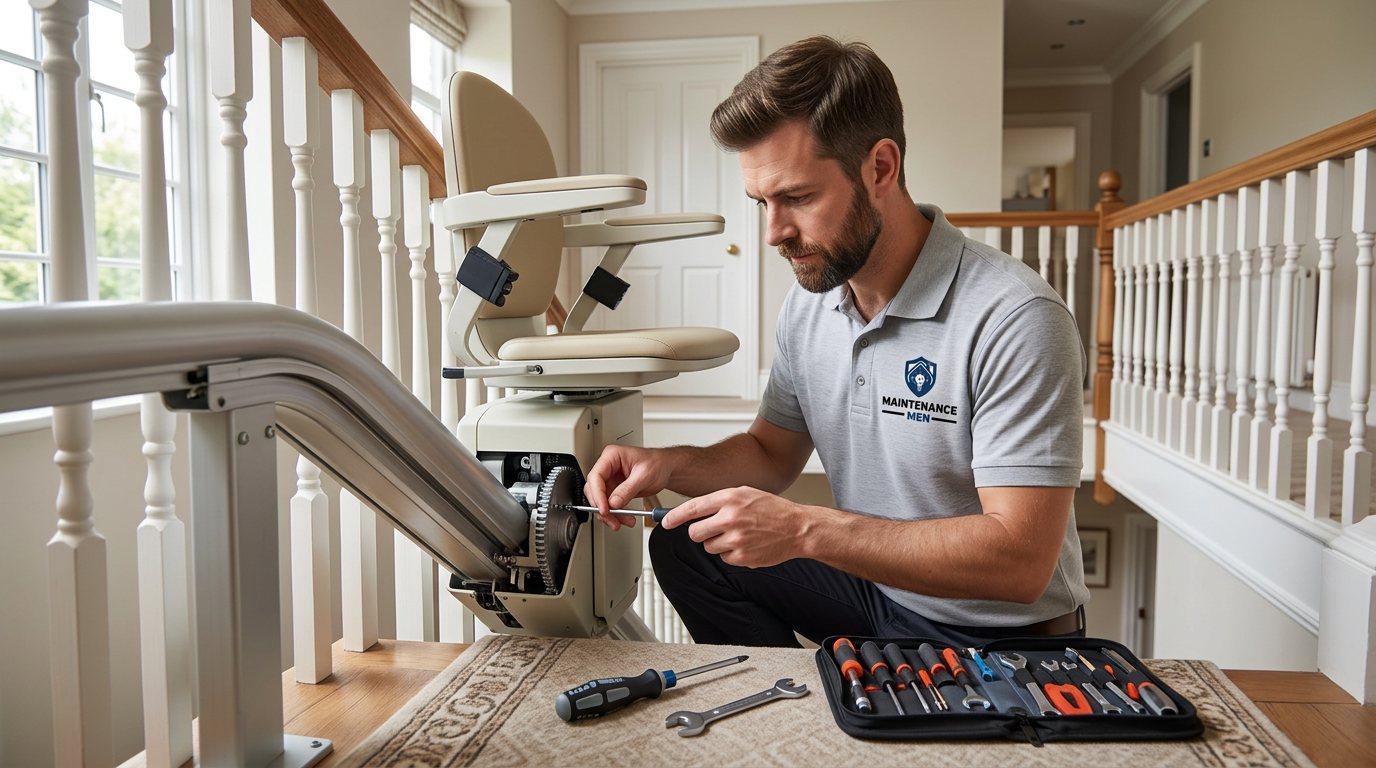
Stair Lift Making Loud Noises? We'll Trace the Sound to Its Source
We listen, test and inspect to find what the grinding, squealing or clunking means, then quote the fix before work starts.
Booking fee plus hourly labour — the price is confirmed before any work starts.
What this costs
| Booked 14+ days ahead | £25 booking fee £85 per hour |
|---|---|
| Booked within 48 hours | £100 booking fee £65 per hour |
| Same-day call-out | £220 booking fee £45 per hour |
The booking fee secures the visit. Labour is then charged by the hour, so you only pay for the time the job actually takes.
Booking fee £25–£220
£25 + £85/hr booked 14+ days ahead, £100 + £65/hr inside 48 hours, £220 + £45/hr same day. Agreed before we arrive.
Covered under Stair Lifts
Mobility & Accessibility › Stair Lifts — one of 24 documented jobs in this section.
Same-day stair lift making loud noise
Urgent jobs can often be booked for today. Ask when you book and we will confirm the slot before you pay anything.
15 service areas
Birmingham, Coventry, Dorridge and 12 more across the West Midlands.
A healthy stair lift is almost silent apart from a soft motor hum and the gentle chimes at each end. When that changes — a squeal on the climb, a grind under the carriage, a clunk at the top of the rail — the machine is reporting something. New noises on stair lifts deserve attention precisely because they arrive early: they are usually the first and cheapest-to-fix stage of a developing fault.
What the different noises usually mean
Squealing or whining that rises with the climb typically points to the drive: a dry or glazed drive belt, a bearing starting to roughen, or motor brushes nearing the end of their life. Grinding or rumbling suggests something mechanical working against something else: a flattened or seized roller, debris caught in the rail profile, or worn gears. Clunking at the ends of travel usually means limit switch or stop adjustment, or a carriage looser on the rail than it should be. Clicking or buzzing from the control panel points to electronics or a relay. Creaking from the seat itself is often just fixings or the swivel mechanism needing attention. And a noise that appeared after heavy weather or a house move deserves its own mention — rail fixings can loosen with vibration and temperature change.
Why noises matter
Noise is friction, and friction is wear. A drive belt that squeals for months eventually glazes and slips; a roller that rumbles eventually flats and judders; a loosened fixing eventually shifts the rail. Caught early, each is a minor visit; left alone, each becomes a component replacement — and in the worst case a mid-journey stop. If the noise is accompanied by jerking, slowing, a burning smell or tripped electrics, stop using the lift until it has been checked.
What you can do first
Note when the noise happens: climbing or descending, at one particular spot or all along, under load or unloaded, and whether it has changed over weeks. That pattern genuinely speeds diagnosis. Check visually that nothing rests on the rail and clear any obvious debris if the manual permits. Do not lubricate anything unless your manual explicitly directs it with a specified product — the wrong lubricant attracts grit and often makes the noise worse while hiding the cause.
How we find the source
We run the lift unloaded and loaded, climbing and descending, listening at each point where you have noted the noise, and use the sound's character to direct inspection: drive belt and bearings, rollers and rail profile, gears, limit stops, carriage fixings and seat mechanism in turn. We check the rail along its full length for debris and wear marks — the rail often shows exactly where the problem is. Where the cause is a worn or dry component we repair or replace it with manufacturer-approved parts; where it is an adjustment we make it and verify. Sometimes the honest answer is that the noise is a normal characteristic of the model — we will say so rather than sell you a repair. All costs are quoted in full for your approval before work starts, parts quoted separately.
Safety reminders
If the lift has ever stopped with someone aboard, keep them safe, comfortable and calm, call 999 if they are in pain or distress, and use a manual release only strictly per the manufacturer's instructions by a confident person — never climb under, push or force a suspended lift.
Aftercare
Keep the rail and stairway clean, mention every new noise early, and have the lift serviced annually — a service listens for exactly these sounds and catches them while they are still cheap to fix.
Booking
Get in touch with the make and model and describe the noise and when it happens. You pay a booking fee when you book, the hourly labour rate depends on how soon you need us, and the full cost is quoted and approved before work begins, with parts quoted separately.
How the price works
We charge a booking fee to hold your slot, then an hourly rate for the work itself. The fee changes with how soon you need us; the hourly rate changes with the slot you choose. You approve the price before we start, so there is no surprise on the invoice.
Booked 14+ days ahead
£25 booking fee
then £85 per hour of labour
Best value. Book the slot now, pay the smallest booking fee.
Booked within 48 hours
£100 booking fee
then £65 per hour of labour
For jobs that can wait a day or two but not a fortnight.
Same-day call-out
£220 booking fee
then £45 per hour of labour
Urgent problems: standing water, no heat, no power, leaks.
Book the slot
Choose the window that suits you and pay the booking fee. That holds your place in the diary.
We diagnose on site
The engineer confirms the cause and tells you what the job involves and how long it should take.
You approve, we work
Nothing goes ahead until you agree the price. Labour is then charged per hour at your slot rate.
Stair lifts are quiet machines, so a new noise is always information — sometimes harmless, sometimes the first sign of wear. Our visit identifies exactly what the sound is, what is causing it, and whether it needs a repair now or just monitoring.
What our customers say about our mobility & accessibility service
4.5 out of 5 from 8 reviews
Proper job, no upselling
Turned up in the window they promised, walked me through the options (turns out the old fitting was seized and needed careful removal), then cracked on. Everything was tested before they left. No mess, no drama, no surprise on the bill.
Job: Loose or Faulty Brakes
Fine in the end
The problem is fixed, which is the main thing, and the engineer clearly knew what they were doing. It took a fair bit longer than the estimate on the phone and I had to ask twice for a breakdown of the hours.
Job: Stair Lift Service
Would use again
What I appreciated was being told what was actually wrong before anyone started. Sorted in under 70 minutes and the invoice matched the quote to the penny.
Job: Control Panel Fault
Book Stair Lift Making Loud Noise
Tell us what is happening and choose a slot. If you are not sure this is the right job, use the diagnosis panel — it narrows the problem down before you book.
- Booking fee confirmed up front
- Hourly labour, agreed before work starts
- Same-day slots for urgent problems


Questions people ask about stair lift making loud noise
Straight answers to the things customers ask most often before booking.
Are all stair lift noises a fault?
No — some models have characteristics such as a firmer motor note on steep flights or a defined click at the ends of travel, and cold weather makes every lift a little noisier. But a noise that is new, changing or accompanied by jerking or slowing should be diagnosed rather than assumed normal. We will tell you honestly either way.
What do you check for a grinding noise?
Grinding usually points to the drive and running gear, so we inspect the rollers and bearings, the drive belt or gears, and the rail profile along its full length for debris or wear marks. The rail often shows exactly where the fault is, which speeds up both diagnosis and the quote.
Can I oil the noisy parts myself?
Only if your manufacturer's manual explicitly says so, using the product it specifies. Otherwise no — the wrong lubricant collects grit, can damage bearings and often masks the noise while the wear continues. Cleaning visible debris off the rail is always fine.
The lift has started grinding and sometimes jerks — should we stop using it?
Yes, stop until it has been checked — grinding with jerking suggests active mechanical wear that can lead to a mid-journey stop. If it stops with someone aboard, keep them safe and comfortable, call 999 if they are in distress, and use manual release only strictly per the manufacturer's instructions by a confident person.
What will the visit cost?
You pay a booking fee when you book, and labour is charged at an hourly rate that depends on how soon you need us. After diagnosis we quote the full cost of the work for your approval before starting, and any parts are quoted separately.
Need stair lift making loud noise sorted?
Book a slot in the diary and pay only the booking fee up front. We confirm the rest before we start.