
Gas Detector Fault? Sensible Steps First, Then a Proper Diagnosis in Leamington Spa
We diagnose why a gas leak detector is not working or faulting — battery, sensor lifespan, placement or the unit itself — and restore it with your approval.
Booking fee plus hourly labour — the price is confirmed before any work starts.
What this costs
| Booked 14+ days ahead | £25 booking fee £85 per hour |
|---|---|
| Booked within 48 hours | £100 booking fee £65 per hour |
| Same-day call-out | £220 booking fee £45 per hour |
The booking fee secures the visit. Labour is then charged by the hour, so you only pay for the time the job actually takes.
Booking fee £25–£220
£25 + £85/hr booked 14+ days ahead, £100 + £65/hr inside 48 hours, £220 + £45/hr same day. Agreed before we arrive.
Covered under Sensors & Detectors
Security & CCTV › Sensors & Detectors — one of 22 documented jobs in this section.
Same-day gas leak detector fault
Urgent jobs can often be booked for today. Ask when you book and we will confirm the slot before you pay anything.
15 service areas
Birmingham, Coventry, Dorridge and 12 more across the West Midlands.
Gas detectors are unusual among home sensors because their job is to notice something your nose might miss, quietly and early. When one fails its test, shows a fault indication or has simply stopped responding, the sensible reaction is not panic but also not delay. And there is one rule that comes before everything else on this page: if you can smell gas now, treat it as a leak regardless of what the detector says. Open windows and doors if it is safe to do so, keep everyone out of the area, do not operate light switches or electrical devices, and call the National Gas Emergency Service on 0800 111 999. The detector's own fault is a problem for afterwards.
Why gas detectors fail
Gas detectors have shorter working lives than most home sensors because their sensing element is consumable by design — many have a designed lifespan of five to ten years, printed on the unit, after which the manufacturer cannot vouch for its sensitivity. That is the most common and most overlooked cause of failure: a unit that is simply past its date. Beyond age, the usual suspects apply: a dead or dying battery producing chirps, fault codes or silence; dirt, moisture or cooking residues contaminating the sensor, especially in kitchens where these units often live; poor placement that both shortens the sensor's life and reduces its usefulness — too low, too high or tucked behind a cupboard, depending on the gas it is meant to detect; and internal sensor failure, which on most domestic units cannot be repaired and means replacement.
How we diagnose it
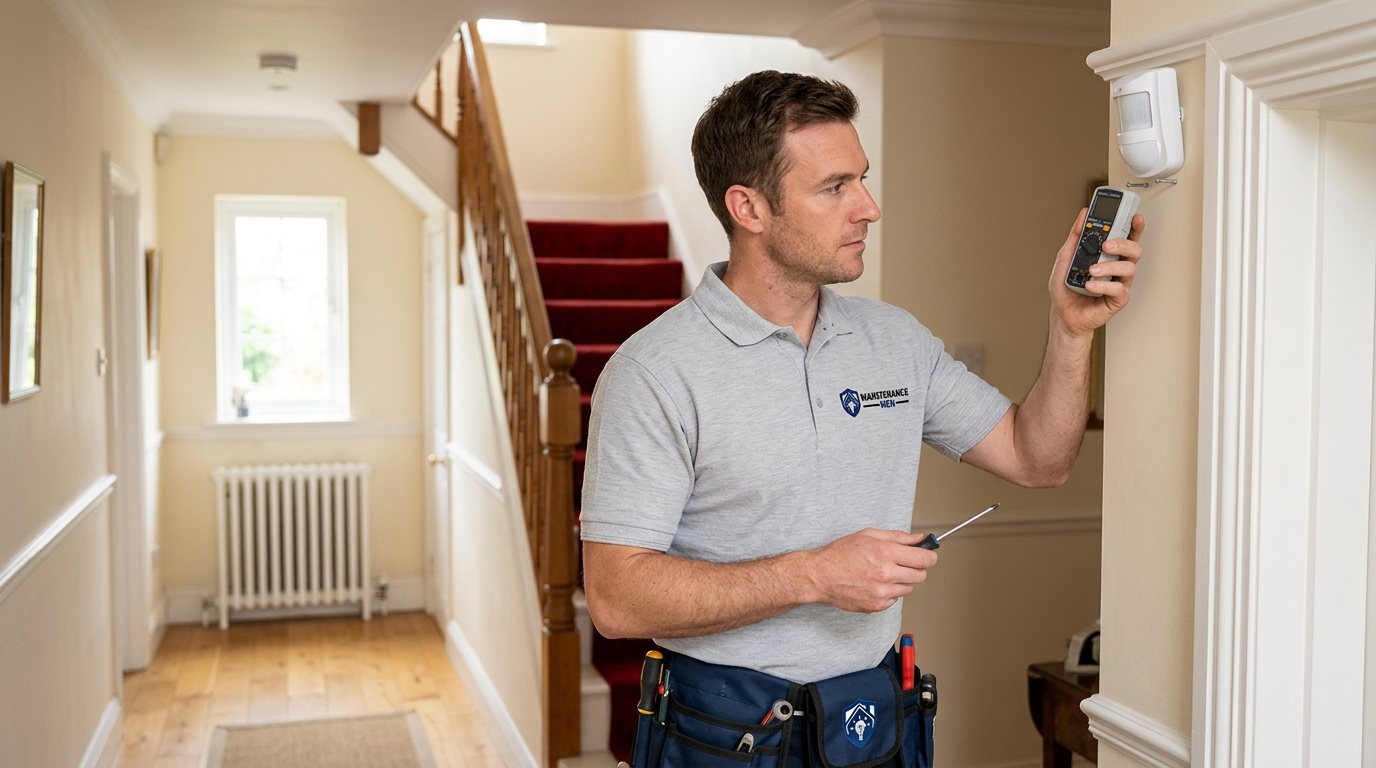
Once the immediate safety picture is clear, we work methodically. We identify the unit and check its date stamp against its designed lifespan, because a sensor past its date is not worth repairing at any price. We test its response where the manufacturer's test facilities allow, check the battery and the power supply, inspect for contamination and moisture, and assess its mounting position against the manufacturer's guidance for the gas type it covers. We will tell you plainly what we find, and if the honest answer is that the unit is past its life or failed internally, we will say that a replacement is the correct option rather than sell you a repair that cannot restore sensitivity.
Repairs, replacements and honest limits
Battery replacement and repositioning are the routine fixes. Contaminated sensors sometimes recover after cleaning, but we will be honest about whether the unit can be trusted afterwards. Replacement units are quoted separately and matched to what you need — the correct type for the gas it is detecting and the position it will occupy, fitted per the manufacturer's placement guidance. Placement matters as much as hardware: a detector sited where the manufacturer intends it gets both better sensitivity and a longer working life, and we will say so plainly when we find one badly placed. No domestic detector can be promised to detect every leak in every condition, which is why we also make sure you leave the visit knowing the emergency routine by heart. We also recommend that fuel-burning appliances in the home are serviced by the appropriately qualified engineers — a working detector and well-maintained appliances are complements, not alternatives.
Booking a detector diagnosis
Phone or use the website and tell us the make and age of the detector if you can see the date stamp, what the fault looks like, and where it is mounted. You pay a booking fee when you book, labour is charged hourly at a rate that depends on how soon you need the visit, and the full cost is quoted and approved before work starts, with any replacement unit quoted separately.
How the price works
We charge a booking fee to hold your slot, then an hourly rate for the work itself. The fee changes with how soon you need us; the hourly rate changes with the slot you choose. You approve the price before we start, so there is no surprise on the invoice.
Booked 14+ days ahead
£25 booking fee
then £85 per hour of labour
Best value. Book the slot now, pay the smallest booking fee.
Booked within 48 hours
£100 booking fee
then £65 per hour of labour
For jobs that can wait a day or two but not a fortnight.
Same-day call-out
£220 booking fee
then £45 per hour of labour
Urgent problems: standing water, no heat, no power, leaks.
Book the slot
Choose the window that suits you and pay the booking fee. That holds your place in the diary.
We diagnose on site
The engineer confirms the cause and tells you what the job involves and how long it should take.
You approve, we work
Nothing goes ahead until you agree the price. Labour is then charged per hour at your slot rate.
A gas detector that has failed its test, keeps faulting or has gone quiet leaves a safety gap you should not sit on. If you can smell gas right now, stop reading and act first — the emergency steps come before any diagnosis. Once the immediate risk is handled, we diagnose the detector properly.
What our customers say about this job
5 out of 5 from 1 reviews
Proper job, no upselling
I had put off sorting this for months because I expected a runaround. Quoted the booking fee plus hourly rate upfront, stuck to it, and actually found the underlying cause rather than just clearing the symptom. Worked neatly and hoovered up afterwards.
Job: Gas Leak Detector Fault
Book Gas Leak Detector Fault
Tell us what is happening and choose a slot. If you are not sure this is the right job, use the diagnosis panel — it narrows the problem down before you book.
- Booking fee confirmed up front
- Hourly labour, agreed before work starts
- Same-day slots for urgent problems






Questions people ask about gas leak detector fault
Straight answers to the things customers ask most often before booking.
Can I replace a gas detector battery myself?
Yes — where the manual describes battery replacement, fitting the correct cell is sensible DIY, followed by the unit's own test button. But if the unit is faulting with a fresh battery, is past its printed lifespan, or fails its test, book a diagnosis rather than trusting a detector you cannot verify.
What do you check during a gas detector diagnosis?
We check the unit's age against its printed lifespan, test the battery and power supply, inspect for contamination and moisture, assess whether its mounting position suits the gas type it covers, and test its response using the manufacturer's test facilities. Then we explain the findings and quote before any work.
What should I do if I can smell gas right now?
Treat it as a leak whatever the detector says: get people out of the area, open doors and windows if safe, do not operate switches or electrical devices, and call the National Gas Emergency Service on 0800 111 999. Do not wait for a fault diagnosis, and do not try to trace the leak yourself.
Do gas detectors need replacing after a few years?
Most do — the sensing element is consumable, and many domestic units carry a designed lifespan of five to ten years printed on the casing. A detector past its date may still chirp and pass a test button while having lost sensitivity. We will read the date stamp and give you an honest verdict.
How is a gas detector visit priced?
You pay a booking fee when you book, and labour is charged hourly at a rate that depends on how soon you need the visit. The full cost of the work is quoted and approved before we start, and any replacement detector or parts are quoted separately so you know exactly what you are approving.
Need gas leak detector fault sorted in Leamington Spa?
Book a slot in the diary and pay only the booking fee up front. We confirm the rest before we start.