
Standing Water on Your Pathway? We'll Find the Fall Fault and Fix It in Knowle
Water that sits on a pathway means falls, levels or drainage are wrong — we assess why it pools and level or drain the path so it sheds water properly.
Booking fee plus hourly labour — the price is confirmed before any work starts.
What this costs
| Booked 14+ days ahead | £25 booking fee £85 per hour |
|---|---|
| Booked within 48 hours | £100 booking fee £65 per hour |
| Same-day call-out | £220 booking fee £45 per hour |
The booking fee secures the visit. Labour is then charged by the hour, so you only pay for the time the job actually takes.
Booking fee £25–£220
£25 + £85/hr booked 14+ days ahead, £100 + £65/hr inside 48 hours, £220 + £45/hr same day. Agreed before we arrive.
Covered under Driveways & Pathways
Outdoor & Exterior › Driveways & Pathways — one of 22 documented jobs in this section.
Same-day standing water on pathway
Urgent jobs can often be booked for today. Ask when you book and we will confirm the slot before you pay anything.
15 service areas
Birmingham, Coventry, Dorridge and 12 more across the West Midlands.
A garden or front path should shed water in minutes. When puddles sit for hours after rain — or turn to sheet ice in winter — the path is telling you that its levels have gone wrong or its drainage has failed. This page explains the common reasons water stands on a pathway, how we diagnose them, and the repairs that genuinely solve the problem rather than moving the puddle somewhere else.
Why water stands on pathways
The most common cause is a dip: a section of path has settled — over soft ground, an old trench, or a poorly compacted base — and become the low point that collects everything. Next is missing or inadequate fall: paths laid flat, or even slightly back-sloped towards the house or lawn, hold water across their whole width rather than shedding it. A third cause is drainage that used to work but no longer does — a gully or channel that has silted, or an edge where water used to run off onto a permeable border that has since been paved or enclosed. And sometimes the cause is upstream: water arriving from a roof, a downpipe discharge or a neighbouring surface in volumes the path was never expected to handle.
How we assess it
We look at where the water sits and how long it stays, then measure the falls across and along the path with a level to find where the low points are and whether they were built in or have developed. We probe for soft spots under dips to see whether settlement is ongoing, check any gullies, channels or gravel borders that once took the water, and consider what feeds the path in heavy rain — because fixing the path while a downpipe empties onto it is only half a fix.
The repairs
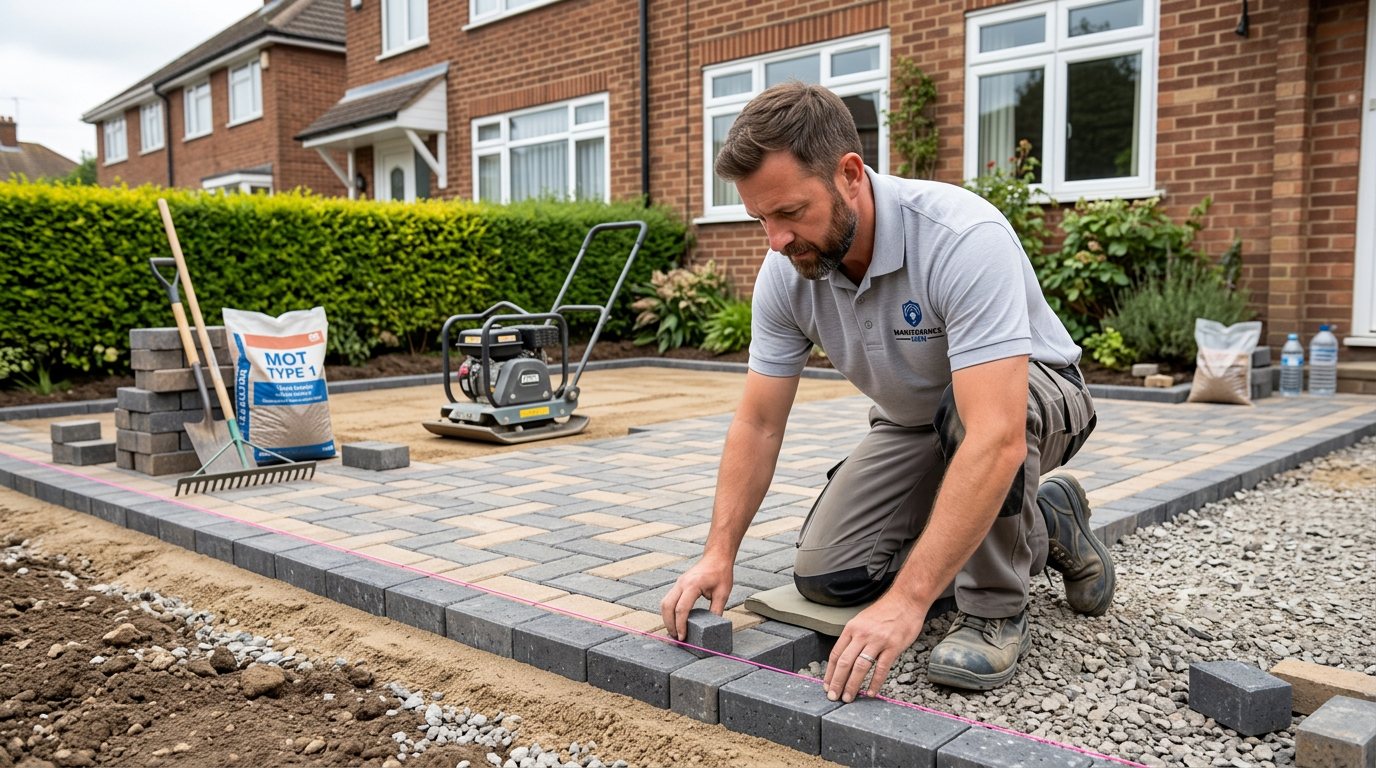
For a sunken dip, the fix depends on the surface: paving slabs can be lifted, the bed re-levelled and relaid; block pathways relay the affected units; and concrete or tarmac dips may need the section excavated and rebuilt with correct falls where the base has failed. Where the whole path lacks fall, we re-lay or re-profile it with a deliberate slope to a sensible discharge point — that is a bigger job and quoted after survey. Where a gully or channel is the problem, clearing or repairing it is often the whole answer. Where water arrives from elsewhere — a downpipe, a slope of ground, a neighbour's hardstanding — we will say so, because the fix belongs at the source, and matters of where water may lawfully be directed involve permissions that remain the customer's responsibility; we can help establish the boundaries but do not promise compliance status on anyone's behalf.
Why it matters
Standing water on a path is a daily nuisance and a winter hazard: freeze-thaw also works on the surface itself, opening cracks and lifting edges, so the puddle grows its own repairs year by year. Moss and algae love the same conditions, making the path slippery well before it freezes. Fixing the levels early is cheaper than rebuilding a path that has spent five winters underwater.
Limits
Ground moves and weather varies, and we do not guarantee a path will never hold a drop of water again — extreme rain leaves every outdoor surface wet. What we deliver is proper falls, sound bedding and drainage that carries ordinary rain away promptly, plus an honest account of what to expect in extremes and what to watch for as the ground settles.
Booking
You pay a booking fee when you book, and labour is charged hourly at a rate that depends on how soon you need the visit. The full cost of any levelling or drainage work is quoted and approved before we start, with materials quoted separately; re-laying or re-profiling a whole path is a larger project quoted after survey. Tell us where the puddles form, how long water sits, and whether it is worse after frost or heavy rain.
How the price works
We charge a booking fee to hold your slot, then an hourly rate for the work itself. The fee changes with how soon you need us; the hourly rate changes with the slot you choose. You approve the price before we start, so there is no surprise on the invoice.
Booked 14+ days ahead
£25 booking fee
then £85 per hour of labour
Best value. Book the slot now, pay the smallest booking fee.
Booked within 48 hours
£100 booking fee
then £65 per hour of labour
For jobs that can wait a day or two but not a fortnight.
Same-day call-out
£220 booking fee
then £45 per hour of labour
Urgent problems: standing water, no heat, no power, leaks.
Book the slot
Choose the window that suits you and pay the booking fee. That holds your place in the diary.
We diagnose on site
The engineer confirms the cause and tells you what the job involves and how long it should take.
You approve, we work
Nothing goes ahead until you agree the price. Labour is then charged per hour at your slot rate.
A pathway that holds water is unpleasant every single day and dangerous in frost, and the puddle is usually the symptom of a level or drainage fault underneath. Our visit finds the cause — dips, poor falls, blocked gullies or a sunken section — and sets out the levelling or drainage work that will move the water on.
What our customers say about our outdoor & exterior service
4.6 out of 5 from 10 reviews
Sorted the same day
Rang in the morning and they got to us in Wolverhampton by early afternoon. Very clear about what needed doing, what it would cost and what could wait. No pressure to add extras. Exactly the sort of tradesperson you want.
Job: Uneven Shed Base
Turned up when they said
Turned up in the window they promised, walked me through the options (turns out the previous installer had left the pipework awkward to get to), then cracked on. Everything was tested before they left. No mess, no drama, no surprise on the bill.
Job: Water-Damaged Patio
Good work, poor communication
Work itself was fine and tidy. Communication beforehand was patchy — I did not get the confirmation message and had to ring to check the slot. Would still use again.
Job: Sinking Driveway
Book Standing Water on Pathway
Tell us what is happening and choose a slot. If you are not sure this is the right job, use the diagnosis panel — it narrows the problem down before you book.
- Booking fee confirmed up front
- Hourly labour, agreed before work starts
- Same-day slots for urgent problems








Questions people ask about standing water on pathway
Straight answers to the things customers ask most often before booking.
Can I fix a puddling pathway myself?
Lifting and re-laying a couple of sunken slabs is a genuine DIY job if the bedding is the only problem — and we will say so if that is all yours needs. What DIY does not solve is a path that was laid without fall, ongoing settlement over soft ground, or a drainage question about where the water should go. If puddles span the path's width or return after a DIY re-level, have the falls assessed properly.
What do you check when a pathway holds water?
We measure the falls along and across the path, find the low points and whether they were built in or have settled, probe for soft spots beneath the dips, and check any gullies, channels or edges that should be taking the water away. We also look at what feeds the path in heavy rain, because the source matters as much as the surface.
Is standing water on a pathway dangerous?
Yes — it is a slip hazard when wet and becomes sheet ice in frost, on a surface people use every day without looking down. It also accelerates the path's own deterioration through freeze-thaw and algae growth. If the path is used by children or older family members, we would treat persistent pooling as a priority fix.
Can you guarantee the pathway will never puddle again?
No — extreme rain wets every outdoor surface, and ground settlement over time is always possible. What we do is build correct falls on sound, well-compacted bedding so ordinary rain drains promptly, and we will be clear with you about what to expect in a serious downpour and what signs of movement to watch for afterwards.
How much does it cost to fix a puddling pathway?
You pay a booking fee when you book, and labour is charged hourly at a rate that depends on how soon you need the visit. Levelling or drainage repairs are quoted and approved before we start, with materials quoted separately. Where the whole path needs re-laying with new falls, that is a bigger project and the price follows a survey, not a phone estimate.
Need standing water on pathway sorted in Knowle?
Book a slot in the diary and pay only the booking fee up front. We confirm the rest before we start.