
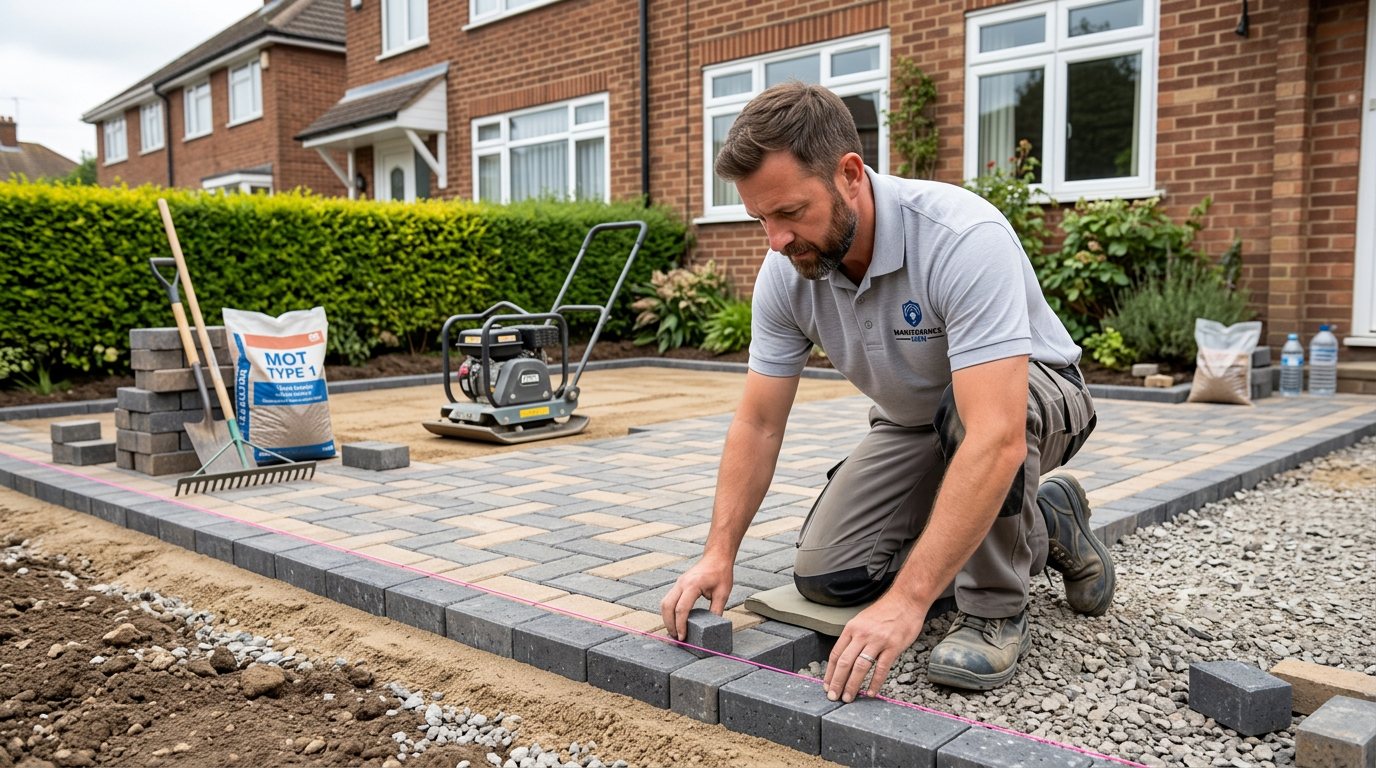
Loose Block Paving? We'll Re-Sand, Re-Level and Stop the Rocking in Knowle
Loose or rocking blocks usually mean lost jointing sand, poor edge restraint or bedding problems — we diagnose which and relay the paving properly.
Booking fee plus hourly labour — the price is confirmed before any work starts.
What this costs
| Booked 14+ days ahead | £25 booking fee £85 per hour |
|---|---|
| Booked within 48 hours | £100 booking fee £65 per hour |
| Same-day call-out | £220 booking fee £45 per hour |
The booking fee secures the visit. Labour is then charged by the hour, so you only pay for the time the job actually takes.
Booking fee £25–£220
£25 + £85/hr booked 14+ days ahead, £100 + £65/hr inside 48 hours, £220 + £45/hr same day. Agreed before we arrive.
Covered under Driveways & Pathways
Outdoor & Exterior › Driveways & Pathways — one of 22 documented jobs in this section.
Same-day loose block paving
Urgent jobs can often be booked for today. Ask when you book and we will confirm the slot before you pay anything.
15 service areas
Birmingham, Coventry, Dorridge and 12 more across the West Midlands.
Block paving earns its keep by being repairable: unlike a cracked concrete slab, individual blocks can be lifted, re-levelled and relaid. But loose blocks are also the system asking for attention, and ignoring them is how a small patch of wobble becomes a driveway-wide problem. This page explains why blocks loosen, how we diagnose the cause, and what a proper repair involves.
Why block paving comes loose
Most loose blocks trace back to one of four causes. Lost jointing sand is the most common — the kiln-dried sand brushed between the blocks is what locks them together and spreads wheel loads; wind, rain, jet washing and ants carry it away, and once it is gone the blocks start to move. Poor or failed edge restraints are the next: block paving is a flexible surface, and without a solid edge course held by concrete haunching or a firm kerb, the blocks at the boundary creep outwards and the loosening works inwards from there. Bedding problems — sand laid too thin, too thick or over an uncompacted base — show up as areas that sink and rock under wheel paths. And water is the multiplier: it washes bedding sand out through any gap and softens the ground below, so a poorly drained drive loses blocks far faster than a well-drained one.
How we diagnose it
We walk the drive and map where blocks rock, sink or have spread, then look for the cause of each pattern. Widespread fine movement usually means jointing sand loss; a loose band along the boundary points at edge restraints; dips in the wheel paths or around parked cars suggest bedding or subbase issues; and areas that worsen after heavy rain tell us water is washing through. We lift a block or two in the worst area — that is the beauty of the system — to see the condition of the bedding sand and base directly, and we check the falls to see where water goes.
The repair
The right repair depends on the diagnosis, and here is what each looks like. Re-sanding is quick: clean the joints and brush in fresh kiln-dried sand to lock the surface back together, ideally re-doing it after a season as it settles. Where edge restraints have failed, we rebuild them — a solid edge course set in concrete or a proper kerb — because re-laying blocks against a rotten edge simply restarts the creep. Where blocks have sunk or rocked badly, we lift them, remove the disturbed bedding, re-level and compact the base, lay fresh bedding sand and relay the blocks, then re-sand the joints. Where our probing shows the subbase itself has failed, we will say so: those sections need the base rebuilt, not just the blocks rearranged. And where the drive lacks fall and feeds water into the joints, we will discuss correcting the drainage, because no amount of re-sanding survives a drive that sheds water into its own bedding.
Honest limits
Block paving repairs last well when the cause is fixed, but we do not guarantee that sand will not need topping up again — it is a consumable, particularly on exposed drives and after jet washing — nor that an ageing drive with poor original compaction will stay perfectly level. What we do is fix the structural causes, relay properly, and tell you how to maintain the surface so the repair earns its keep. New paving and larger relays are quoted projects: the visit assessment tells us the scope, and the price follows a survey rather than a guess.
Between visits
Keep the joints topped up with kiln-dried sand — a brush-in every year or two is cheap insurance. If you jet wash the drive, re-sand immediately afterwards, because jetting strips the joints clean. Pull weeds when they are small; roots widen joints and hold water. And get rocking blocks looked at promptly — the movement spreads block by block and each year of traffic makes the underlying bedding worse.
Booking
You pay a booking fee when you book, and labour is charged hourly at a rate that depends on how soon you need the visit. The full cost of the repair is quoted and approved before we start, with materials such as sand, blocks and concrete for haunching quoted separately. When you book, tell us the approximate area affected, whether blocks rock only underfoot or under cars too, and whether it worsens after rain — that helps us bring the right materials.
How the price works
We charge a booking fee to hold your slot, then an hourly rate for the work itself. The fee changes with how soon you need us; the hourly rate changes with the slot you choose. You approve the price before we start, so there is no surprise on the invoice.
Booked 14+ days ahead
£25 booking fee
then £85 per hour of labour
Best value. Book the slot now, pay the smallest booking fee.
Booked within 48 hours
£100 booking fee
then £65 per hour of labour
For jobs that can wait a day or two but not a fortnight.
Same-day call-out
£220 booking fee
then £45 per hour of labour
Urgent problems: standing water, no heat, no power, leaks.
Book the slot
Choose the window that suits you and pay the booking fee. That holds your place in the diary.
We diagnose on site
The engineer confirms the cause and tells you what the job involves and how long it should take.
You approve, we work
Nothing goes ahead until you agree the price. Labour is then charged per hour at your slot rate.
Rocking blocks are annoying before they become expensive: every wobble pumps sand out, lets water in and spreads the looseness to its neighbours. Our visit finds out why the blocks have loosened — sand, edges, bedding or water — and puts right what is actually wrong, not just the blocks you have tripped over.
What our customers say about our outdoor & exterior service
4.6 out of 5 from 10 reviews
Sorted the same day
Rang in the morning and they got to us in Wolverhampton by early afternoon. Very clear about what needed doing, what it would cost and what could wait. No pressure to add extras. Exactly the sort of tradesperson you want.
Job: Uneven Shed Base
Turned up when they said
Turned up in the window they promised, walked me through the options (turns out the previous installer had left the pipework awkward to get to), then cracked on. Everything was tested before they left. No mess, no drama, no surprise on the bill.
Job: Water-Damaged Patio
Good work, poor communication
Work itself was fine and tidy. Communication beforehand was patchy — I did not get the confirmation message and had to ring to check the slot. Would still use again.
Job: Sinking Driveway
Book Loose Block Paving
Tell us what is happening and choose a slot. If you are not sure this is the right job, use the diagnosis panel — it narrows the problem down before you book.
- Booking fee confirmed up front
- Hourly labour, agreed before work starts
- Same-day slots for urgent problems






Questions people ask about loose block paving
Straight answers to the things customers ask most often before booking.
Can I re-sand block paving myself?
Yes — brushing kiln-dried jointing sand into clean, dry joints is a genuinely useful DIY job and we will tell you if that is all your drive needs. What DIY does not fix is failed edge restraints, sunken bedding or a soft base, and re-sanding over those treats a symptom. If blocks actually rock or have dipped, lift-and-relay work is usually needed, and it is worth having the cause assessed first.
What do you check on a loose block paving visit?
We map where blocks rock, sink or have spread, check the jointing sand and edge restraints, lift sample blocks to inspect the bedding and base beneath, and trace how water drains across and through the surface. Then we explain which of the common causes you have and what repair that points to.
Is loose block paving dangerous?
The rocking blocks themselves are a trip hazard, and on a drive the dips they create collect water that freezes in winter. Loose blocks also let water flood the bedding, which accelerates sinking across a wider area. We would not call it an emergency, but we would not leave it for years either — the repair grows with the neglect.
Why do my block paving joints keep emptying of sand?
Jointing sand is swept away by weather and traffic, ants carry it off, and jet washing strips it in minutes — so some topping up is normal maintenance rather than a fault. If joints empty unusually fast, though, water is usually washing through from beneath, which points at a drainage or bedding problem we should look at rather than endless re-sanding.
How much does block paving repair cost?
You pay a booking fee when you book, and labour is charged hourly at a rate that depends on how soon you need the visit. The full cost of the repair is quoted and approved before we start, with materials — sand, blocks, concrete — quoted separately. A full relay or re-build of the base is a bigger project, and we quote that after a survey of the area.
Need loose block paving sorted in Knowle?
Book a slot in the diary and pay only the booking fee up front. We confirm the rest before we start.