
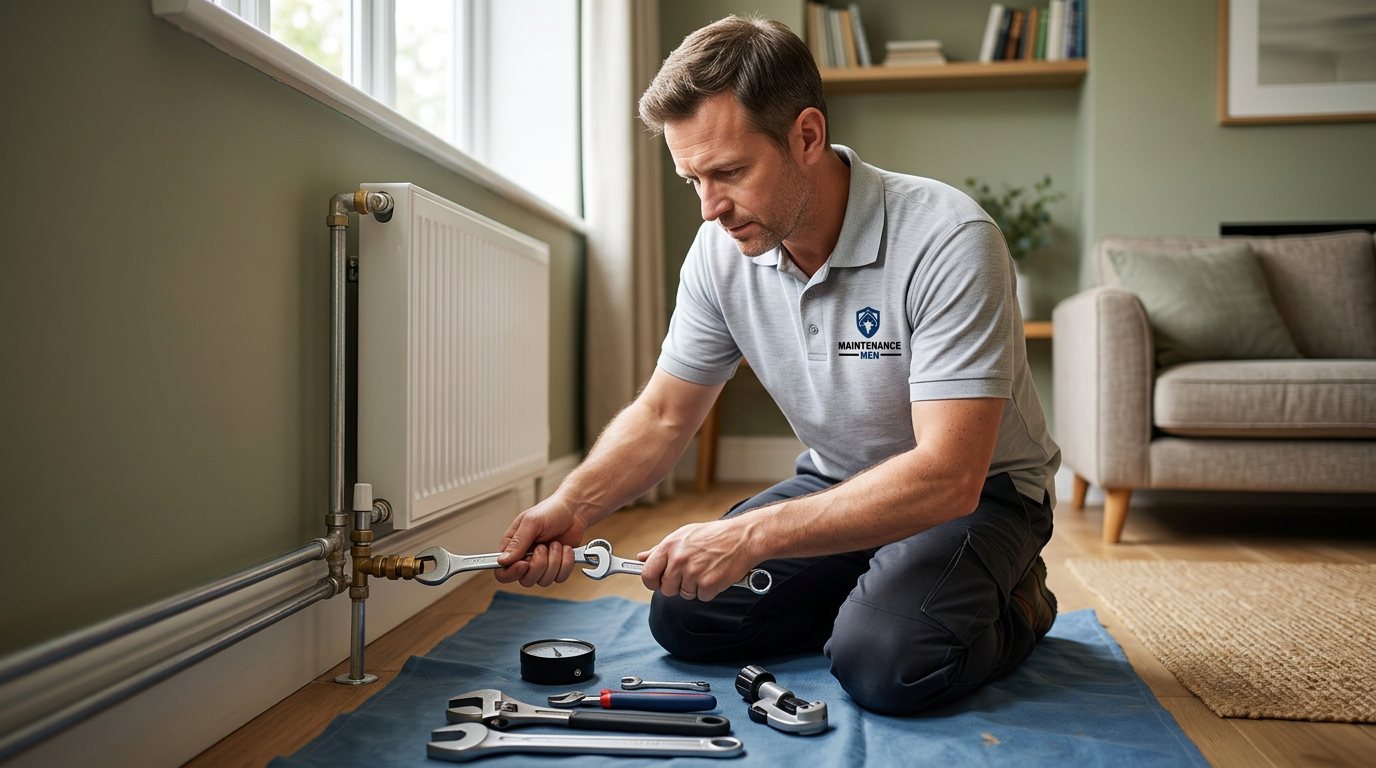
Radiator Pipe Leak at the Valve, Repaired and Tested Under Pressure in Knowle
We trace the weep to the valve tail, compression nut or pipe run, isolate the circuit and renew the failed part rather than just tightening it.
Booking fee plus hourly labour — the price is confirmed before any work starts.
What this costs
| Booked 14+ days ahead | £25 booking fee £85 per hour |
|---|---|
| Booked within 48 hours | £100 booking fee £65 per hour |
| Same-day call-out | £220 booking fee £45 per hour |
The booking fee secures the visit. Labour is then charged by the hour, so you only pay for the time the job actually takes.
Booking fee £25–£220
£25 + £85/hr booked 14+ days ahead, £100 + £65/hr inside 48 hours, £220 + £45/hr same day. Agreed before we arrive.
Covered under Pipework & Pressure
Heating & Radiators › Pipework & Pressure — one of 19 documented jobs in this section.
Same-day radiator pipe leak
Urgent jobs can often be booked for today. Ask when you book and we will confirm the slot before you pay anything.
15 service areas
Birmingham, Coventry, Dorridge and 12 more across the West Midlands.
The Joints Most Likely to Weep
A radiator connects to the heating circuit through two valves, each with a tail screwed into the radiator and a compression nut joining it to the pipe. There are four potential leak points per radiator, plus the pipe run itself. The gland on the valve spindle, where the knob turns, is another common seep.
Typical causes include an olive that was crushed unevenly when the joint was made, a nut that has loosened as the pipe expanded and contracted over years, a valve tail with damaged threads or missing sealant, and corrosion inside the radiator tapping. A radiator that has been removed for decorating and refitted is a frequent source, because the old olive is often reused.
What You Will See
Look for white or green crusting around a nut, a dark damp patch on the carpet or floor, or water that appears only when the heating runs. A weep that dries between cycles can go unnoticed for months, leaving a stain and a corroded fitting behind.
Immediate Steps
If water is running, place a towel or shallow container underneath and turn both radiator valves off: the lockshield at one end and the control valve at the other, turning clockwise. That isolates the radiator but not the pipework feeding it, so if the leak continues, turn the water off at the stopcock. Switch the boiler off if the system pressure has dropped sharply. Do not use a naked flame near a valve, and do not attempt to undo a nut on a hot, pressurised system.
How We Diagnose It
We ask when the damp appears, whether it is worse with the heating on, and whether the radiator has been removed or worked on recently. On site we dry the area and watch the joint while the system runs, because a slow weep is easier to see on clean metal than on a wet floor. We check the valve tails, nuts, spindle glands and the visible pipe for pinholes, and feel along the pipe for soft spots or staining. If the leak seems to come from under the floor, we discuss isolation tests rather than guessing.
Repair Options
A weeping compression nut can sometimes be remade with a fresh olive and a new nut, which is the durable repair. Tightening an old joint may stop a drip briefly, but an over-tightened nut can split the olive and make matters worse. A failed valve is replaced, either the whole valve or the tail if the body is sound. A pinhole in copper is cut out and a short section spliced in by solder or press fitting. On microbore, we may need to replace a longer run back to a manifold if the pipe is brittle.
Draining down is usually needed for valve work. That means the system is refilled afterwards, air is bled from radiators, and pressure is set to the maker's cold figure. We test every joint we have touched under pressure before leaving.
Parts, Access and Honest Limits
Parts are quoted separately: valves, tails, olives, fittings and pipe are all priced once identified, and we confirm sizes before ordering. Access is the variable we cannot wish away. If a valve sits behind a boxing or the pipe runs under a solid floor, we will explain what needs opening before work begins. We do not promise to make good decoration or flooring unless that is separately agreed.
We also cannot promise that a radiator will not need replacing. If the tapping is corroded through, a new valve will not seal into it, and a new radiator becomes the sensible repair. We will show you why if that is the case.
Gas and Safety Boundary
Maintenance Men never carries out gas work and is not Gas Safe registered. Everything described here is water-side pipework, valves and radiators. If a fault involves a gas appliance connection, a gas pipe or a gas-side boiler component, we stop and recommend a Gas Safe registered engineer. If you smell gas, do not operate switches or flames, open windows if safe, leave the property and call 0800 111 999.
Preventing the Next Leak
Inhibitor keeps the water from corroding radiators and fittings from the inside, and a magnetic filter captures the debris that settles in valve bodies. When we repair a joint we will tell you if the system water looks dirty, because that is a warning that other fittings may follow. Checking under radiators once a year, particularly after any work, catches a weep while it is still a stain rather than a soaked floor.
Book a Radiator Pipe Repair
Tell us which radiator, what you can see, whether the heating was recently worked on, and your boiler make and model. We work across the West Midlands; same-day slots are sometimes possible but never promised. We take the booking fee up front, labour is billed hourly at a rate set by how soon you need the visit, and the full cost is quoted and approved before work begins.
How the price works
We charge a booking fee to hold your slot, then an hourly rate for the work itself. The fee changes with how soon you need us; the hourly rate changes with the slot you choose. You approve the price before we start, so there is no surprise on the invoice.
Booked 14+ days ahead
£25 booking fee
then £85 per hour of labour
Best value. Book the slot now, pay the smallest booking fee.
Booked within 48 hours
£100 booking fee
then £65 per hour of labour
For jobs that can wait a day or two but not a fortnight.
Same-day call-out
£220 booking fee
then £45 per hour of labour
Urgent problems: standing water, no heat, no power, leaks.
Book the slot
Choose the window that suits you and pay the booking fee. That holds your place in the diary.
We diagnose on site
The engineer confirms the cause and tells you what the job involves and how long it should take.
You approve, we work
Nothing goes ahead until you agree the price. Labour is then charged per hour at your slot rate.
A damp patch under a radiator or a crust of green deposit on a valve nut usually means one thing: the joint is weeping. Sometimes a quarter turn on a nut will stop it, but often the olive or the valve tail has failed and tightening only postpones the problem. We will identify the exact joint at fault, repair it with the right part, and check the rest of the radiator connections while we are there.
What our customers say about this job
5 out of 5 from 1 reviews
Clear price before they started
What I appreciated was being told what was actually wrong before anyone started. Sorted in under 56 minutes and the invoice matched the quote to the penny.
Job: Radiator Pipe Leak
Book Radiator Pipe Leak
Tell us what is happening and choose a slot. If you are not sure this is the right job, use the diagnosis panel — it narrows the problem down before you book.
- Booking fee confirmed up front
- Hourly labour, agreed before work starts
- Same-day slots for urgent problems



Questions people ask about radiator pipe leak
Straight answers to the things customers ask most often before booking.
Can I just tighten the nut myself?
A gentle quarter turn on a compression nut is a reasonable first try if the system is cold, but do not force it. Over-tightening can split the olive and turn a weep into a leak. If it drips again after tightening, the joint needs remaking.
What is checked during the repair visit?
We locate the exact joint weeping, check the other valve and tail on that radiator, inspect visible pipe for pinholes and corrosion, then remake or replace the failed part and test it under pressure. Radiators are bled and pressure reset before we leave.
Will the radiator need draining?
Usually the radiator and its valves do, which means a drain-down and refill. That is why we bleed the radiators afterwards and set the cold pressure to the manufacturer's figure. The visit time reflects this.
Can you repair a leak on a gas pipe near the radiator?
No. Gas pipework is Gas Safe territory and Maintenance Men does not carry out gas work. We will say so plainly and recommend a registered engineer. A gas smell is an emergency: call 0800 111 999 from outside the property.
How much will the repair cost?
The booking fee is paid when you book and the hourly labour rate depends on how soon you need the visit. You approve the full cost before work starts. Valves, tails, olives and pipe are identified and quoted separately.
Need radiator pipe leak sorted in Knowle?
Book a slot in the diary and pay only the booking fee up front. We confirm the rest before we start.