
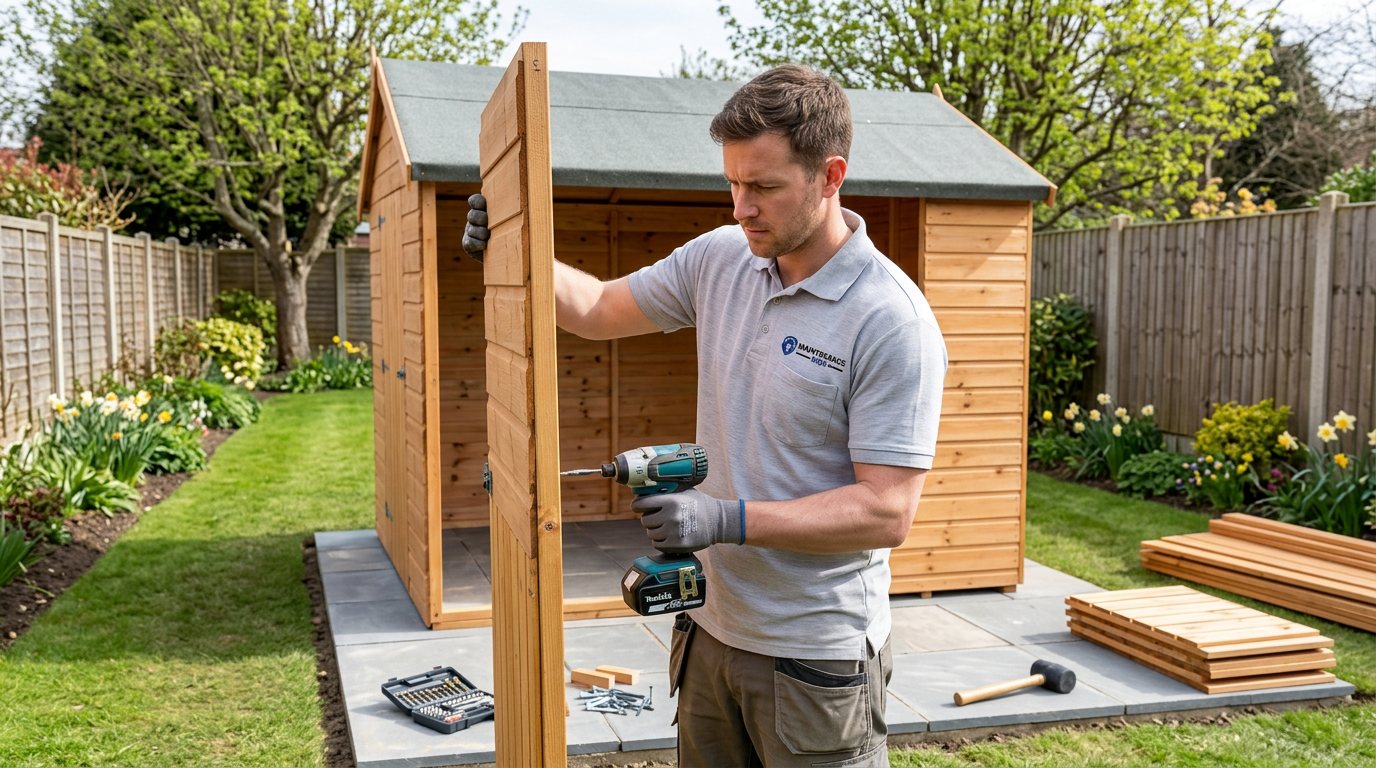
Leaning Shed? We'll Find Out Why It's Moving and Make It Stand True in Kenilworth
We assess whether the lean comes from the base, frame or ground, then quote the bracing or refoundation work that will hold.
Booking fee plus hourly labour — the price is confirmed before any work starts.
What this costs
| Booked 14+ days ahead | £25 booking fee £85 per hour |
|---|---|
| Booked within 48 hours | £100 booking fee £65 per hour |
| Same-day call-out | £220 booking fee £45 per hour |
The booking fee secures the visit. Labour is then charged by the hour, so you only pay for the time the job actually takes.
Booking fee £25–£220
£25 + £85/hr booked 14+ days ahead, £100 + £65/hr inside 48 hours, £220 + £45/hr same day. Agreed before we arrive.
Covered under Sheds
Outdoor & Exterior › Sheds — one of 21 documented jobs in this section.
Same-day leaning shed structure
Urgent jobs can often be booked for today. Ask when you book and we will confirm the slot before you pay anything.
15 service areas
Birmingham, Coventry, Dorridge and 12 more across the West Midlands.
Sheds lean for a reason, and the reason is almost always movement: the base has settled unevenly, the ground has shifted, or the frame has lost the bracing that kept it square. Cosmetic straightening of a leaning shed without addressing the cause is a temporary smile on a growing problem — which is why our assessment starts at the ground and works upward.
Why sheds lean
The most common cause is a base that has sunk or heaved unevenly — a slab or timber base laid on soft or poorly prepared ground, or on ground that freezes and thaws, moves more at one corner than the rest. Water is a big driver: standing water or a downpipe discharging beside the shed softens the ground under one side. Frame factors include rotted corner posts, failed bracing, fixings that have worked loose, and panels that have let the structure rack out of square. Heavy snow loading, wind and a door that's been propped open in a gale all contribute. On sloping sites, gradual creep downhill is common where the base was never properly restrained.
What we assess
We check how far the structure is out of plumb and in which direction, whether walls are racked or still square to each other, and the condition of corner posts, rails and bracing. Then we go to the ground: the base construction, its level and condition, soil and drainage around it, and any obvious movement such as gaps opening between base and frame. The assessment tells us whether the lean is stable or progressing, whether the frame can be pushed back square or has distorted beyond that, and whether the base can be corrected or needs rebuilding. Older sheds with unknown panel materials get care — we don't disturb anything that could contain asbestos and recommend testing instead.
What can be done
If the frame is sound, bracing and pushing it back to square is often practical, followed by fixing whatever let it move in the first place. Where the base has settled, correcting it — re-levelling, packing, extending or rebuilding the affected part — is the durable answer, and DIY shed bases are frequently the root cause. Rotted posts and failed bracing are replaced as part of the same job. If the lean is severe and long-standing, the frame may have distorted beyond economic repair, and we'll say so honestly rather than quote work that won't hold. Where a shed sits on ground we can't stabilise — a persistently wet spot, for instance — relocation or rebuilding may be the better spend. Everything is quoted with full approval before work starts, and any parts or materials are quoted separately.
Safety, weather and limits
A badly leaning shed is a structure under stress: avoid storing heavy items on the leaning side, don't lean ladders against it, and take care with doors that have started to bind. Groundwork needs dry conditions, and we schedule around the forecast. We can't promise a perfectly upright shed before we've assessed it, and we don't guarantee against future ground movement — but a repair aimed at the cause gives the structure its best chance of standing true for years.
Booking your visit
Call or book through the website and tell us the shed's size, age and base type, how long the lean has been developing, whether it's getting worse and what the ground is like around it. You'll pay a booking fee when you book, labour is charged hourly at a rate that depends on how soon you need the visit, and the full cost is quoted and approved before work starts, with any parts quoted separately.
How the price works
We charge a booking fee to hold your slot, then an hourly rate for the work itself. The fee changes with how soon you need us; the hourly rate changes with the slot you choose. You approve the price before we start, so there is no surprise on the invoice.
Booked 14+ days ahead
£25 booking fee
then £85 per hour of labour
Best value. Book the slot now, pay the smallest booking fee.
Booked within 48 hours
£100 booking fee
then £65 per hour of labour
For jobs that can wait a day or two but not a fortnight.
Same-day call-out
£220 booking fee
then £45 per hour of labour
Urgent problems: standing water, no heat, no power, leaks.
Book the slot
Choose the window that suits you and pay the booking fee. That holds your place in the diary.
We diagnose on site
The engineer confirms the cause and tells you what the job involves and how long it should take.
You approve, we work
Nothing goes ahead until you agree the price. Labour is then charged per hour at your slot rate.
A shed that's developed a lean is telling you something is moving underneath it — and the angle will usually get worse, not better, until the cause is dealt with. Our visit establishes whether the problem is the base, the ground or the frame, explains what can realistically be done, and quotes the work before anything is disturbed.
What our customers say about our outdoor & exterior service
4.6 out of 5 from 10 reviews
Sorted the same day
Rang in the morning and they got to us in Wolverhampton by early afternoon. Very clear about what needed doing, what it would cost and what could wait. No pressure to add extras. Exactly the sort of tradesperson you want.
Job: Uneven Shed Base
Turned up when they said
Turned up in the window they promised, walked me through the options (turns out the previous installer had left the pipework awkward to get to), then cracked on. Everything was tested before they left. No mess, no drama, no surprise on the bill.
Job: Water-Damaged Patio
Good work, poor communication
Work itself was fine and tidy. Communication beforehand was patchy — I did not get the confirmation message and had to ring to check the slot. Would still use again.
Job: Sinking Driveway
Book Leaning Shed Structure
Tell us what is happening and choose a slot. If you are not sure this is the right job, use the diagnosis panel — it narrows the problem down before you book.
- Booking fee confirmed up front
- Hourly labour, agreed before work starts
- Same-day slots for urgent problems








Questions people ask about leaning shed structure
Straight answers to the things customers ask most often before booking.
Can I straighten a leaning shed myself?
Lightly bracing and checking fixings is one thing, but pulling a shed back square involves real forces and can crack panels or injure someone if it slips. More importantly, straightening without fixing the sinking base or rotted post underneath means the lean returns within a season. An assessment first tells you whether it's a DIY-scale problem at all.
What causes a shed to lean?
Usually the base or ground moving unevenly — settlement, frost heave or water softening the soil — sometimes combined with rotted posts or failed bracing in the frame. We check the structure from the ground up so the repair addresses the driver, not just the symptom.
Is a leaning shed dangerous?
It can be, especially if the lean is worsening or the frame has racked. Avoid loading the leaning side, don't lean anything against the walls, and be careful with binding doors. If the shed looks close to shifting further, keep people clear and get it assessed promptly.
Will you need to dig around the base?
Often, yes — correcting a settled base means working at ground level, and we locate underground services carefully before any digging, using detectors where appropriate. No scan can guarantee what's below, so we'd also ask you to check any utility plans you have before the visit.
How much will it cost to fix?
You pay a booking fee when you book, and labour is charged hourly at a rate that depends on how soon you need us. The full cost is quoted and approved before work starts, with any parts quoted separately — and if the honest answer is replacement rather than repair, we'll say so at the quote stage.
Need leaning shed structure sorted in Kenilworth?
Book a slot in the diary and pay only the booking fee up front. We confirm the rest before we start.