
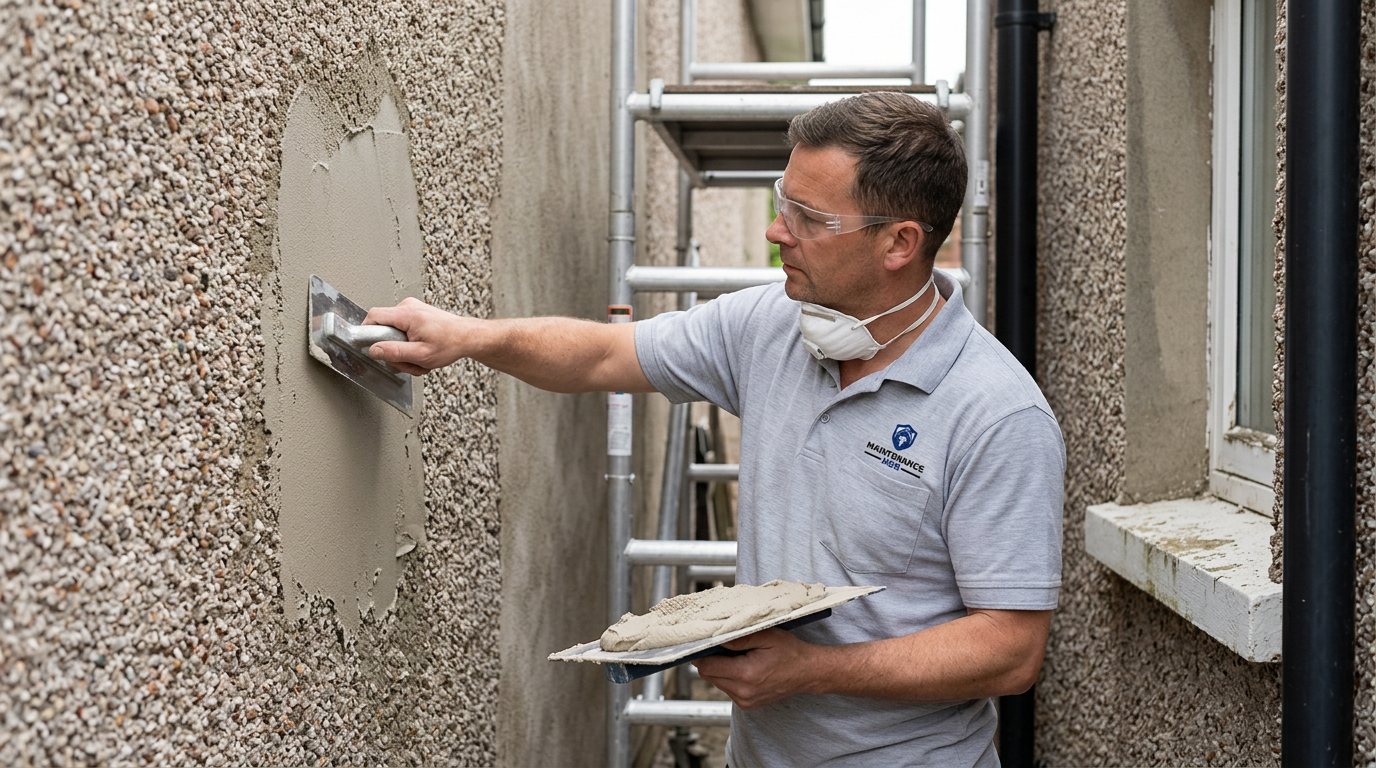
Rising Damp on Your Walls? We Trace It and Stop the Damage in Kenilworth
We identify whether moisture is climbing from the ground, correct what's letting it in, and repair the wall surfaces it has damaged.
Booking fee plus hourly labour — the price is confirmed before any work starts.
What this costs
| Booked 14+ days ahead | £25 booking fee £85 per hour |
|---|---|
| Booked within 48 hours | £100 booking fee £65 per hour |
| Same-day call-out | £220 booking fee £45 per hour |
The booking fee secures the visit. Labour is then charged by the hour, so you only pay for the time the job actually takes.
Booking fee £25–£220
£25 + £85/hr booked 14+ days ahead, £100 + £65/hr inside 48 hours, £220 + £45/hr same day. Agreed before we arrive.
Covered under Walls & Rendering
Outdoor & Exterior › Walls & Rendering — one of 20 documented jobs in this section.
Same-day rising damp on exterior walls
Urgent jobs can often be booked for today. Ask when you book and we will confirm the slot before you pay anything.
15 service areas
Birmingham, Coventry, Dorridge and 12 more across the West Midlands.
Rising damp is one of the most misdiagnosed problems in housing, and one of the most expensive to get wrong. Moisture climbing up from the ground through a wall stains it, breaks down plaster and render, and leaves salt deposits that keep ruining decoration until the route in is closed. Before anything is repaired, it has to be confirmed that rising damp is genuinely what you are looking at. Here is how we approach it.
What rising damp actually is
Ground moisture climbs through porous building materials by capillary action, the same way a sponge draws up water. Every building should have a barrier against this — the damp-proof course (DPC), a layer of impervious material built into the wall near the ground. When that barrier is missing, broken, or bridged by something outside, ground moisture climbs until it evaporates, typically leaving a damp band up to about a metre high with a sharp upper edge.
The clues are distinctive: tide marks with white salty deposits, dampness worse at the base and drying upward, plaster crumbling or blowing off low on the wall, and skirting timbers rotting. But other problems mimic it. Condensation, leaking pipes, and penetrating damp from a blocked gutter above can all be mistaken for rising damp — and each needs a completely different fix.
The bridging problem we see most
In the West Midlands housing stock, the most common reason a sound damp course starts failing is bridging. Soil piled against the wall, new paths, patios or driveways laid over the DPC, render carried down below the barrier, or decking and flower beds abutting the wall all give ground moisture a route over the top of the barrier. That is why our assessment always starts outside: ground levels, drainage, and everything touching the wall's base.
How we assess and what we do
We inspect outside and inside together. Outside we check ground levels against the damp course, how water drains away, and the condition of render and pointing at the base. Inside we confirm the damp band's pattern, check with a moisture meter, and rule out condensation and plumbing leaks as alternative explanations. We are careful to tell you honestly what we find — sometimes the answer is a levelled path or a soil strip rather than a chemical intervention.
Where bridging is the cause, correcting it — lowering soil, cutting back inappropriate paving or render, improving drainage — is often the bulk of the fix. Damaged plaster and render are then cut back, dried, and reinstated with salt-resistant materials so the decoration lasts. Where a damp course has genuinely failed and the diagnosis confirms it, we refer to a damp-proofing specialist, because injected courses and guarantees in that field belong with a firm that does it every day. We would rather hand you to the right specialist than sell you the wrong fix.
Honest expectations
Damp walls take time to dry even after the cause is fixed, so improvements appear gradually rather than overnight. We cannot guarantee a wall will never dampen again — the answer depends on drainage, ground levels and maintenance that continue after we leave. And where the diagnosis needs specialist equipment or a guaranteed injected system, we say so plainly.
Aftercare
Keep soil, mulch and decking below the damp course level. Keep gullies and drainage clear so water doesn't pool at the base. Watch the repaired areas through a winter and report anything that reappears — patterns over time are diagnostic gold.
Booking
Book via maintenance-men.com or by phone. You pay a booking fee when you book, and labour is charged hourly at a rate that depends on how soon you need the visit. The full cost of any work is quoted and approved before we start, with parts and materials quoted separately. Describe where the damp shows, how high it reaches and when you first noticed it when you book.
How the price works
We charge a booking fee to hold your slot, then an hourly rate for the work itself. The fee changes with how soon you need us; the hourly rate changes with the slot you choose. You approve the price before we start, so there is no surprise on the invoice.
Booked 14+ days ahead
£25 booking fee
then £85 per hour of labour
Best value. Book the slot now, pay the smallest booking fee.
Booked within 48 hours
£100 booking fee
then £65 per hour of labour
For jobs that can wait a day or two but not a fortnight.
Same-day call-out
£220 booking fee
then £45 per hour of labour
Urgent problems: standing water, no heat, no power, leaks.
Book the slot
Choose the window that suits you and pay the booking fee. That holds your place in the diary.
We diagnose on site
The engineer confirms the cause and tells you what the job involves and how long it should take.
You approve, we work
Nothing goes ahead until you agree the price. Labour is then charged per hour at your slot rate.
Tide marks, salt stains and crumbling plaster low on your walls are the classic signs of ground moisture at work. Our visit establishes what is really happening at the base of your walls, deals with the causes we can fix, and restores the damaged surfaces — with a straight answer if the job needs a damp specialist.
What our customers say about our outdoor & exterior service
4.6 out of 5 from 10 reviews
Sorted the same day
Rang in the morning and they got to us in Wolverhampton by early afternoon. Very clear about what needed doing, what it would cost and what could wait. No pressure to add extras. Exactly the sort of tradesperson you want.
Job: Uneven Shed Base
Turned up when they said
Turned up in the window they promised, walked me through the options (turns out the previous installer had left the pipework awkward to get to), then cracked on. Everything was tested before they left. No mess, no drama, no surprise on the bill.
Job: Water-Damaged Patio
Good work, poor communication
Work itself was fine and tidy. Communication beforehand was patchy — I did not get the confirmation message and had to ring to check the slot. Would still use again.
Job: Sinking Driveway
Book Rising Damp on Exterior Walls
Tell us what is happening and choose a slot. If you are not sure this is the right job, use the diagnosis panel — it narrows the problem down before you book.
- Booking fee confirmed up front
- Hourly labour, agreed before work starts
- Same-day slots for urgent problems








Questions people ask about rising damp on exterior walls
Straight answers to the things customers ask most often before booking.
Can I treat rising damp myself with damp-proof paint?
Damp-proof paints and sealers don't stop ground moisture — they trap it, and the damp simply finds its way around or pushes the coating off. Rising damp has to be tackled at the cause: ground levels, drainage, the damp course itself. Sorting the wall's outside environment is more effective DIY than any coating, and we can tell you what is worth doing.
How do you confirm it's rising damp and not something else?
We look at the pattern — a damp band with a tide mark and salt deposits, worst at the base and drying upward — and we rule out the lookalikes: condensation, plumbing leaks and penetrating damp from above. We check outside for bridged damp courses, high soil levels and poor drainage. The pattern across inside and outside is what makes the diagnosis reliable.
Is rising damp harmful to health or the house?
The moisture damages plaster, decoration and skirting timbers, and the damp conditions it creates can support mould growth indoors, which is worth avoiding for health reasons. It also keeps masonry salty and friable. It's a slow-moving problem rather than an emergency, but the sooner the cause is closed off, the less repair the wall ultimately needs.
Will you inject a new damp-proof course yourselves?
No — where a damp course has genuinely failed, we refer to a damp-proofing specialist, because injected systems need specialist materials, equipment and guarantees that belong with a dedicated firm. What we do well is the surrounding work: correcting bridging, drainage, ground levels, and reinstating damaged plaster and render properly once the moisture is under control.
What will fixing this cost, and how is it charged?
You pay a booking fee when you book, and labour is charged hourly at a rate that depends on how soon you need the visit. The full cost of the work is quoted and approved before we start, with parts and materials quoted separately. Any specialist damp-proofing treatment is quoted and guaranteed by the specialist firm we refer you to, and we will explain the split clearly.
Need rising damp on exterior walls sorted in Kenilworth?
Book a slot in the diary and pay only the booking fee up front. We confirm the rest before we start.