
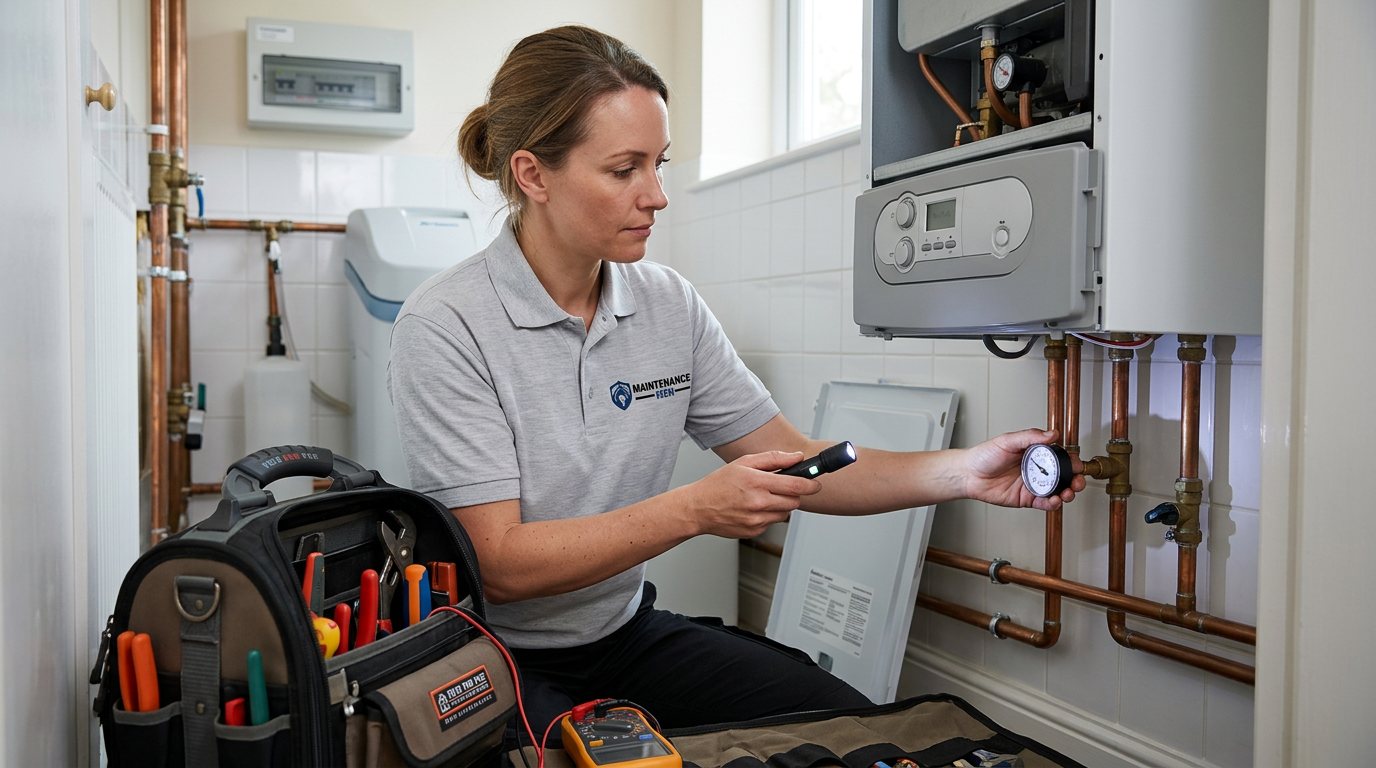
Boiler Pressure Keeps Dropping? We'll Hunt Down the Hidden Leak in Kenilworth
For systems that lose pressure again and again, we trace the leak or failed component responsible, repair it and leave the system holding pressure as it should.
Booking fee plus hourly labour — the price is confirmed before any work starts.
What this costs
| Booked 14+ days ahead | £25 booking fee £85 per hour |
|---|---|
| Booked within 48 hours | £100 booking fee £65 per hour |
| Same-day call-out | £220 booking fee £45 per hour |
The booking fee secures the visit. Labour is then charged by the hour, so you only pay for the time the job actually takes.
Booking fee £25–£220
£25 + £85/hr booked 14+ days ahead, £100 + £65/hr inside 48 hours, £220 + £45/hr same day. Agreed before we arrive.
Covered under Boilers
Heating & Radiators › Boilers — one of 22 documented jobs in this section.
Same-day boiler pressure keeps dropping
Urgent jobs can often be booked for today. Ask when you book and we will confirm the slot before you pay anything.
15 service areas
Birmingham, Coventry, Dorridge and 12 more across the West Midlands.
Why Pressure Loss Becomes a Habit
A one-off pressure drop is usually obvious — a bleeding operation, a repaired joint, a drained radiator. When the gauge keeps sinking, something is actively wrong, and the most frequent repeat offenders are:
- A small persistent leak — weeps at radiator valve tails, compression joints and radiator pinholes are easy to miss because they evaporate or soak away. On sealed systems they are the commonest cause of recurring loss.
- A leaking pressure relief valve — designed to open at a set maximum pressure, it can be weakened by repeated discharges and then weep constantly through the discharge pipe outside. It looks like nothing happening, but the system quietly empties.
- A failed expansion vessel — without its air cushion, pressure spikes when the system heats, the relief valve discharges, and the system cools down below its starting pressure. The pattern repeats every heating cycle.
- A passing filling loop — a loop that is not fully closed, or has a faulty non-return valve, can pass water continuously.
- Leaks inside the boiler — internal seals, the pump seal or the automatic air vent can weep inside the casing, where the water drains away unseen.
- Micro-leaks in buried or underfloor pipework — invisible, often only detected by isolating sections and monitoring.
The Cost of Ignoring It
Beyond the nuisance, chronic pressure loss damages the system quietly. Every top-up introduces fresh water rich in oxygen and minerals, which speeds corrosion and builds sludge in radiators, valves and the pump. The boiler itself suffers too: running repeatedly at or below its minimum pressure stresses the pump and heat exchanger, and a boiler that keeps locking out is being switched hard on and off. Fixing the underlying cause is nearly always cheaper than the eventual repair bill for a system that has been run low for a year.
How We Trace the Loss
We take a history first: how often the gauge drops, whether it falls faster when the heating runs, whether the discharge pipe outside has ever dripped, and whether any radiator or joint shows staining. Then we work through the system — checking every accessible joint and valve, the filling loop, the expansion vessel's charge, and the relief valve's behaviour when the system heats. If nothing external explains it, we isolate sections of pipework and monitor pressure across each to focus the search, which is how hidden underfloor and buried leaks get pinned down. We keep to the water side throughout; we do not open the boiler casing or work on gas components.
The Repairs We Can Do
Most recurring pressure loss is fixable on the spot once found. We replace weeping radiator valves and failing joints, repair or replace corroded radiator sections, recharge or replace expansion vessels, replace worn pressure relief valves on accessible system pipework, and repressurise the system to the boiler maker's specified cold fill. Where the leak is inside the boiler casing — internal seals, pump seal or air vent — some of those water-side parts are within our scope and some involve gas-side components that are not; we will always tell you plainly which is which, and recommend a trusted Gas Safe registered engineer we work closely with for anything we cannot lawfully do.
Aftercare So It Stays Fixed
Once the system holds pressure, we will check inhibitor levels and recommend topping up if the water has been refreshed repeatedly, since fresh water feeds corrosion. We will show you the correct cold pressure reading and suggest a monthly glance at the gauge so any new loss is caught early. If the system water is heavily sludged from months of top-ups, we can quote a power flush separately.
How to Book the Trace
Tell us your boiler's make and model, how often you are topping up, and whether anything outside — such as the relief discharge pipe — has ever dripped. Same-day attendance may be available but is never guaranteed. You pay a booking fee when booking, labour is charged hourly at a rate that depends on how soon you need us, and the full repair cost is quoted and approved before we start. Parts are quoted separately. We cover the West Midlands.
How the price works
We charge a booking fee to hold your slot, then an hourly rate for the work itself. The fee changes with how soon you need us; the hourly rate changes with the slot you choose. You approve the price before we start, so there is no surprise on the invoice.
Booked 14+ days ahead
£25 booking fee
then £85 per hour of labour
Best value. Book the slot now, pay the smallest booking fee.
Booked within 48 hours
£100 booking fee
then £65 per hour of labour
For jobs that can wait a day or two but not a fortnight.
Same-day call-out
£220 booking fee
then £45 per hour of labour
Urgent problems: standing water, no heat, no power, leaks.
Book the slot
Choose the window that suits you and pay the booking fee. That holds your place in the diary.
We diagnose on site
The engineer confirms the cause and tells you what the job involves and how long it should take.
You approve, we work
Nothing goes ahead until you agree the price. Labour is then charged per hour at your slot rate.
A boiler that needs repressurising every few weeks is not being temperamental — it has a leak, a failed expansion vessel or a passing valve, and each top-up is hiding the real fault a little deeper. We will trace where the water is going, repair the cause, and leave you with a system that holds its pressure. If the trail leads inside the boiler to gas-side components, we will explain our findings and refer you to a trusted Gas Safe registered engineer we work closely with.
What our customers say about our heating & radiators service
5 out of 5 from 10 reviews
Fast, tidy and friendly
Booked the £220 booking-fee slot on Tuesday and got a message confirming the time the same morning. The cause was explained, the price agreed before any work started, and the job was done in about 46 minutes. Clean and tidy when they left.
Job: No Heating from Boiler
Turned up when they said
What I appreciated was being told what was actually wrong before anyone started. Sorted in under 46 minutes and the invoice matched the quote to the penny.
Job: Expansion Vessel Fault
Exactly what was quoted
I had put off sorting this for months because I expected a runaround. Quoted the booking fee plus hourly rate upfront, stuck to it, and actually found the underlying cause rather than just clearing the symptom. Worked neatly and hoovered up afterwards.
Job: Airlock in Hot Water System
Book Boiler Pressure Keeps Dropping
Tell us what is happening and choose a slot. If you are not sure this is the right job, use the diagnosis panel — it narrows the problem down before you book.
- Booking fee confirmed up front
- Hourly labour, agreed before work starts
- Same-day slots for urgent problems




Questions people ask about boiler pressure keeps dropping
Straight answers to the things customers ask most often before booking.
My boiler needs topping up every week — is that normal?
No. A healthy sealed system holds pressure for months. Weekly top-ups mean water is escaping somewhere, and every refill feeds corrosion into the system. It is worth having the cause found rather than continuing to top up indefinitely.
Can a pressure leak be completely hidden?
Yes. Leaks under floors, inside walls or inside the boiler casing often leave no visible trace, so the falling gauge is the only clue. That is why we isolate sections and monitor the pressure rather than guessing — it narrows a whole-house search down to one circuit or one component.
What if the leak is inside the boiler?
We will tell you exactly what the evidence shows. Some internal water-side components are within our scope; anything involving gas-side parts is not, because we are not Gas Safe registered and never carry out gas work. In that case we explain our findings and refer you to a trusted Gas Safe registered engineer we work closely with.
Why does the pressure drop faster when the heating is on?
Hot systems leak faster because expansion opens up small gaps and thins the water, and a faulty relief valve discharges only when hot. If your gauge falls mainly during heating runs, that pattern points towards the relief valve or an internal leak — a useful clue we will always ask about.
How much does tracing and fixing a pressure loss cost?
You pay a booking fee when you book, and the hourly labour rate depends on how soon you need the visit. Tracing can take a little longer than an obvious repair, and we quote the full cost for the agreed work before starting. Parts such as valves or an expansion vessel are identified and quoted separately.
Need boiler pressure keeps dropping sorted in Kenilworth?
Book a slot in the diary and pay only the booking fee up front. We confirm the rest before we start.