
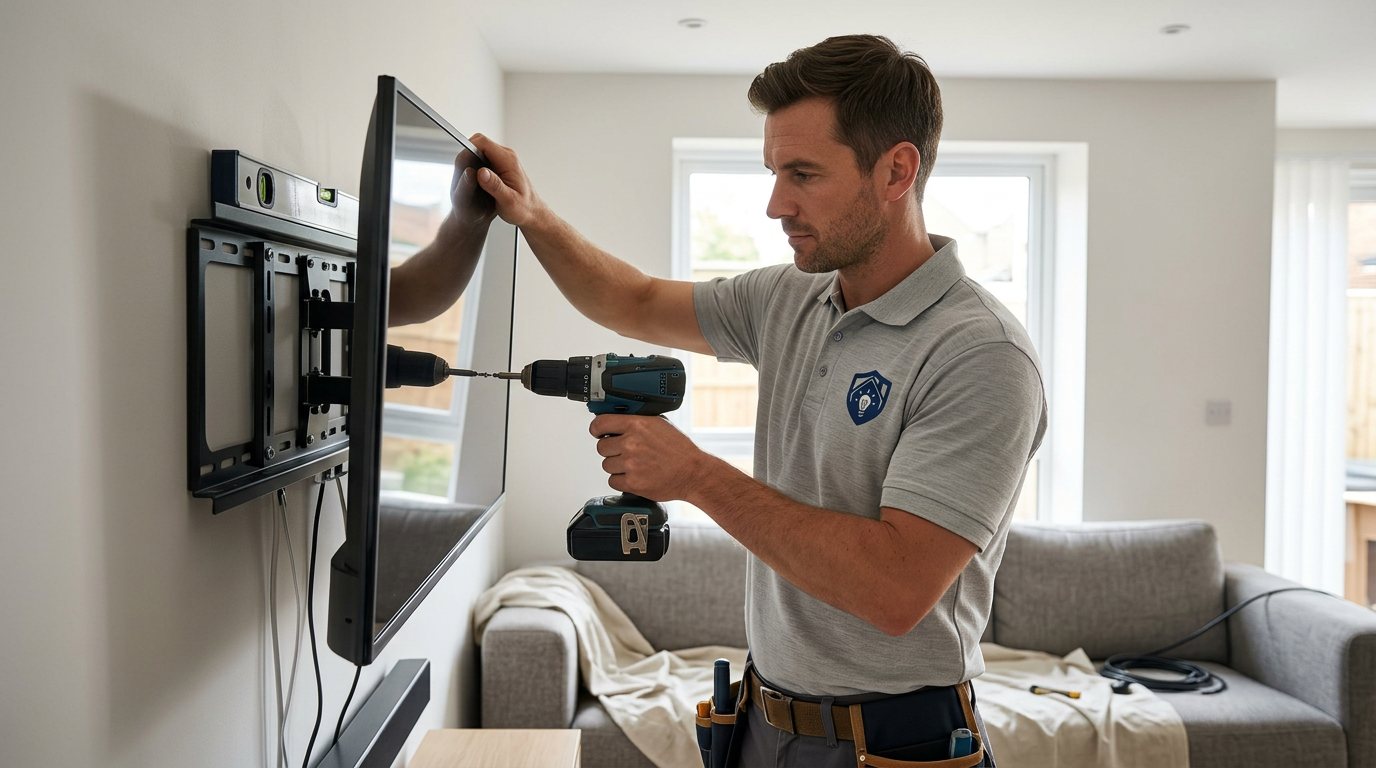
TV Mounting on Plasterboard, Fixed to What Can Carry It in Kenilworth
We find the frame behind the board, spread the load properly and tell you honestly what your wall can take.
Booking fee plus hourly labour — the price is confirmed before any work starts.
What this costs
| Booked 14+ days ahead | £25 booking fee £85 per hour |
|---|---|
| Booked within 48 hours | £100 booking fee £65 per hour |
| Same-day call-out | £220 booking fee £45 per hour |
The booking fee secures the visit. Labour is then charged by the hour, so you only pay for the time the job actually takes.
Booking fee £25–£220
£25 + £85/hr booked 14+ days ahead, £100 + £65/hr inside 48 hours, £220 + £45/hr same day. Agreed before we arrive.
Covered under TV & Wall Mounting
Handyman › TV & Wall Mounting — one of 21 documented jobs in this section.
Same-day TV Mount on Plasterboard Wall
Urgent jobs can often be booked for today. Ask when you book and we will confirm the slot before you pay anything.
15 service areas
Birmingham, Coventry, Dorridge and 12 more across the West Midlands.
Plasterboard is not a solid wall
The first thing to understand about plasterboard is what it is not: it is not a load-bearing surface. It is typically 12–15mm of gypsum board over a void — a timber frame in a stud partition, or masonry with a plasterboard lining on a dry-lined wall. That void is why the standard plugs in a TV bracket box fail here: they grip nothing, or they crush the board the first time the load shifts. Mounting a TV on plasterboard is entirely achievable, but only by loading the weight into whatever is behind the board, and that starts with finding it.
Finding what is behind the board
Before anything is drilled we work out the wall's construction. That means establishing whether you have a timber stud partition or a dry-lined masonry wall, because the strategies differ. Then we locate the frame: in a stud wall, the vertical studs and, crucially, any horizontal noggins between them; in dry-lining, the masonry behind the board. We probe and check for signs of hidden services at the same time — socket spurs, cable routes and pipework all run through stud cavities and dry-lined voids, and they change where fixings can safely go. A detector helps narrow this down, but no scan can guarantee what is behind the board, so we verify carefully and never drill blind.
Fixing strategies that actually work
Where the position allows, the best fixing is into timber: a bracket plate screwed into a stud or, better, spanning studs or landing on noggins, so the load is shared. Where the bracket's fixing holes do not coincide with the frame, options include repositioning the bracket, opening a small agreed access point to add a noggin behind the board, or using fixings designed to spread load into the board — suitable only for lighter screens and never our first choice for a large one. On dry-lined masonry, the answer is usually fixing through the board into the masonry behind with anchors long enough to do the job properly. Which strategy fits depends on the screen's weight, the bracket's fixing pattern and what the wall offers — we work it out with you before drilling rather than after.
When reinforcement is needed
Some positions simply do not have structure where the screen needs to hang. If a large screen must go where there are no studs or noggins, the honest answer is reinforcement: a piece of timber added behind the board, or a small section opened, strengthened and made good. That is a bigger job than a standard mount — it involves carpentry and likely some making-good — and we will quote it separately and let you decide, rather than quietly under-engineer the fixing and hope you never notice. A lighter screen, a different wall, or a floor-standing solution are always on the table as alternatives.
Honest limits
We will not fix a heavy screen to plasterboard on board alone, and we will tell you if a wall cannot safely carry the screen you have bought. We do not touch electrical wiring that lives in the cavity, and in-wall cable routing happens only where access is agreed and stays non-invasive. If making good — filling, sanding, painting — is needed after reinforcement work, that is scoped and agreed as its own item rather than assumed.
Preparing for the visit
Tell us the screen size and weight if you know it, the bracket model, and what you know about the wall — the year of the build helps, as does whether the wall sounds hollow or solid. Have the bracket and fixings out, clear the wall and floor, and expect some probing: finding studs and noggins is the first real task, not a failure to find them.
Booking
Same-day slots may be available, and planned visits suit jobs that may need reinforcement. You pay a booking fee on booking, labour is charged hourly at a rate that depends on how soon you need the visit, and the full cost is quoted and approved before work starts. Any timber, fixings or making-good materials are identified and quoted separately.
How the price works
We charge a booking fee to hold your slot, then an hourly rate for the work itself. The fee changes with how soon you need us; the hourly rate changes with the slot you choose. You approve the price before we start, so there is no surprise on the invoice.
Booked 14+ days ahead
£25 booking fee
then £85 per hour of labour
Best value. Book the slot now, pay the smallest booking fee.
Booked within 48 hours
£100 booking fee
then £65 per hour of labour
For jobs that can wait a day or two but not a fortnight.
Same-day call-out
£220 booking fee
then £45 per hour of labour
Urgent problems: standing water, no heat, no power, leaks.
Book the slot
Choose the window that suits you and pay the booking fee. That holds your place in the diary.
We diagnose on site
The engineer confirms the cause and tells you what the job involves and how long it should take.
You approve, we work
Nothing goes ahead until you agree the price. Labour is then charged per hour at your slot rate.
Plasterboard is the most common wall in modern homes and the least forgiving for TV mounts. It is a skim layer, not a structure — fix into the board alone and even a modest screen will eventually pull it out. We locate what is behind the board and fix to that, or tell you plainly what reinforcement the wall needs.
What our customers say about our handyman service
5 out of 5 from 8 reviews
Fast, tidy and friendly
Booked the £100 booking-fee slot on Saturday and got a message confirming the time the same morning. The cause was explained, the price agreed before any work started, and the job was done in about 77 minutes. Clean and tidy when they left.
Job: Heavy Picture Wall Mounting
Exactly what was quoted
Third time we have used Maintenance Men, and the same experience each time: agreed price, proper explanation, job done in one visit. The hourly rate is fair for the standard of work.
Job: Plaster Wall Repair
Worth the booking fee
Booked online, paid the booking fee, and the engineer rang ahead. Job done in about 43 minutes, plus straightforward advice on stopping it happening again. Will use them for the rest of the house now.
Job: Soundbar Installation
Book TV Mount on Plasterboard Wall
Tell us what is happening and choose a slot. If you are not sure this is the right job, use the diagnosis panel — it narrows the problem down before you book.
- Booking fee confirmed up front
- Hourly labour, agreed before work starts
- Same-day slots for urgent problems





Questions people ask about tv mount on plasterboard wall
Straight answers to the things customers ask most often before booking.
Can a TV be mounted on plasterboard at all?
Yes, but never by fixing into the board alone. The weight has to load into the timber frame behind it or the masonry behind dry-lining, using studs, noggins or appropriately spread fixings. Lighter screens have more options; heavier screens need structure found or added. We assess and tell you which situation you are in before drilling.
How do you find the studs behind the plasterboard?
We combine probing, measuring from known points and detector work to locate studs and noggins, and we check for concealed pipes and cables in the cavity at the same time. A detector helps but cannot promise what is hidden, so nothing is drilled until we are satisfied the fixing is safe — and never blindly.
Why can't I just use strong plasterboard anchors?
Load-spreading anchors have their place for lighter screens, but they still rely on the board, which flexes and crushes over time under a heavy, leveraged load. For anything but a small screen, fixing into the frame is the sound choice. We will be honest about whether anchors suit your particular screen and wall combination.
What if there is no stud where I want the TV?
Then we talk through options rather than forcing it: reposition the bracket to land on structure, add a noggin behind the board through a small agreed access point, or choose a lighter screen or different wall. Reinforcement is a bigger job with a separate quote — we explain it plainly instead of under-fixing and hoping.
How much does plasterboard TV mounting cost?
You pay a booking fee on booking, and hourly labour at a rate that depends on how soon you need the visit. The full cost is quoted and approved before work starts — plasterboard jobs are booked with more time because finding structure is part of the work. Any timber, fixings or making-good are identified and quoted separately.
Need tv mount on plasterboard wall sorted in Kenilworth?
Book a slot in the diary and pay only the booking fee up front. We confirm the rest before we start.