
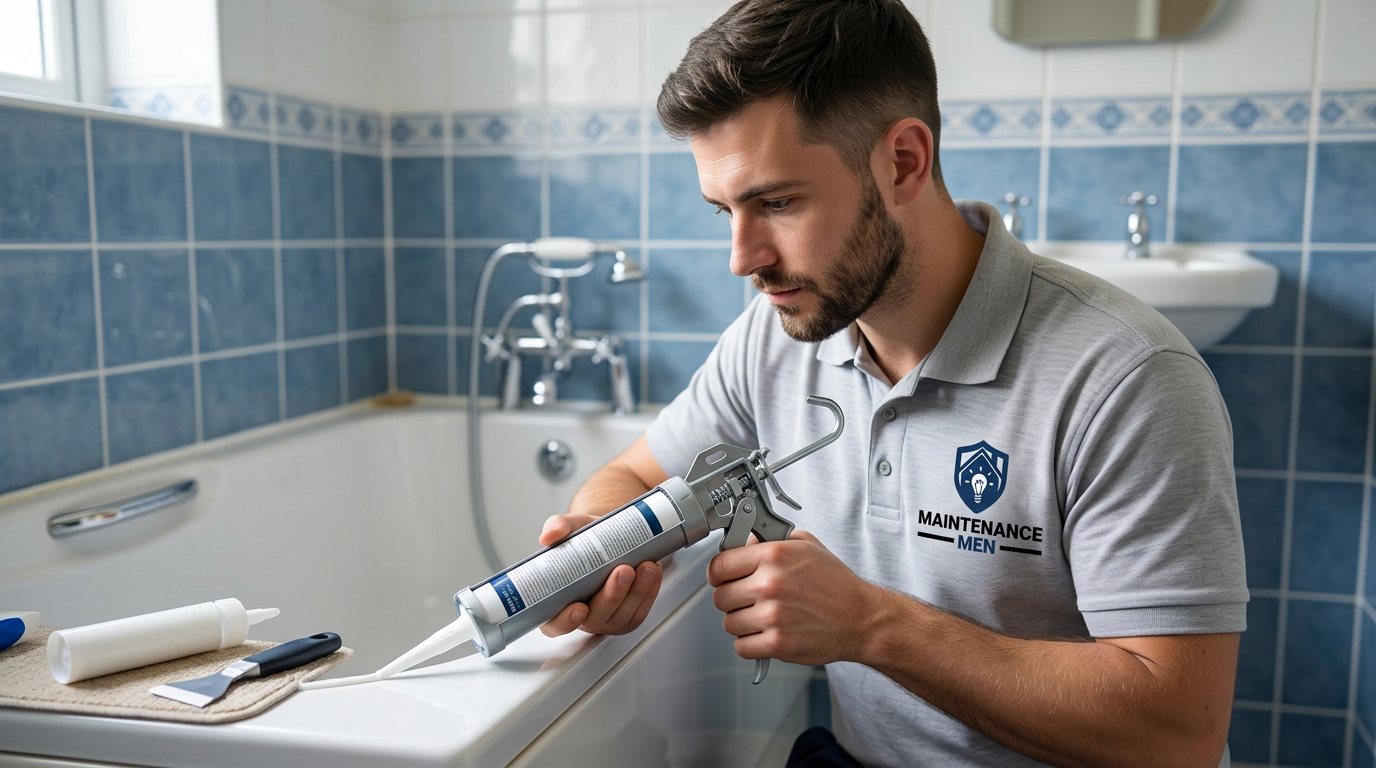
Black Sealant? We Remove It Fully and Seal It Right in Kenilworth
We cut out mouldy silicone completely rather than cleaning over it, reseal with a mould-resistant product, and flag what the mould might be telling you.
Booking fee plus hourly labour — the price is confirmed before any work starts.
What this costs
| Booked 14+ days ahead | £25 booking fee £85 per hour |
|---|---|
| Booked within 48 hours | £100 booking fee £65 per hour |
| Same-day call-out | £220 booking fee £45 per hour |
The booking fee secures the visit. Labour is then charged by the hour, so you only pay for the time the job actually takes.
Booking fee £25–£220
£25 + £85/hr booked 14+ days ahead, £100 + £65/hr inside 48 hours, £220 + £45/hr same day. Agreed before we arrive.
Covered under Sealing & Caulking
Handyman › Sealing & Caulking — one of 22 documented jobs in this section.
Same-day mouldy seal removal
Urgent jobs can often be booked for today. Ask when you book and we will confirm the slot before you pay anything.
15 service areas
Birmingham, Coventry, Dorridge and 12 more across the West Midlands.
Why the sealant went black
The black staining on bathroom sealant is mould growing on and within the silicone itself. Silicone is slightly porous to moisture over time, and in a room that stays warm and humid — a bathroom used daily with the door shut — spores settle into the bead, feed on the residue left by soap and shampoo, and spread through the material. Surface cleaners can bleach the outside of the bead, which is why a scrubbed sealant strip looks better for a fortnight and then darkens again. Once mould is inside the silicone, no amount of cleaning removes it, because the material it is living in has to go.
What mould in the bead really means
Mouldy sealant tells you two things. First, that the seal has reached the end of its life and needs replacing — that part is straightforward. Second, and worth pausing on, that the room stays damp long enough for mould to thrive. That can simply be how the household uses the bathroom, but persistent mould along a joint, or mould that returns quickly after resealing, often points to something more: poor ventilation, a cold wall, or moisture finding its way from somewhere it should not. We will not pretend a fresh bead fixes the room's dampness, and if we see signs of a leak or persistent condensation, we will say so — resealing a joint above an active leak, or in a room whose ventilation is failing, just resets the clock on the same problem.
Removing the old seal
The mouldy sealant is cut out in full, every stretch of it. This is more laborious than it sounds: mould roots into the bead and often into the grout line or joint edge behind it, so the job means slicing the silicone, lifting it in strips, and picking fragments from the joint until nothing contaminated remains. Cleaning over a mouldy bead, or sealing a new bead over an old one, leaves the mould in place — it reappears through the new sealant surprisingly quickly. Where the mould has marked the tile or grout beneath, we clean the surfaces as far as the material allows and tell you if any staining is likely to be permanent.
Reseating with the right product
Once the joint is stripped, it is cleaned and dried thoroughly — damp is the enemy of a lasting bond, and a freshly showered bathroom will need to wait. The new bead is a sanitary-grade silicone with mould-resistant treatment built in: it slows regrowth noticeably, though in a humid room no sealant is mould-proof, and we will not claim otherwise. Colour is agreed in advance — white and clear are the usual choices — and materials are quoted separately from the labour, so the product is settled before work starts.
Cure and keeping it clean
New silicone needs its full cure time before it meets water, typically several hours to a day depending on the product and room conditions. We will tell you the exact waiting time and how to look after the bead: squeegee or wipe down the joints after showering, keep the extractor fan running or the window open after use, and clean with a non-abrasive product. Those habits do more for the life of the seal than any product claim.
The limits — ventilation and leaks
A replaced seal fixes the seal. It does not fix a bathroom that never dries out, a wall that stays cold, or a leak behind the tiles, and we do not describe a reseal as curing mould or as a watertight guarantee. If the room has no working extractor, if mould reappears on walls and ceiling as well as joints, or if there is any sign water is entering from elsewhere, the lasting answer lies in ventilation, heating or plumbing — and we will refer that work rather than reseal over it. Mould that raises health concerns is a matter for the right advice; our scope is the sealant and an honest assessment of what we can see.
Preparing the bathroom
Leave the bath or shower unused and dry beforehand if you can. Clear bottles and caddies from the joints being worked and pull the bath mat away. If the mould covers a large area or several rooms, say so at booking so enough time is allowed for a proper strip-out.
Booking
Book online or by phone. A booking fee is paid when you book, the hourly rate depends on how soon you need the visit, and the full cost is confirmed with you before work begins. Same-day appointments may be available.
How the price works
We charge a booking fee to hold your slot, then an hourly rate for the work itself. The fee changes with how soon you need us; the hourly rate changes with the slot you choose. You approve the price before we start, so there is no surprise on the invoice.
Booked 14+ days ahead
£25 booking fee
then £85 per hour of labour
Best value. Book the slot now, pay the smallest booking fee.
Booked within 48 hours
£100 booking fee
then £65 per hour of labour
For jobs that can wait a day or two but not a fortnight.
Same-day call-out
£220 booking fee
then £45 per hour of labour
Urgent problems: standing water, no heat, no power, leaks.
Book the slot
Choose the window that suits you and pay the booking fee. That holds your place in the diary.
We diagnose on site
The engineer confirms the cause and tells you what the job involves and how long it should take.
You approve, we work
Nothing goes ahead until you agree the price. Labour is then charged per hour at your slot rate.
Blackened sealant around a bath or shower is mould growing in and under the silicone, and once it is established, cleaning the surface will not remove it. The only honest fix is to cut the old seal out entirely and reseal. We do that, use a mould-resistant product, and explain what recurring mould may say about the room itself.
What our customers say about our handyman service
5 out of 5 from 8 reviews
Fast, tidy and friendly
Booked the £100 booking-fee slot on Saturday and got a message confirming the time the same morning. The cause was explained, the price agreed before any work started, and the job was done in about 77 minutes. Clean and tidy when they left.
Job: Heavy Picture Wall Mounting
Exactly what was quoted
Third time we have used Maintenance Men, and the same experience each time: agreed price, proper explanation, job done in one visit. The hourly rate is fair for the standard of work.
Job: Plaster Wall Repair
Worth the booking fee
Booked online, paid the booking fee, and the engineer rang ahead. Job done in about 43 minutes, plus straightforward advice on stopping it happening again. Will use them for the rest of the house now.
Job: Soundbar Installation
Book Mouldy Seal Removal
Tell us what is happening and choose a slot. If you are not sure this is the right job, use the diagnosis panel — it narrows the problem down before you book.
- Booking fee confirmed up front
- Hourly labour, agreed before work starts
- Same-day slots for urgent problems






Questions people ask about mouldy seal removal
Straight answers to the things customers ask most often before booking.
Can I just clean the mould off the sealant myself?
You can clean the surface, and it will look better for a short while, but mould established inside silicone cannot be cleaned out — the material has to be replaced. Bleaching the bead also hides how far it has spread. If you want the job done once, the old seal needs cutting out fully before a mould-resistant bead goes on.
What do you actually do about mouldy sealant?
We cut out every stretch of affected silicone, including fragments in the joint behind it, then clean and dry the surfaces before resealing. The replacement bead is a sanitary-grade silicone with mould-resistant treatment. As we work, we also look at what encouraged the mould — ventilation, condensation, or signs of a leak — because a fresh bead in an unchanged room will darken again.
Will new sealant stop the mould coming back?
Mould-resistant silicone slows regrowth considerably, but nothing we apply makes a damp bathroom mould-proof, and we will not claim it does. If the room stays humid — no working extractor, windows kept shut, or moisture coming from somewhere it should not — mould will find the new bead too. We will tell you what the pattern of growth suggests and where the lasting fix lies.
Should I be worried about the mould itself?
Mould in a home is worth taking seriously, and if anyone in the household is affected by it, sensible advice is to seek appropriate guidance on the health side — that is outside our remit and we make no claims about it. What we can do is remove the affected sealant, reseal properly, and tell you honestly whether the room's dampness needs more than a new bead.
What does mouldy seal removal cost?
You pay a booking fee on booking, and the hourly labour rate depends on how soon you need the visit. The full cost is quoted and agreed before work starts, based on how much sealant is affected. Heavy mould growth takes longer to strip out properly, which is worth knowing at the booking stage.
Need mouldy seal removal sorted in Kenilworth?
Book a slot in the diary and pay only the booking fee up front. We confirm the rest before we start.