
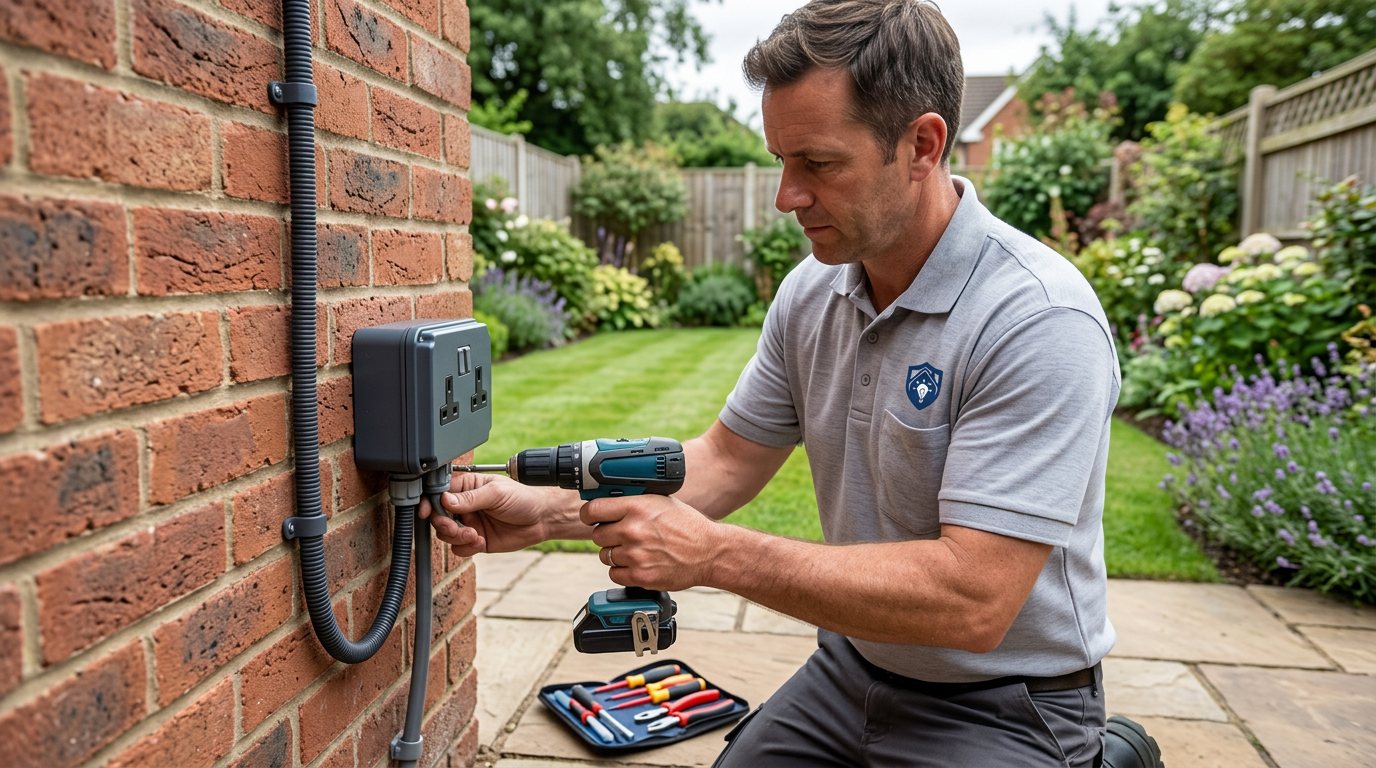
Burning Smell From Outdoor Electrics? Switch Off and Call Straight Away
A burning smell means something is overheating right now — we isolate it fast, find the hot connection, and repair it safely.
Booking fee plus hourly labour — the price is confirmed before any work starts.
What this costs
| Booked 14+ days ahead | £25 booking fee £85 per hour |
|---|---|
| Booked within 48 hours | £100 booking fee £65 per hour |
| Same-day call-out | £220 booking fee £45 per hour |
The booking fee secures the visit. Labour is then charged by the hour, so you only pay for the time the job actually takes.
Booking fee £25–£220
£25 + £85/hr booked 14+ days ahead, £100 + £65/hr inside 48 hours, £220 + £45/hr same day. Agreed before we arrive.
Covered under Outdoor Electrical
Electrical › Outdoor Electrical — one of 23 documented jobs in this section.
Same-day burning smell outside electrics
Urgent jobs can often be booked for today. Ask when you book and we will confirm the slot before you pay anything.
15 service areas
Birmingham, Coventry, Dorridge and 12 more across the West Midlands.
What a Burning Smell Means
That acrid, hot-plastic smell is insulation, terminals or fittings being heated beyond their design temperature. It is nearly always caused by a high-resistance connection — a loose terminal, a corroded contact, a damaged conductor — where current flowing through resistance generates heat. Other causes include overloading (too much demand on a cable or fitting), arcing from a poor contact, and insulation that has been damaged by water or age and is now breaking down. Whatever the cause, the heat is real and it is happening while the smell is there.
What To Do Right Now
If you can smell burning near an outdoor socket, light, cable or other equipment, act on it, don't investigate it. Switch the affected circuit off at the consumer unit if you can reach it safely and it is itself dry and undamaged. Do not touch the equipment that smells — hot fittings can burn and faulty ones can shock. Do not wait to see whether the smell fades; it often does once the load drops, but the damaged connection remains. Keep everyone away, and call us for an emergency visit. If you ever see smoke or flames, that is a fire — call the fire service first, then us.
What Happens If It Is Ignored
Overheating connections do not recover. Each period of overheating chars the insulation a little further and pits the contact surfaces a little more, so the resistance rises and the next load runs hotter still. The end point is a fitting or cable that ignites, or a fault that trips the RCD and leaves you without power at a worse moment. The smell is the cheap warning — the only one you get before real damage.
How We Find the Hot Connection
We arrive with the circuit off and confirm it stays off. Then we inspect everything on the affected circuit for the classic signs: discoloured or melted plastic, darkened terminals, a heat smell inside fittings, and insulation that has gone stiff or brittle. Where the source is not obvious, thermal checks and resistance testing of each connection point narrow it down. We also review what the circuit was powering, because chronic overload produces the same smell as a loose screw. You will be told what we found, why it overheated, and exactly what the repair involves before we begin.
How We Repair It
The overheated component — a socket, a connection, a section of cable, a fitting — is replaced, not reused. Chared insulation and pitted terminals cannot be trusted again. We remake every connection on the affected section cleanly and to the correct torque, replace damaged cable runs, and fit weatherproof (IP-rated) replacements where the equipment is outdoors. If the circuit was overloaded, we explain what it can safely carry and what should be moved elsewhere. Before we leave, the full circuit is tested and the RCD confirmed working, and we show you what the repaired area looked like so you know what "normal" is.
Aftercare and Prevention
High-resistance faults announce themselves early if you know the signs: any warmth from a plug or fitting during use, discolouration around terminals, a plug that smells hot, or an RCD that trips under heavy use. Treat all of them as early versions of the burning smell and book a check rather than waiting. Avoid overloading single outdoor sockets with long extension reels, especially for high-draw equipment like pressure washers and heaters.
When to Call Us
Call as an emergency for any burning smell, smoke, visible charring, or equipment that is hot to the touch. Book urgently — same visit if possible — for repeated RCD tripping under load, or any fitting that has ever smelled hot. Routine visits cover everything else.
Book an Emergency Repair Today
We cover the West Midlands and hold slots specifically for urgent electrical faults, with same-day and emergency appointments where we have them. If you can smell burning now, switch the circuit off first, then call — describing the smell, where it is strongest and what was running on the circuit helps us bring the right parts first time. We will make it safe, find the cause, and put it right.
How the price works
We charge a booking fee to hold your slot, then an hourly rate for the work itself. The fee changes with how soon you need us; the hourly rate changes with the slot you choose. You approve the price before we start, so there is no surprise on the invoice.
Booked 14+ days ahead
£25 booking fee
then £85 per hour of labour
Best value. Book the slot now, pay the smallest booking fee.
Booked within 48 hours
£100 booking fee
then £65 per hour of labour
For jobs that can wait a day or two but not a fortnight.
Same-day call-out
£220 booking fee
then £45 per hour of labour
Urgent problems: standing water, no heat, no power, leaks.
Book the slot
Choose the window that suits you and pay the booking fee. That holds your place in the diary.
We diagnose on site
The engineer confirms the cause and tells you what the job involves and how long it should take.
You approve, we work
Nothing goes ahead until you agree the price. Labour is then charged per hour at your slot rate.
A burning or hot-plastic smell near outdoor electrics is the most urgent fault on this page. It means something is overheating at that moment — usually a connection carrying more resistance than it should. Switch the circuit off at the consumer unit if you can do so safely, keep clear of the equipment, and call us for an emergency visit. Overheating connections are how electrical fires start.
What our customers say about our electrical service
4.6 out of 5 from 11 reviews
Does what it says on the tin
No complaints about the work itself — clear explanation, sensible advice, fair price. Booking online was easy enough once I found the right job page.
Job: Smoke Alarm Replacement
Fixed it, but took longer than expected
Work itself was fine and tidy. Communication beforehand was patchy — I did not get the confirmation message and had to ring to check the slot. Would still use again.
Job: Flickering Outdoor Lights
Turned up when they said
Third time we have used Maintenance Men, and the same experience each time: agreed price, proper explanation, job done in one visit. The hourly rate is fair for the standard of work.
Job: Appliance Causing Power Trip
Book Burning Smell Outside Electrics
Tell us what is happening and choose a slot. If you are not sure this is the right job, use the diagnosis panel — it narrows the problem down before you book.
- Booking fee confirmed up front
- Hourly labour, agreed before work starts
- Same-day slots for urgent problems




Questions people ask about burning smell outside electrics
Straight answers to the things customers ask most often before booking.
The smell stopped — is the danger over?
No. The smell usually fades when the load drops or the circuit is switched off, but the overheated connection is still damaged and will overheat again under load. Chared insulation does not recover. Treat a burning smell that has stopped as a fault that is resting, not one that has gone.
Can I find the hot connection myself by feeling the fittings?
No — don't touch anything that smells hot or has been overheating. Fittings can burn you, and a damaged fitting can also shock. The only safe action is switching off the circuit at the consumer unit and keeping clear. We locate the hot point with the power isolated and proper instruments.
What will the engineer do on an emergency visit?
We confirm the circuit is dead, inspect and test the whole affected circuit for heat damage and high-resistance connections, and identify what overheated and why. Then we replace the damaged parts, remake the connections, test everything, and only restore power when the circuit is proven sound. You approve the price before we start.
How much does an emergency visit cost?
You pay a booking fee when you book, and labour is charged hourly at a rate that depends on how quickly you need us — emergency attendance is at the highest rate. The full cost of the work is quoted before we start, so you approve it before any tools come out.
Could this have been prevented?
Often yes — loose terminals, corrosion and overload usually give earlier warnings such as warmth, discolouration or intermittent tripping. The useful step now is knowing what caused it. If it was a one-off, it's fixed; if the circuit was overloaded or poorly maintained, we'll tell you what to change so it doesn't happen again.
Need burning smell outside electrics sorted?
Book a slot in the diary and pay only the booking fee up front. We confirm the rest before we start.