
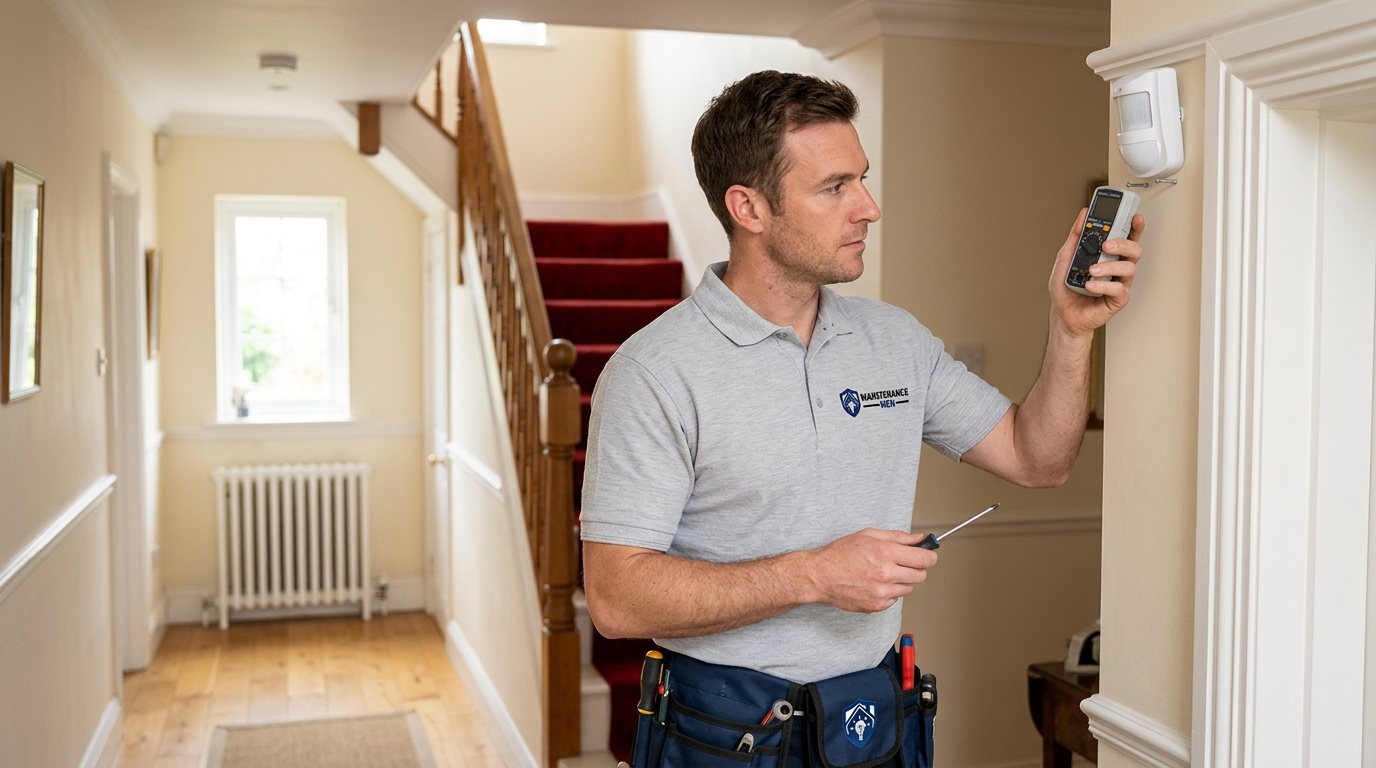
Heat Sensor Fault? Kitchen-Safe Detection You Can Rely On in Edgbaston
We diagnose heat alarm faults — battery, supply, age or the sensing element — and restore detection that suits steamy rooms where smoke alarms struggle.
Booking fee plus hourly labour — the price is confirmed before any work starts.
What this costs
| Booked 14+ days ahead | £25 booking fee £85 per hour |
|---|---|
| Booked within 48 hours | £100 booking fee £65 per hour |
| Same-day call-out | £220 booking fee £45 per hour |
The booking fee secures the visit. Labour is then charged by the hour, so you only pay for the time the job actually takes.
Booking fee £25–£220
£25 + £85/hr booked 14+ days ahead, £100 + £65/hr inside 48 hours, £220 + £45/hr same day. Agreed before we arrive.
Covered under Sensors & Detectors
Security & CCTV › Sensors & Detectors — one of 22 documented jobs in this section.
Same-day heat sensor fault
Urgent jobs can often be booked for today. Ask when you book and we will confirm the slot before you pay anything.
15 service areas
Birmingham, Coventry, Dorridge and 12 more across the West Midlands.
Heat alarms are fitted where smoke alarms cannot cope — directly over cookers, in kitchens, garages and utility rooms — and they respond to a fixed temperature rather than smoke, which is what lets them live beside steam and frying fumes without nuisance-triggering. When one fails, the fault usually shows up as a dead test button, persistent chirping, or a fault indication on an interconnected system. Because heat alarms sit in exactly the rooms where fires are most likely to start, a failure here deserves prompt attention rather than a note to self. The causes are similar to other alarms but with their own character, and a proper diagnosis separates them cleanly.
Why heat alarms fail
On battery-powered units, a dead or ageing battery is the most common cause, and a dying battery often produces intermittent chirping and odd behaviour before silence. On mains-connected heat alarms — the usual arrangement in modern kitchens, often interconnected with the smoke alarms elsewhere — a tripped circuit, a disconnected supply or a failed backup battery can leave the unit dead while everything else seems fine. The sensing element itself, typically a thermistor that responds when the room reaches a fixed temperature, can fail with age or after a past overheat event. Dust and grease are particular enemies of kitchen-mounted alarms: a layer of cooking grease on the casing and vents degrades performance even when the unit still tests fine. And age applies here exactly as it does to smoke alarms — heat alarms have a designed lifespan, usually around ten years, after which replacement rather than repair is the honest answer.
How we diagnose it
We identify the type and age of the unit first, then test methodically: the test button, the battery or mains supply and backup, and the interconnection to other alarms in the system. We inspect the casing for grease, dust and heat damage — a unit mounted too close to a hob can have cooked itself — and check the date stamp against the manufacturer's lifespan. Where the alarm is part of an interconnected set, we test whether it still triggers the others and responds to them, because a heat alarm that works alone but no longer calls the rest of the system is only half-working. You finish with a plain-language cause and a clear recommendation.
Repairs and replacements
Battery replacement is routine and often the entire fix. Cleaning a grease-fouled unit, re-fixing a loose mount or restoring a tripped supply covers most of the rest. Replacement is quoted separately and matched properly: a heat alarm for a kitchen or garage position, mains-connected where your system is mains-connected, interlinked where yours are. We will be honest if we find the wrong device in the wrong place — a smoke alarm over a hob, for example — and recommend the correct type rather than repeatedly repairing a unit that was never suited to its room. All work is approved by you before it starts.
Honest limits and safety
No alarm can be promised to detect every fire in every condition — heat alarms, by design, react to temperature rather than smouldering smoke, so they respond later to slow, cool fires. That trade-off is why they belong in steamy rooms, not on landings, and we will explain the coverage picture plainly. Test monthly with the button, keep the casing clean, and if an alarm ever sounds in a real fire, get everyone out and call 999 first.
Booking a heat alarm visit
Call or use the website and tell us where the alarm is fitted, whether it is battery or mains, and what the fault looks like — silent, chirping, or a fault on the panel. You pay a booking fee when you book, labour is charged hourly at a rate that depends on how soon you need the visit, and the full cost is quoted and approved before work starts, with any replacement alarms quoted separately.
How the price works
We charge a booking fee to hold your slot, then an hourly rate for the work itself. The fee changes with how soon you need us; the hourly rate changes with the slot you choose. You approve the price before we start, so there is no surprise on the invoice.
Booked 14+ days ahead
£25 booking fee
then £85 per hour of labour
Best value. Book the slot now, pay the smallest booking fee.
Booked within 48 hours
£100 booking fee
then £65 per hour of labour
For jobs that can wait a day or two but not a fortnight.
Same-day call-out
£220 booking fee
then £45 per hour of labour
Urgent problems: standing water, no heat, no power, leaks.
Book the slot
Choose the window that suits you and pay the booking fee. That holds your place in the diary.
We diagnose on site
The engineer confirms the cause and tells you what the job involves and how long it should take.
You approve, we work
Nothing goes ahead until you agree the price. Labour is then charged per hour at your slot rate.
Heat alarms are the unsung heroes of kitchens, garages and boiler cupboards, going unnoticed until they fail their test. A fault here is worth taking seriously, because these are the rooms where fire often starts. We diagnose the actual cause, explain it plainly, and restore the alarm with your approval.
What our customers say about our Security & CCTV service
5 out of 5 from 7 reviews
Would use again
Third time we have used Maintenance Men, and the same experience each time: agreed price, proper explanation, job done in one visit. The hourly rate is fair for the standard of work.
Job: CCTV Installation
Second time we have used them
I had put off sorting this for months because I expected a runaround. Quoted the booking fee plus hourly rate upfront, stuck to it, and actually found the underlying cause rather than just clearing the symptom. Worked neatly and hoovered up afterwards.
Job: Backup Battery Fault
Exactly what was quoted
What I appreciated was being told what was actually wrong before anyone started. Sorted in under 56 minutes and the invoice matched the quote to the penny.
Job: Alarm Repair Service
Book Heat Sensor Fault
Tell us what is happening and choose a slot. If you are not sure this is the right job, use the diagnosis panel — it narrows the problem down before you book.
- Booking fee confirmed up front
- Hourly labour, agreed before work starts
- Same-day slots for urgent problems






Questions people ask about heat sensor fault
Straight answers to the things customers ask most often before booking.
Can I service a heat alarm myself?
Battery replacement where the manual describes it, monthly test-button checks and gentle cleaning of the casing are all reasonable DIY. Anything involving the mains supply, the interconnect wiring or an alarm that fails its test repeatedly should be diagnosed by an engineer — never open or disable the unit.
What do you check during the visit?
We test the alarm and its interconnection to others, check the battery or mains supply and backup, inspect for grease, dust and heat damage, and verify the unit's age against its date stamp. You get the actual cause explained before any repair or replacement is quoted.
Is a faulty heat alarm a safety risk?
It leaves a detection gap in exactly the rooms where fires most often start, so it should not be ignored or worked around. Never disable a chirping or faulty unit while you decide. If an alarm sounds and you suspect a real fire, get everyone out and call 999 — diagnosis comes afterwards.
Why a heat alarm and not a smoke alarm in the kitchen?
Cooking fumes and steam read as smoke to a smoke alarm, so kitchen smoke alarms nuisance-trigger constantly. A heat alarm responds to a fixed temperature instead, which makes it kitchen-proof. That same design means it reacts later to a cool, smouldering fire, which is why heat alarms belong in steamy rooms and smoke alarms on escape routes.
How is this visit priced?
You pay a booking fee when you book, and labour is charged hourly at a rate that depends on how soon you need us. The full cost of the work is quoted and approved before we start, and any parts — a replacement heat alarm or battery — are quoted separately so you can see what they cost.
Need heat sensor fault sorted in Edgbaston?
Book a slot in the diary and pay only the booking fee up front. We confirm the rest before we start.