
Boiler Leaking? We Find the Source, Stop It and Restore Pressure in Edgbaston
Water under the boiler, a pressure gauge that keeps dropping, or a stain spreading in the cupboard — traced and repaired in one visit.
Booking fee plus hourly labour — the price is confirmed before any work starts.
What this costs
| Booked 14+ days ahead | £25 booking fee £85 per hour |
|---|---|
| Booked within 48 hours | £100 booking fee £65 per hour |
| Same-day call-out | £220 booking fee £45 per hour |
The booking fee secures the visit. Labour is then charged by the hour, so you only pay for the time the job actually takes.
Booking fee £25–£220
£25 + £85/hr booked 14+ days ahead, £100 + £65/hr inside 48 hours, £220 + £45/hr same day. Agreed before we arrive.
Covered under Leaks
Plumbing › Leaks — one of 17 documented jobs in this section.
Same-day boiler leak repair
Urgent jobs can often be booked for today. Ask when you book and we will confirm the slot before you pay anything.
15 service areas
Birmingham, Coventry, Dorridge and 12 more across the West Midlands.
Why boilers leak
A boiler is a sealed system under pressure, so any water you can see has escaped from somewhere specific. When you notice water leaking from boiler casing, a puddle beneath it or a pressure gauge that will not stay up, the source is usually one of a few known points. The most common is the pressure relief valve, which opens when pressure climbs too high and should reseat afterwards. When it stops reseating, water trickles down the discharge pipe and often shows up outside or under the boiler. Condensate traps and their pipes are the second usual suspect: the plastic can crack, block or come loose, and the water looks identical to a leak from the boiler itself.
Seals and gaskets are the third. Pump seals, diverter valve bodies, plate heat exchanger gaskets and the seals around the heat exchanger all harden with age and heat cycling. Isolation valves on the flow and return can weep at the spindle. On older installations, corroded pipework close to the boiler does the same job more slowly, leaving a green or white crust on the copper.
Why a small leak gets worse
A boiler leak rarely stays the size it starts. Every time you top the pressure up, you introduce fresh, oxygenated water into a system that was designed to keep the same water for years. That accelerates corrosion inside the radiators and pipework, which produces sludge, which in turn blocks passageways and puts more strain on the pump. Water inside the casing also finds its way onto the fan, the circuit board and the wiring loom, and those repairs cost far more than the seal that started it. If the pressure keeps falling and you keep topping it up, you are paying twice.
How we diagnose it
We start by asking when the water appears. A leak only when the heating runs points towards expansion, a failed expansion vessel or a joint that opens as the pipework heats. A leak only when hot water is drawn points towards the diverter valve or plate heat exchanger. A constant drip with the boiler off usually means the relief valve, condensate route or a supply pipe.
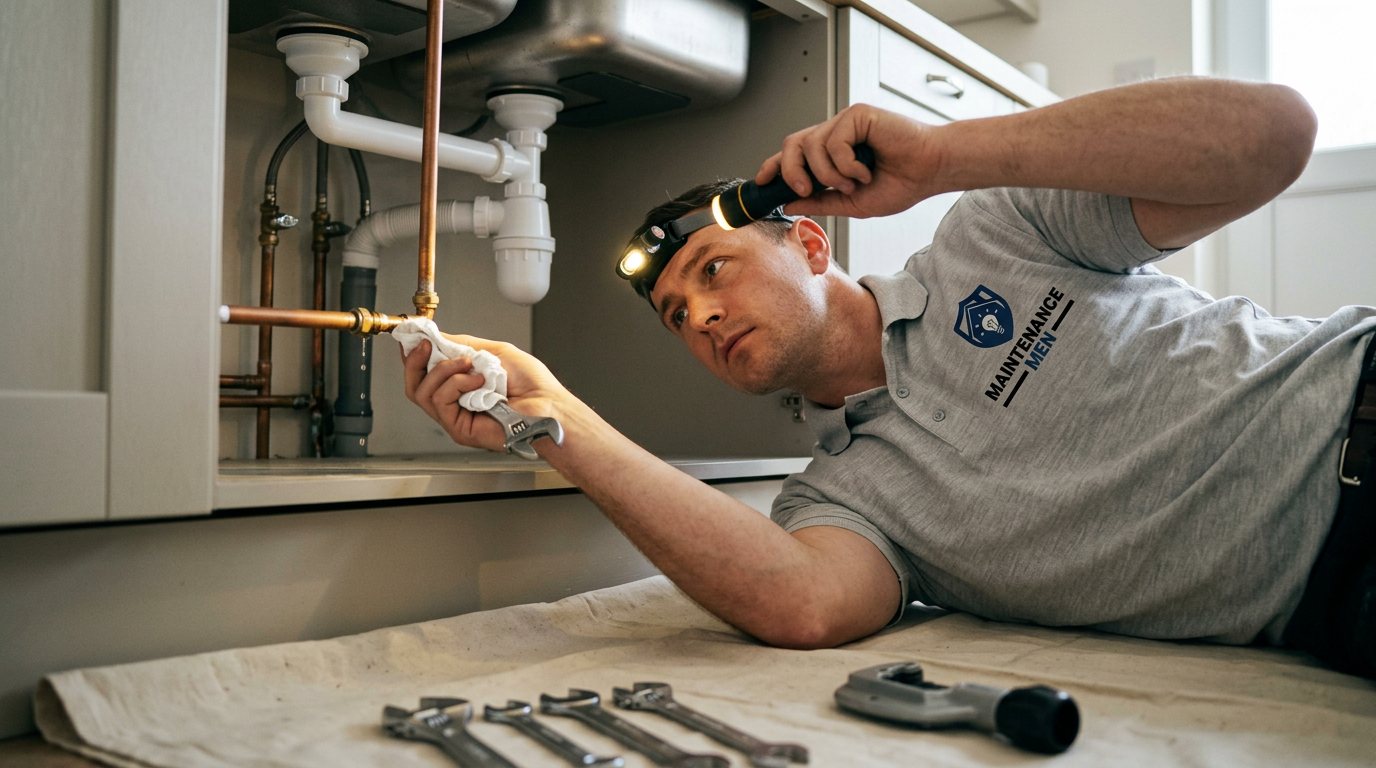
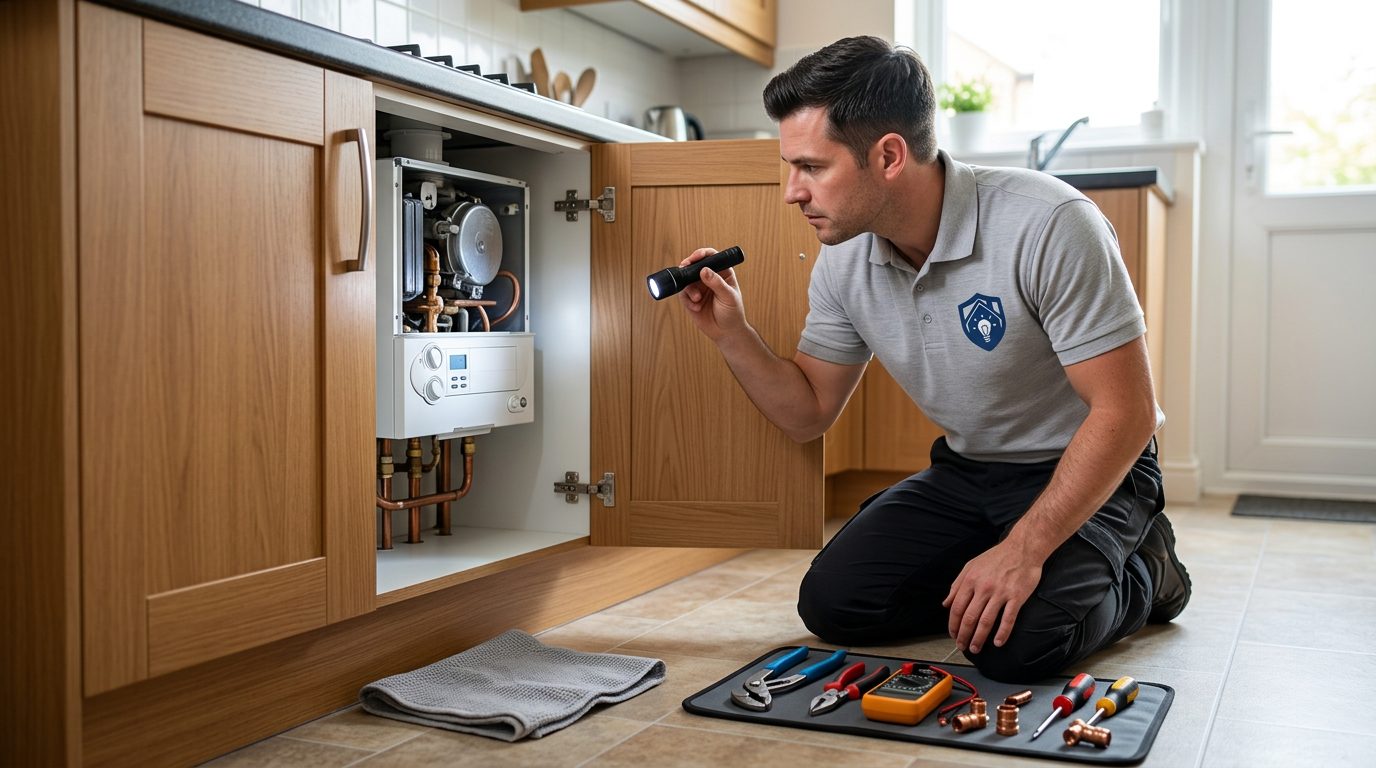
Then we check the gauge, the discharge pipe and the condensate run, and dry the area thoroughly so we can see where water returns. A dry tissue passed around joints and seals shows the exact point. We check the expansion vessel charge, because a flat vessel is what pushes a healthy relief valve into opening in the first place. Repairs inside the boiler casing are limited to the water-side and electrical components we are qualified to work on – pumps, sensors, circuit boards, valves and seals. Where a fault lies on the gas side – the gas valve, burner or supply – we diagnose it, tell you exactly what it is, and arrange the repair through the Gas Safe registered engineers we work closely with and can recommend with confidence. Electric boilers we repair in full – elements, control boards, pumps and pressure faults.
How we fix it
The repair follows the diagnosis, not a guess. A failed relief valve is replaced and the expansion vessel recharged or renewed so the new valve is not asked to do a job it cannot do. A split condensate trap or pipe is replaced with the correct component and the run is checked for fall and blockage. Weeping seals and gaskets are renewed, and corroded sections of pipe are cut out and replaced in copper.
Once the leak is stopped we refill to the correct cold pressure, add inhibitor, run the boiler through heating and hot water, and watch the gauge with the system hot and then cold. You get a plain explanation of what failed, what we replaced, and whether any part of the appliance is close to the end of its life.
Prevention
Have the boiler serviced annually, and ask for the expansion vessel charge and relief valve to be checked as part of it. Keep the cold pressure where the manufacturer specifies rather than at the top of the scale — over-pressurising is what wears relief valves out. Leave inhibitor in the system and top it up when work is done. In cold spells, keep the heating on a low background setting so the condensate pipe does not freeze, and lag any condensate run that passes outside.
When to call us
Call straight away if water is anywhere near electrics, if you can smell gas, or if water is running from the casing rather than a pipe. Those are not wait-and-see situations; isolate the power and, for gas, call the national gas emergency line. A heating engineer leak repair visit is the right call if the pressure drops repeatedly, if the gauge sits at zero, if the boiler locks out after you top it up, or if you can hear water inside the appliance. A leak you can see is the easy version — the costlier ones run quietly inside the casing for weeks.
Book a call-out
If a part is needed we confirm the price before fitting anything. One visit, a clear explanation, and a system that holds its pressure.
How the price works
We charge a booking fee to hold your slot, then an hourly rate for the work itself. The fee changes with how soon you need us; the hourly rate changes with the slot you choose. You approve the price before we start, so there is no surprise on the invoice.
Booked 14+ days ahead
£25 booking fee
then £85 per hour of labour
Best value. Book the slot now, pay the smallest booking fee.
Booked within 48 hours
£100 booking fee
then £65 per hour of labour
For jobs that can wait a day or two but not a fortnight.
Same-day call-out
£220 booking fee
then £45 per hour of labour
Urgent problems: standing water, no heat, no power, leaks.
Book the slot
Choose the window that suits you and pay the booking fee. That holds your place in the diary.
We diagnose on site
The engineer confirms the cause and tells you what the job involves and how long it should take.
You approve, we work
Nothing goes ahead until you agree the price. Labour is then charged per hour at your slot rate.
A leaking boiler is more than a puddle in the cupboard. Water inside the casing can reach the electrics, system pressure falls, and the boiler locks out when you need heat most. We trace the leak to its real source — pressure relief valve, seal, condensate trap or nearby pipework — repair it, then refill, dose and confirm the system holds pressure.
What our customers say about this job
4 out of 5 from 1 reviews
Did the job well
Came out the next day, sorted it in one visit and left the place clean. Marked down one star only because the arrival window slipped by half an hour.
Job: Boiler Leak Repair
Book Boiler Leak Repair
Tell us what is happening and choose a slot. If you are not sure this is the right job, use the diagnosis panel — it narrows the problem down before you book.
- Booking fee confirmed up front
- Hourly labour, agreed before work starts
- Same-day slots for urgent problems





Questions people ask about boiler leak repair
Straight answers to the things customers ask most often before booking.
Is a leaking boiler dangerous?
Water and electricity in the same casing is the immediate risk, and a leak can also damage the fan or circuit board. If water is coming from inside the case, switch the boiler off at the isolator and call us rather than running it. Any smell of gas is a separate emergency — call the national gas emergency line.
My boiler pressure keeps dropping but I cannot see water. Why?
A sealed system only loses pressure through a leak or a failed expansion vessel. The leak may be under a floor, at a radiator valve, or escaping through the relief valve discharge pipe outside where you would not notice it. We test the vessel and the visible pipework first, then narrow down the hidden sections.
Can you repair it the same day?
In most cases yes, because the common failures — relief valves, seals, condensate traps and gaskets — are parts we carry. If your appliance needs a manufacturer-specific component we will tell you at the visit and book the return with the part.
Should I keep topping the pressure up?
Only as a temporary measure to keep the heating running, and only to the cold fill mark. Regular top-ups add oxygenated water that speeds up corrosion and sludge, which shortens the life of the whole system. Repeated topping up is the sign that the leak needs finding.
Will the repair include a service?
No, a leak repair is a repair. We will check the expansion vessel and relief valve because they are part of the fault, but a full annual service is a separate booking. If the appliance has not been serviced in a while, it is worth arranging once the leak is sorted.
Need boiler leak repair sorted in Edgbaston?
Book a slot in the diary and pay only the booking fee up front. We confirm the rest before we start.