
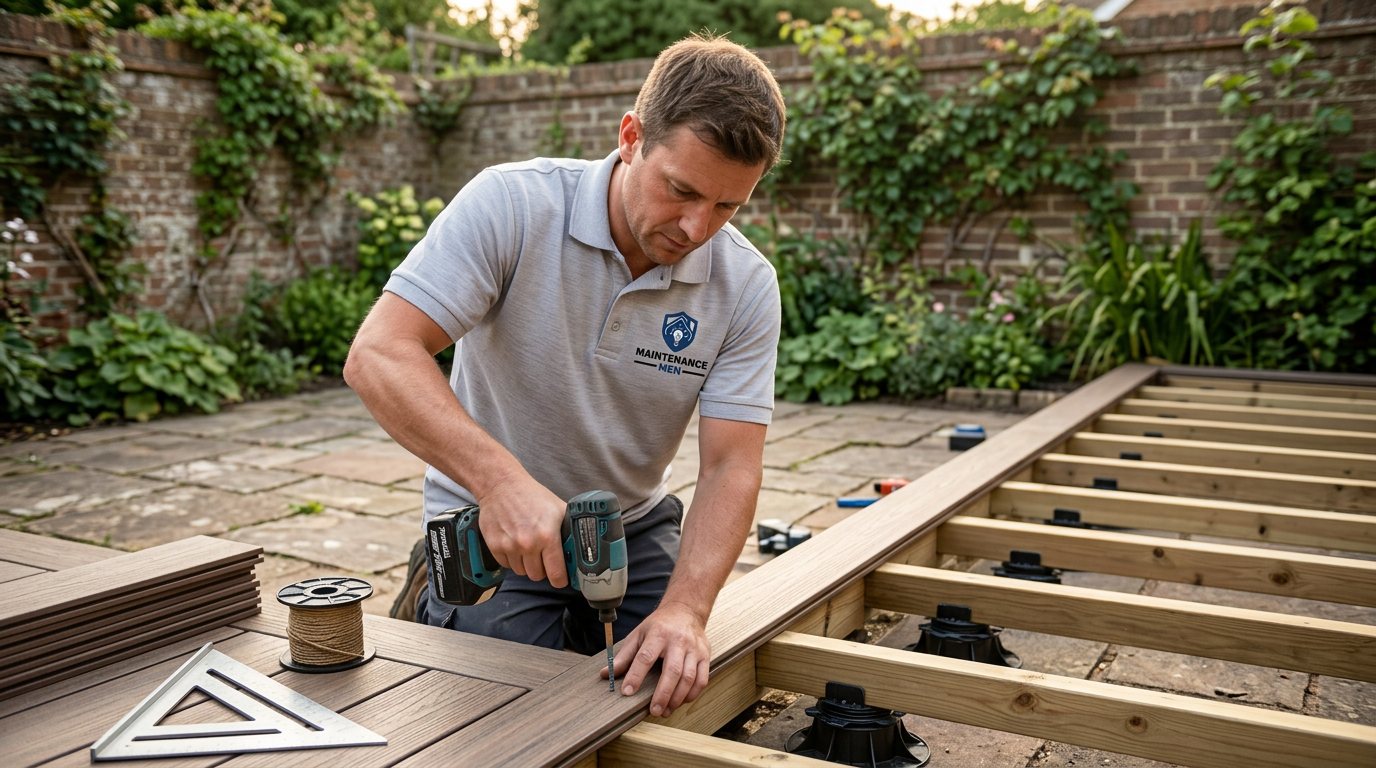
Splintered Decking Sanded Smooth and Safe for Bare Feet in Edgbaston
We deal with the splinters, lifted grain and rough edges properly — sanding or replacing boards where needed — so the deck is comfortable underfoot again.
Booking fee plus hourly labour — the price is confirmed before any work starts.
What this costs
| Booked 14+ days ahead | £25 booking fee £85 per hour |
|---|---|
| Booked within 48 hours | £100 booking fee £65 per hour |
| Same-day call-out | £220 booking fee £45 per hour |
The booking fee secures the visit. Labour is then charged by the hour, so you only pay for the time the job actually takes.
Booking fee £25–£220
£25 + £85/hr booked 14+ days ahead, £100 + £65/hr inside 48 hours, £220 + £45/hr same day. Agreed before we arrive.
Covered under Decking & Patios
Outdoor & Exterior › Decking & Patios — one of 19 documented jobs in this section.
Same-day splintered wooden decking
Urgent jobs can often be booked for today. Ask when you book and we will confirm the slot before you pay anything.
15 service areas
Birmingham, Coventry, Dorridge and 12 more across the West Midlands.
Splintering is weathering in action. Sunlight breaks down the surface fibres, moisture swells and shrinks the grain, and fixings and foot traffic open everything up. Left alone, a splintered board gets rougher every season, and the raised grain holds water and dirt, which speeds up the cycle. Bare feet, dogs' paws and children's hands find every rough patch.
Why boards splinter
UV degrades the lignin between wood fibres, so the surface goes grey and fuzzy, then lifts along the grain. Boards that were not oiled or treated regularly go first. Fixing heads proud of the surface catch feet and start tears, and boards that have cupped — curved across their width — present an edge that splinters readily. Moisture from below, where boards sit over damp ground, works from the underside at the same time.
How we assess it
We walk the deck feeling for rough areas, check how deep the splintering goes, and look at whether the boards are still thick and sound enough to sand back — sanding removes timber, so a board that is already thin or cracked may not be a candidate. We check fixing heads and look for cupping, cracks and soft spots. Then we give you an honest split: which boards will sand back beautifully, which are borderline, and which should simply be replaced.
Repairing the surface
Sound boards are sanded with the grain, worked back to clean timber, and edges are eased so they do not catch again. Proud fixings are driven home or replaced. Boards past saving are replaced with matching timber, quoted separately as materials. After sanding, a suitable oil or decking treatment protects the fresh surface and is worth doing while the timber is clean and dry — we include that in the quote so you can choose.
Conditions and timing
Sanding needs dry timber — damp grain clogs paper and the result is poor — and oiling needs a dry spell to cure properly. We schedule around the weather and say plainly if conditions must delay the finishing coat.
Honest limits
Sanding restores the surface but does not stop weathering: timber outdoors will grey and lift again without periodic maintenance, and we cannot guarantee otherwise. What we do is bring the deck back to smooth, safe timber and tell you the honest maintenance interval — usually a light clean and re-oil every year or two — that keeps it that way.
When to call
If you have started warning guests to wear shoes, or you are picking splinters out of feet after a summer afternoon, the surface is due. Catching it before boards become thin makes sanding far more likely to succeed than replacement.
Prevention worth knowing
Splintering is UV and moisture working on untreated timber, so the single best protection is a periodic clean and re-oil — typically every year or two depending on exposure. A surface that sheds water stays smooth far longer than one left grey and porous. Sweeping rather than pressure-washing, keeping gaps clear, and easing any proud fixings early also slow the cycle. If your deck gets full sun, expect to treat it more often than a shaded one, which trades splintering for algae — either way, a light annual routine beats a full sanding every few years.
How to book
Book via maintenance-men.com or by phone. The booking fee is paid when you book and labour is hourly at a rate that depends on how soon you need us. Knowing the deck's approximate size and when it was last treated helps us plan. The full cost is quoted and approved before work starts; oils and replacement boards are quoted separately.
How the price works
We charge a booking fee to hold your slot, then an hourly rate for the work itself. The fee changes with how soon you need us; the hourly rate changes with the slot you choose. You approve the price before we start, so there is no surprise on the invoice.
Booked 14+ days ahead
£25 booking fee
then £85 per hour of labour
Best value. Book the slot now, pay the smallest booking fee.
Booked within 48 hours
£100 booking fee
then £65 per hour of labour
For jobs that can wait a day or two but not a fortnight.
Same-day call-out
£220 booking fee
then £45 per hour of labour
Urgent problems: standing water, no heat, no power, leaks.
Book the slot
Choose the window that suits you and pay the booking fee. That holds your place in the diary.
We diagnose on site
The engineer confirms the cause and tells you what the job involves and how long it should take.
You approve, we work
Nothing goes ahead until you agree the price. Labour is then charged per hour at your slot rate.
Splinters turn a deck from the best seat in the house into a no-barefoot zone, and they tell you the timber surface is breaking down. We assess whether boards can be sanded back to good timber or are past it, then quote the work — including any replacements — for your approval.
What our customers say about our outdoor & exterior service
4.6 out of 5 from 10 reviews
Sorted the same day
Rang in the morning and they got to us in Wolverhampton by early afternoon. Very clear about what needed doing, what it would cost and what could wait. No pressure to add extras. Exactly the sort of tradesperson you want.
Job: Uneven Shed Base
Turned up when they said
Turned up in the window they promised, walked me through the options (turns out the previous installer had left the pipework awkward to get to), then cracked on. Everything was tested before they left. No mess, no drama, no surprise on the bill.
Job: Water-Damaged Patio
Good work, poor communication
Work itself was fine and tidy. Communication beforehand was patchy — I did not get the confirmation message and had to ring to check the slot. Would still use again.
Job: Sinking Driveway
Book Splintered Wooden Decking
Tell us what is happening and choose a slot. If you are not sure this is the right job, use the diagnosis panel — it narrows the problem down before you book.
- Booking fee confirmed up front
- Hourly labour, agreed before work starts
- Same-day slots for urgent problems








Questions people ask about splintered wooden decking
Straight answers to the things customers ask most often before booking.
Can I sand my own decking?
Yes, with a belt or orbital sander, patience and the right grits, it is a realistic DIY job on a sound deck. The common mistakes are sanding damp timber, gouging soft weathered boards with too coarse a paper, and skipping the oil afterwards — which leaves the fresh timber to weather fast.
What do you check before sanding a deck?
We check how deep the splintering goes, whether boards are still thick enough to sand back, fixing heads, cupping, cracks and soft spots. That tells us whether the answer is sanding, a mix of sanding and board replacement, or — for badly weathered decks — a bigger conversation.
Are splinters a real hazard or just annoying?
Both, but mostly a real one. Deep splinters can become infected, children and bare feet suffer most, and dogs' paws are vulnerable too. Raised grain and proud fixing heads also trip people. A rough deck is one that stops being used, which is a shame when the fix is usually straightforward.
Will the sanded deck match the rest of the boards?
Sanded areas show fresh timber against weathered boards until the whole deck is treated, so we recommend oiling the full surface as part of the job to even out the colour. We will quote that option separately so you can decide; otherwise the new timber darkens naturally over a season.
How much does it cost to fix splintered decking?
You pay a booking fee when you book, labour is charged hourly at a rate that depends on how soon you need the visit, and the full cost is quoted and approved before work starts. Oils, treatments and any replacement boards are quoted separately as materials.
Need splintered wooden decking sorted in Edgbaston?
Book a slot in the diary and pay only the booking fee up front. We confirm the rest before we start.