
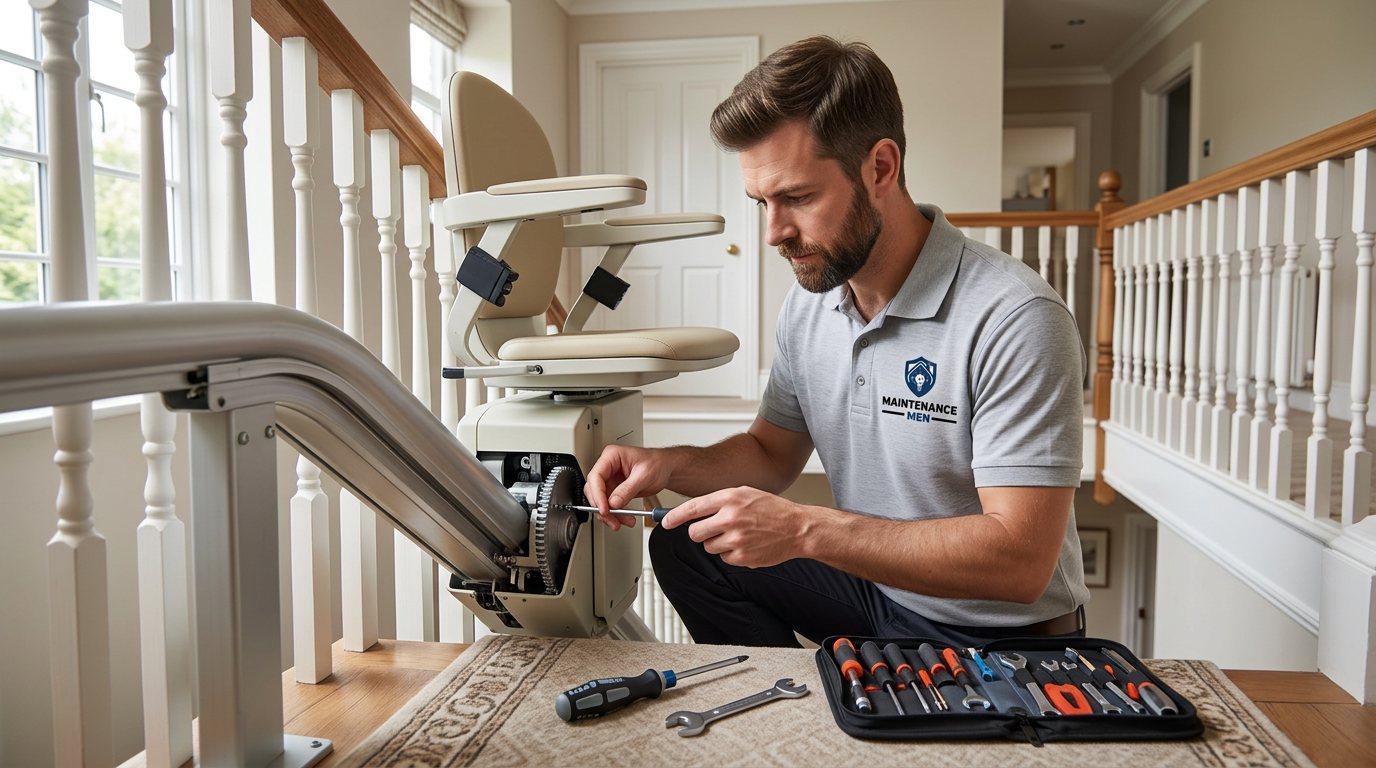
Stair Lift Running Slow or Jerky? Here's What It Means in Edgbaston
We test the drive, rail and power supply to explain the sluggishness or jerking, then quote the remedy for your approval.
Booking fee plus hourly labour — the price is confirmed before any work starts.
What this costs
| Booked 14+ days ahead | £25 booking fee £85 per hour |
|---|---|
| Booked within 48 hours | £100 booking fee £65 per hour |
| Same-day call-out | £220 booking fee £45 per hour |
The booking fee secures the visit. Labour is then charged by the hour, so you only pay for the time the job actually takes.
Booking fee £25–£220
£25 + £85/hr booked 14+ days ahead, £100 + £65/hr inside 48 hours, £220 + £45/hr same day. Agreed before we arrive.
Covered under Stair Lifts
Mobility & Accessibility › Stair Lifts — one of 24 documented jobs in this section.
Same-day slow or jerky movement
Urgent jobs can often be booked for today. Ask when you book and we will confirm the slot before you pay anything.
15 service areas
Birmingham, Coventry, Dorridge and 12 more across the West Midlands.
Stair lifts are designed to travel at a gentle, steady pace, and most people stop noticing the speed after a week of ownership. That is exactly why changes stand out: a lift that takes longer than it used to, or one that hesitates and lurches where it once glided, is telling you something has changed underneath. Slow and jerky are related symptoms but not the same problem, and they point to different causes.
Slow travel — the usual reasons
Gradual slowing is most often the batteries. As they age they deliver less current under load, and the lift's control system compensates by travelling more cautiously, particularly uphill and near the ends of the rail. A charger or charging contact that only partly works produces the same effect, because the batteries never quite reach full charge. Cold weather also slows every stair lift a little — batteries and lubricants both stiffen — which is why winter complaints are common. Less often, a drive component starting to bind makes the motor labour and the system slow down to protect itself.
Jerky movement — a different set of causes
Jerking — stop-start or lurching motion — usually points to something mechanical or a sensor issue: a flattened or rough roller, a worn spot on the drive belt or gear, debris on the rail at one location, a rail that has come slightly out of alignment, or a safety sensor that keeps briefly reading an obstruction. Jerking that happens at the same spot on every journey points strongly to something at that location on the rail; jerking that happens anywhere points to the drive or power supply.
What you can safely do
Check nothing rests on or near the rail and footplate edges, confirm the lift parks fully on its charge points, and note where and when the symptoms occur — uphill or downhill, which point on the stairs, first journey or later ones. Your manual may permit cleaning the visible rail surface. Beyond that, resist the temptation to lubricate or adjust anything: the wrong product on a stair lift rail attracts grit and turns hesitation into a jam.
How we diagnose it
We ride along (or run the lift unloaded and loaded) to reproduce both symptoms and note exactly where they occur. We load-test the batteries and check the charging chain, inspect rollers, bearings and the drive belt or gears for wear, clean and inspect the rail along its whole length, and verify alignment and bracket tightness. If the symptom turns out to be normal cold-weather behaviour rather than a fault, we will say so honestly rather than sell you a repair. Where a fix is needed — batteries, rollers, drive components, cleaning or realignment — we quote the full cost for approval before starting, fitting manufacturer-approved parts only.
Why not to ignore it
Slow travel is uncomfortable but rarely dangerous; jerky travel is different. A lift that lurches can make a passenger feel unsafe, aggravate the underlying wear, and in the worst case stop unpredictably mid-journey. If the movement has become erratic in a new way, if the lift has tripped the electrics, or if anything smells of burning, stop using it until it has been checked. And if it ever stops with someone aboard, keep them safe and comfortable, call 999 if they are in distress, and use a manual release only strictly per the manufacturer's instructions by a confident person.
Aftercare
Park squarely on the charge points, keep the rail clean, and mention any new noise promptly — hesitation caught early is usually a minor fix. An annual service keeps rollers, drive and batteries in good condition and preserves that steady, unremarkable ride you should be able to take for granted.
Booking
Get in touch with the make and model and a description of when the slowing or jerking happens. You pay a booking fee when you book, the hourly labour rate depends on how soon you need us, and the full cost is quoted and approved before work starts, with parts quoted separately.
How the price works
We charge a booking fee to hold your slot, then an hourly rate for the work itself. The fee changes with how soon you need us; the hourly rate changes with the slot you choose. You approve the price before we start, so there is no surprise on the invoice.
Booked 14+ days ahead
£25 booking fee
then £85 per hour of labour
Best value. Book the slot now, pay the smallest booking fee.
Booked within 48 hours
£100 booking fee
then £65 per hour of labour
For jobs that can wait a day or two but not a fortnight.
Same-day call-out
£220 booking fee
then £45 per hour of labour
Urgent problems: standing water, no heat, no power, leaks.
Book the slot
Choose the window that suits you and pay the booking fee. That holds your place in the diary.
We diagnose on site
The engineer confirms the cause and tells you what the job involves and how long it should take.
You approve, we work
Nothing goes ahead until you agree the price. Labour is then charged per hour at your slot rate.
A lift that has gradually slowed, or one that lurches and hesitates instead of gliding, is usually giving early warning rather than failing outright. This page explains the common causes, what you can safely check, and how our visit sorts the benign from the urgent.
What our customers say about our mobility & accessibility service
4.5 out of 5 from 8 reviews
Proper job, no upselling
Turned up in the window they promised, walked me through the options (turns out the old fitting was seized and needed careful removal), then cracked on. Everything was tested before they left. No mess, no drama, no surprise on the bill.
Job: Loose or Faulty Brakes
Fine in the end
The problem is fixed, which is the main thing, and the engineer clearly knew what they were doing. It took a fair bit longer than the estimate on the phone and I had to ask twice for a breakdown of the hours.
Job: Stair Lift Service
Would use again
What I appreciated was being told what was actually wrong before anyone started. Sorted in under 70 minutes and the invoice matched the quote to the penny.
Job: Control Panel Fault
Book Slow or Jerky Movement
Tell us what is happening and choose a slot. If you are not sure this is the right job, use the diagnosis panel — it narrows the problem down before you book.
- Booking fee confirmed up front
- Hourly labour, agreed before work starts
- Same-day slots for urgent problems


Questions people ask about slow or jerky movement
Straight answers to the things customers ask most often before booking.
Is slow travel ever normal rather than a fault?
Yes — most stair lifts run slower in cold weather and many deliberately slow near the ends of the rail or as a low-battery safeguard. But a change you can notice over weeks is usually batteries or charging, so it is worth a load test. We will tell you honestly if what you are seeing is normal behaviour.
What do you check for jerky movement specifically?
We reproduce the jerking and map where it happens, then inspect the rollers, drive belt or gears, rail surface and alignment at those points, and rule out power causes with a battery load test. A fault at one fixed spot points to the rail; jerking anywhere points to the drive or supply.
Can I oil the rail to smooth the ride?
Not unless your manufacturer's manual says to, and then only with its specified product. Unsuitable lubricant collects grit and can turn hesitation into a jam. Wiping visible dust off the rail with a dry cloth is safe and often helps.
The jerking has got worse over a month — is it safe to keep using it?
A lift that lurches should be treated as unreliable, especially with a less steady passenger aboard, because jerking can end in a mid-journey stop. If it stops with someone on it, keep them safe and comfortable and call 999 if they are in distress. Book the diagnosis rather than hoping it settles.
How is this visit priced?
You pay a booking fee when you book, and labour is charged hourly at a rate that depends on how soon you need us. Once we have diagnosed the cause we quote the full cost, you approve it before work starts, and parts are quoted separately.
Need slow or jerky movement sorted in Edgbaston?
Book a slot in the diary and pay only the booking fee up front. We confirm the rest before we start.