
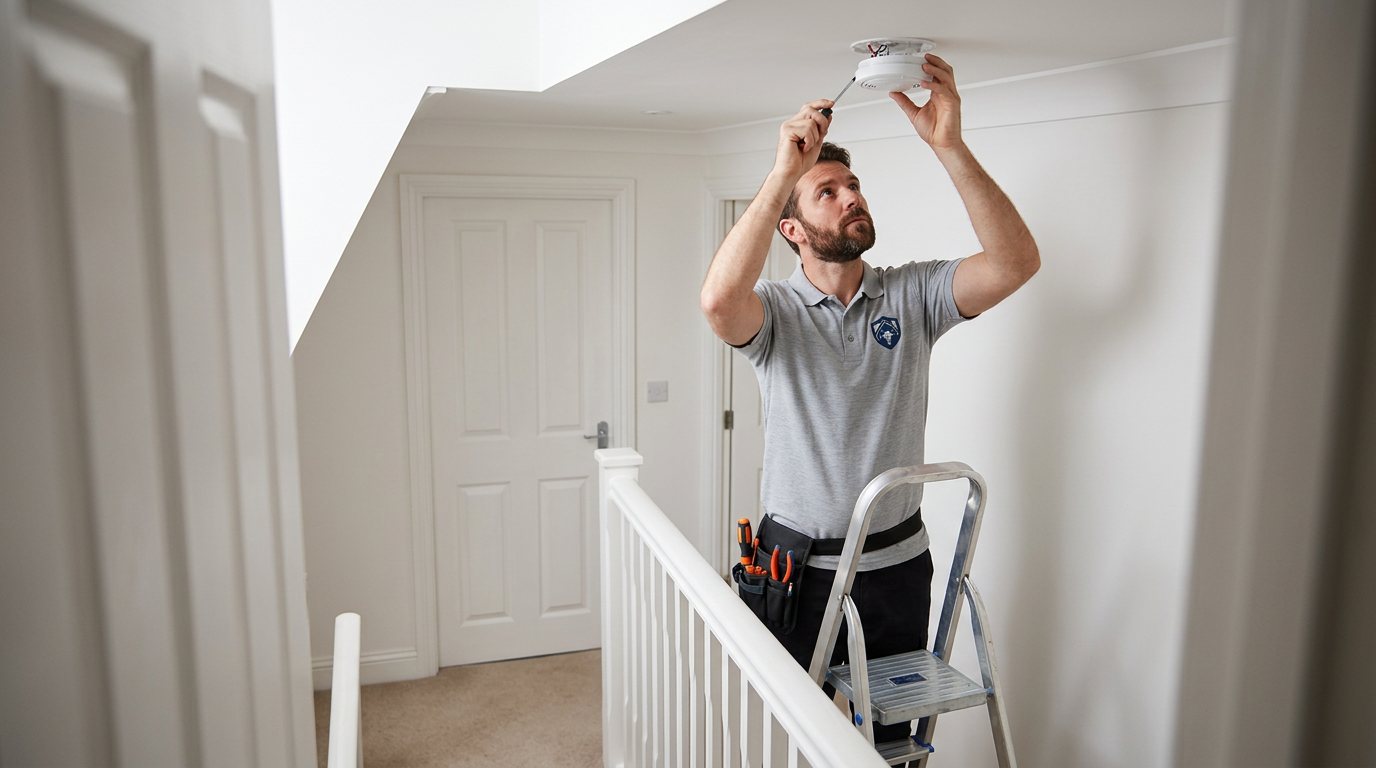
Dust in Your Smoke Alarm? We'll Clean It and Stop the Nuisance in Edgbaston
Proper cleaning of dust-clogged smoke alarms — sensing chamber, casing and mounting — so the alarm stops crying wolf and starts detecting smoke again.
Booking fee plus hourly labour — the price is confirmed before any work starts.
What this costs
| Booked 14+ days ahead | £25 booking fee £85 per hour |
|---|---|
| Booked within 48 hours | £100 booking fee £65 per hour |
| Same-day call-out | £220 booking fee £45 per hour |
The booking fee secures the visit. Labour is then charged by the hour, so you only pay for the time the job actually takes.
Booking fee £25–£220
£25 + £85/hr booked 14+ days ahead, £100 + £65/hr inside 48 hours, £220 + £45/hr same day. Agreed before we arrive.
Covered under Safety Systems
Electrical › Safety Systems — one of 20 documented jobs in this section.
Same-day smoke alarm dust contamination
Urgent jobs can often be booked for today. Ask when you book and we will confirm the slot before you pay anything.
15 service areas
Birmingham, Coventry, Dorridge and 12 more across the West Midlands.
When Dust Learns to Set Off Alarms
A smoke alarm works by watching air move through a sensing chamber, and dust moves through that chamber just like smoke does — except it's always there. As dust builds up inside an alarm, two things happen: first the alarm starts reading the dust as smoke, producing random triggers at 4am with no fire anywhere; then, as the build-up worsens, the chamber's actual sensitivity to smoke declines, because dust is crowding out the thing the alarm is meant to detect.
That combination — more false alarms, less real detection — is about the worst possible trade for a safety device, and it's why a dusty alarm deserves a proper clean rather than a battery pull and a shrug.
How Alarms Get dusty
Some of it is just the house: fine particles from cooking, heating, textiles and everyday life drift everywhere, and the alarm's chamber is deliberately open to the air. Some of it is situational. Building and decorating work is the classic — sanding, plastering and drilling produce particles at volumes no domestic alarm is designed to shrug off, and alarms near the work get clogged in days. Loft access is another common one: the hallway alarm beneath the hatch collects what falls through.
Pets add hair and dander; open windows add pollen and street dust; and time does the rest. Alarms in hallways, on landings and near kitchens are almost always the worst affected, which happens to be exactly where you need them sharpest.
Why Nuisance Alarms Shouldn't Be Ignored
There's a human reason to fix a dusty alarm quickly: every false alarm spends trust. A household that's been woken three times by nothing starts to doubt the fourth alarm — and hesitation in front of a real fire is costly. Some people respond by removing batteries, covering alarms with teacups or taking units off ceilings entirely, and then the house genuinely has no detection.
There's also the detection reason: a chamber loaded with dust responds to real smoke more slowly, so even if you put up with the nuisance alarms, the alarm's core job is already degraded. Cleaning restores both ends of that trade — fewer false alarms and faster real response.
How We Diagnose and Clean
First, we confirm dust is actually the culprit, because other things cause nuisance alarms too — steam, insects in the chamber, a unit nearing end of life, or placement too near a kitchen or bathroom. The engineer will look at where the alarm is, what's been happening in the house and what the alarm's pattern of triggers looks like.
Then the clean itself, done properly. That means the casing vacuumed and wiped around — never jabbed at with a household nozzle — the sensing chamber opened and cleared on alarms designed for it, contacts and mounting plate cleaned, and any battery compartment debris sorted. Where an alarm is simply too far gone — chambers don't always recover from a plastering season — we'll say so and suggest replacement rather than selling you a cleaning that won't last.
Aftercare
We'll show you the gentle routine that keeps dust down: a periodic vacuum around the casing's vents, a note of which rooms generate the worst debris, and — if you're planning building work — a word about protecting or temporarily managing the alarms during the dusty weeks, which saves the alarm and your sleep. The monthly test press stays the same: one beep, alarm working.
When to Call Us
Book a clean if alarms have been nuisance-triggering without any obvious cause, if they've been quiet since building or decorating work and you're not sure they're healthy, if the alarm under the loft hatch has been through a season of access, or if you'd simply like the household's alarms cleaned and verified in one visit.
Book Your Smoke Alarm Clean Today
Dust is an undignified way for a safety device to fail, and sorting it is a small, satisfying visit that ends the 4am shrieking and gives the alarm its edge back. Call Maintenance Men or book online — we'll clean every alarm properly, check them over while we're up there, and leave your ceilings quiet for the right reasons.
How the price works
We charge a booking fee to hold your slot, then an hourly rate for the work itself. The fee changes with how soon you need us; the hourly rate changes with the slot you choose. You approve the price before we start, so there is no surprise on the invoice.
Booked 14+ days ahead
£25 booking fee
then £85 per hour of labour
Best value. Book the slot now, pay the smallest booking fee.
Booked within 48 hours
£100 booking fee
then £65 per hour of labour
For jobs that can wait a day or two but not a fortnight.
Same-day call-out
£220 booking fee
then £45 per hour of labour
Urgent problems: standing water, no heat, no power, leaks.
Book the slot
Choose the window that suits you and pay the booking fee. That holds your place in the diary.
We diagnose on site
The engineer confirms the cause and tells you what the job involves and how long it should take.
You approve, we work
Nothing goes ahead until you agree the price. Labour is then charged per hour at your slot rate.
A smoke alarm full of dust does two bad things at once: it triggers nuisance alarms at nothing, and it slows its response to real smoke, because dust is sitting exactly where smoke should be. Building work, loft access, pets and plain time all fill alarms with debris. We clean the sensing chamber and the unit properly — the way the manufacturer would want it done — and get the alarm back to telling dust from smoke.
What our customers say about our electrical service
4.6 out of 5 from 11 reviews
Does what it says on the tin
No complaints about the work itself — clear explanation, sensible advice, fair price. Booking online was easy enough once I found the right job page.
Job: Smoke Alarm Replacement
Fixed it, but took longer than expected
Work itself was fine and tidy. Communication beforehand was patchy — I did not get the confirmation message and had to ring to check the slot. Would still use again.
Job: Flickering Outdoor Lights
Turned up when they said
Third time we have used Maintenance Men, and the same experience each time: agreed price, proper explanation, job done in one visit. The hourly rate is fair for the standard of work.
Job: Appliance Causing Power Trip
Book Smoke Alarm Dust Contamination
Tell us what is happening and choose a slot. If you are not sure this is the right job, use the diagnosis panel — it narrows the problem down before you book.
- Booking fee confirmed up front
- Hourly labour, agreed before work starts
- Same-day slots for urgent problems








Questions people ask about smoke alarm dust contamination
Straight answers to the things customers ask most often before booking.
Can I clean a smoke alarm myself?
Lightly, yes: vacuum around the vents and casing with a soft brush attachment, never poking into the chamber, and wipe the casing. But opening a sensing chamber or cleaning a mains-connected unit involves the ceiling wiring and the alarm's internals — if the nuisance alarms continue after a gentle external clean, the chamber itself usually needs proper attention.
How does the engineer clean the alarm?
We confirm dust is the cause first, then clean properly: casing and vents vacuumed and wiped, the sensing chamber cleared on units designed for it, contacts and the mounting plate cleaned, and the battery compartment checked. We test the alarm afterwards to confirm it responds normally — and tell you honestly if a unit is too clogged to recover.
Why does my alarm go off at random with no smoke anywhere?
Dust is the most common cause — particles in the sensing chamber read like smoke — followed by insects, steam from bathrooms or kitchens, and units reaching the end of their sensor life. The pattern and location usually point to which, and that's what we establish before cleaning anything.
What does a smoke alarm clean cost?
You pay a booking fee when you book, and the work is charged hourly at a rate that depends on how soon you need us. Cleaning is usually a short visit, and we agree the full cost with you before we start, so nothing is done without your approval.
Should I cover the alarm while decorating instead?
Temporarily, with care — a dusty decorating season is one of the fastest ways to clog a chamber, and some protection during the work makes sense. The important part is taking the cover off and testing the alarm as soon as the dust settles; an alarm left covered or bagged after the work is an alarm that isn't there.
Need smoke alarm dust contamination sorted in Edgbaston?
Book a slot in the diary and pay only the booking fee up front. We confirm the rest before we start.