
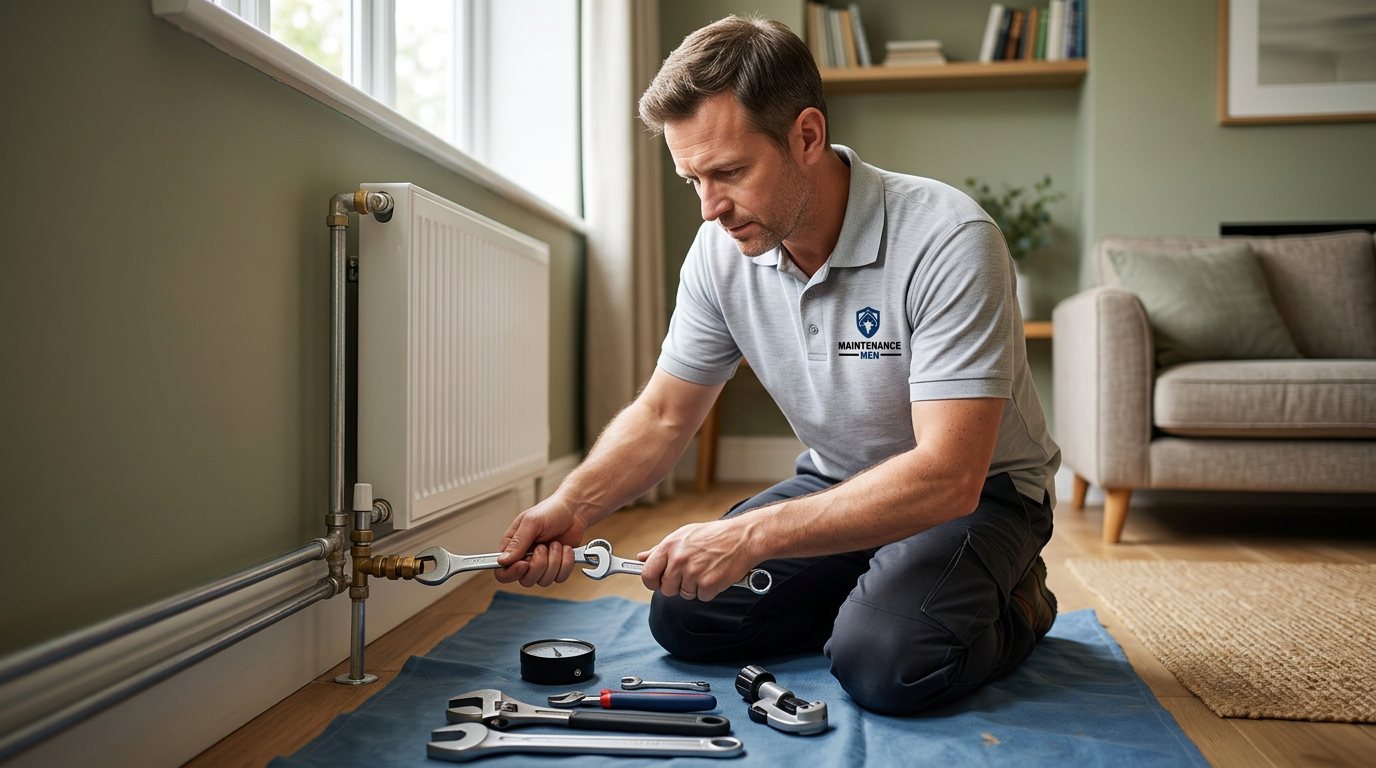
Pressure Keeps Dropping? We Track Down the Leak Causing It in Dudley
We test the sealed circuit, relief valve, expansion vessel and visible joints to find why pressure falls repeatedly, then quote the repair that stops it.
Booking fee plus hourly labour — the price is confirmed before any work starts.
What this costs
| Booked 14+ days ahead | £25 booking fee £85 per hour |
|---|---|
| Booked within 48 hours | £100 booking fee £65 per hour |
| Same-day call-out | £220 booking fee £45 per hour |
The booking fee secures the visit. Labour is then charged by the hour, so you only pay for the time the job actually takes.
Booking fee £25–£220
£25 + £85/hr booked 14+ days ahead, £100 + £65/hr inside 48 hours, £220 + £45/hr same day. Agreed before we arrive.
Covered under Pipework & Pressure
Heating & Radiators › Pipework & Pressure — one of 19 documented jobs in this section.
Same-day pressure keeps dropping
Urgent jobs can often be booked for today. Ask when you book and we will confirm the slot before you pay anything.
15 service areas
Birmingham, Coventry, Dorridge and 12 more across the West Midlands.
A Sealed System Should Not Need Constant Topping Up
Central heating is a closed loop. The same water circulates round and round, and in a healthy system the only reasons to add more are that radiators have been bled or that work has been carried out. If you find yourself reaching for the filling loop every couple of weeks, or the gauge sits low each time the heating has been off for a while, the circuit is losing water. The rate of loss matters as much as the location: a slow weep can go on for a year without visible damage, while a faster leak will eventually stain ceilings or lift flooring.
A single visit cannot always prove where a leak under a floor is escaping, but we can usually narrow it to a component or a section of the system and explain the next step plainly.
The Causes We Work Through
The pressure relief valve. This safety device opens if pressure gets too high and should reseat afterwards. Once it has lifted, grit or scale on the seat can stop it closing fully, and water then trickles continuously out of the discharge pipe. A wet or stained outlet outside is a strong clue, and the loss is often steady rather than intermittent.
The expansion vessel. As water heats it expands, and the vessel gives that expansion somewhere to go. If the internal diaphragm has failed or the air charge has been lost, pressure rises sharply when the boiler runs, the relief valve discharges, and the gauge reads low once everything cools.
Visible joints and valves. Radiator valve glands and compression nuts are frequent culprits, especially where a valve has been turned recently. Look for green or white staining, crusting, or a damp patch beneath a valve rather than a running drip.
Hidden pipework. Pipe under floors, in wall chases or beneath a concrete screed can weep for a long time. Damp patches, lifting laminate, musty smells and unexplained stains on a ceiling below are all worth mentioning when you book.
The boiler itself. Internal seals, diverter valve bodies and heat exchanger connections can lose water into the casing. This usually shows as corrosion, a drip tray with water in it, or a boiler that needs topping up more often than the rest of the system warrants.
A passing filling loop. Less common but easily missed: a filling loop valve that does not close fully keeps the circuit connected to the mains, so pressure creeps up rather than down. We check for this because it changes the diagnosis entirely.
How We Investigate
We start with the evidence you already have: how often you top up, what the gauge reads hot and cold, and where you have seen damp. On site we inspect every visible radiator valve and joint, check the relief valve outlet, test the expansion vessel charge where it is accessible, and confirm the filling loop is properly closed. Temperature patterns across the radiators can point to a section with poor flow, and isolating parts of the system is sometimes the quickest way to prove which leg is leaking. Where a leak is likely under a floor, we explain what access involves before any boards are lifted.
Repair Options and Their Limits
Some causes are quick: a new valve tail, a reseated compression joint, a replacement relief valve or a recharged vessel. Others take longer, such as cutting out and replacing a corroded section of pipe or repairing a joint beneath a floor. Parts are quoted separately and we confirm they suit your system before ordering. We do not promise that every leak is accessible without making good, and decoration or flooring reinstatement is not part of the repair unless we agree it separately. Where a leak is on the gas side of a boiler, we refer to a Gas Safe registered engineer; Maintenance Men never carries out gas work.
Living With It Until We Attend
If the gauge is below the maker's minimum, do not run the heating. Top up only to the cold figure if you know how, and leave the boiler off if it has locked out. If water comes through a ceiling, turn the stopcock off if safe, catch the drip and keep anything electrical clear. A suspected gas leak is never our booking: call 0800 111 999 from outside.
Stopping It Happening Again
Once fixed, a correct cold fill, fresh inhibitor and a magnetic filter will slow corrosion and reduce the chance of another joint failing. Note the gauge monthly to catch a new loss early.
Arrange a Pressure Loss Investigation
Book with your boiler make and model, the pressure readings hot and cold, how often you top up, and any damp or staining you have noticed. We work across the West Midlands and can sometimes attend the same day, though that is never guaranteed. We take the booking fee up front, the hourly labour rate depends on how soon you need the visit, and we quote the full total for your approval before we begin.
How the price works
We charge a booking fee to hold your slot, then an hourly rate for the work itself. The fee changes with how soon you need us; the hourly rate changes with the slot you choose. You approve the price before we start, so there is no surprise on the invoice.
Booked 14+ days ahead
£25 booking fee
then £85 per hour of labour
Best value. Book the slot now, pay the smallest booking fee.
Booked within 48 hours
£100 booking fee
then £65 per hour of labour
For jobs that can wait a day or two but not a fortnight.
Same-day call-out
£220 booking fee
then £45 per hour of labour
Urgent problems: standing water, no heat, no power, leaks.
Book the slot
Choose the window that suits you and pay the booking fee. That holds your place in the diary.
We diagnose on site
The engineer confirms the cause and tells you what the job involves and how long it should take.
You approve, we work
Nothing goes ahead until you agree the price. Labour is then charged per hour at your slot rate.
Topping the boiler up every fortnight is a habit worth breaking. A sealed system should hold its pressure for months, so repeated drops mean water is leaving the circuit somewhere, or the vessel that absorbs expansion has failed. We will work through the likely causes in order, show you what we find, and quote the repair before anything is replaced.
What our customers say about our heating & radiators service
5 out of 5 from 10 reviews
Fast, tidy and friendly
Booked the £220 booking-fee slot on Tuesday and got a message confirming the time the same morning. The cause was explained, the price agreed before any work started, and the job was done in about 46 minutes. Clean and tidy when they left.
Job: No Heating from Boiler
Turned up when they said
What I appreciated was being told what was actually wrong before anyone started. Sorted in under 46 minutes and the invoice matched the quote to the penny.
Job: Expansion Vessel Fault
Exactly what was quoted
I had put off sorting this for months because I expected a runaround. Quoted the booking fee plus hourly rate upfront, stuck to it, and actually found the underlying cause rather than just clearing the symptom. Worked neatly and hoovered up afterwards.
Job: Airlock in Hot Water System
Book Pressure Keeps Dropping
Tell us what is happening and choose a slot. If you are not sure this is the right job, use the diagnosis panel — it narrows the problem down before you book.
- Booking fee confirmed up front
- Hourly labour, agreed before work starts
- Same-day slots for urgent problems




Questions people ask about pressure keeps dropping
Straight answers to the things customers ask most often before booking.
How often is it normal to top up a boiler?
Once after bleeding radiators, or after a repair that drained part of the system. Beyond that, a healthy sealed system should hold pressure for many months. Needing to top up every few weeks means water is escaping and the cause should be investigated.
Can you find a leak under a floor?
Often we can narrow it to a section by isolating parts of the circuit and watching the gauge, then confirm with access. Lifting flooring and making good afterwards is a separate discussion, and we will explain what is involved before starting.
Is it safe to keep topping up while I wait?
Occasional top-ups to the correct cold pressure are acceptable if you follow the manual. Constant topping up is not advisable, because fresh water adds oxygen and scale. If the boiler has locked out, leave it off rather than forcing it to run.
Could the relief valve be the cause even if I see no water?
Yes. The discharge pipe often runs to a wall or drain where a trickle is easy to miss. We check the outlet for staining and damp, and test whether the valve reseats. A valve that weeps is a common reason for steady pressure loss.
What will the investigation cost?
The booking fee is taken when you book, and the hourly labour rate varies with how soon you need us. We quote the full cost of the visit and any repair, and you approve it before work begins. Parts are priced separately once identified.
Need pressure keeps dropping sorted in Dudley?
Book a slot in the diary and pay only the booking fee up front. We confirm the rest before we start.