
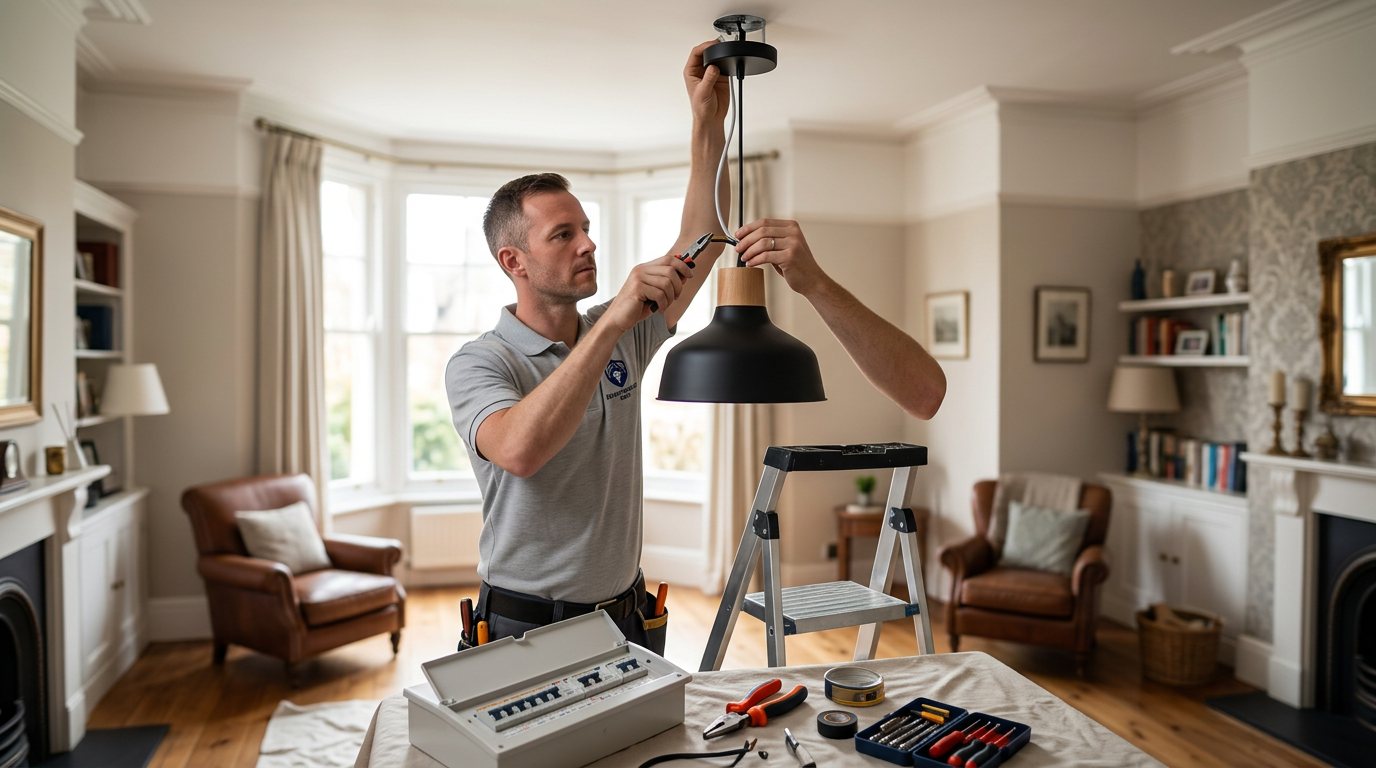
Rooms Feeling Dim? We'll Get Your Lighting Back to Full in Dudley
Dim rooms usually have a mundane cause — the wrong lamps, a failing transformer or aged bulbs — and we find it and brighten things up properly.
Booking fee plus hourly labour — the price is confirmed before any work starts.
What this costs
| Booked 14+ days ahead | £25 booking fee £85 per hour |
|---|---|
| Booked within 48 hours | £100 booking fee £65 per hour |
| Same-day call-out | £220 booking fee £45 per hour |
The booking fee secures the visit. Labour is then charged by the hour, so you only pay for the time the job actually takes.
Booking fee £25–£220
£25 + £85/hr booked 14+ days ahead, £100 + £65/hr inside 48 hours, £220 + £45/hr same day. Agreed before we arrive.
Covered under Lighting
Electrical › Lighting — one of 20 documented jobs in this section.
Same-day low brightness lighting
Urgent jobs can often be booked for today. Ask when you book and we will confirm the slot before you pay anything.
15 service areas
Birmingham, Coventry, Dorridge and 12 more across the West Midlands.
Some rooms never feel properly lit. You've the lights on, the fittings work, and yet everything reads as grey and underdone — you've stopped noticing until you visit somewhere brighter. Dim rooms almost always have a concrete, fixable cause, and it's usually cheaper to solve than people expect. Here's the honest anatomy of a dark room.
Why a Room Delivers Less Light Than It Should
The most common cause is the simplest: the lamps are wrong for the job. A 40-watt-equivalent bulb in a large living room was never going to light it; a bulb chosen for "warm and cosy" in a kitchen where you chop vegetables leaves the worktops gloomy. People inherit a room's lamps from whoever fitted them last and never revisit the choice.
The second cause is aged or failing lamps. LEDs don't usually die dramatically — they dim slowly over years, and a fitting that once blazed now delivers half its light while still technically working. Low-voltage systems add their own failure mode: a 12V transformer on its way out delivers reduced voltage, and the bulbs run visibly duller without ever stopping.
Third, the fittings and the room conspire. A dirty or yellowed diffuser eats light; a shade that throws light at the ceiling rather than the room wastes most of its output; and a single central pendant in a large room simply can't cover the corners. And occasionally there's an electrical cause — a poor connection running a fitting below par, or several fittings on a circuit whose voltage sags under load.
The Quick Diagnosis Questions
Before any visit, a few observations narrow this fast: Is one room dim or the whole house? Did the dimness creep in over years or arrive suddenly? Do the lamps look evenly bright, or does one fitting lag its neighbours? Sudden dimness in one fitting points to a lamp or transformer failure; gradual whole-room dimness points to aged lamps or an underlit design from the start.
How We Work It Out
The engineer measures rather than eyeballs. We check the actual output of each fitting — aged LED, failing transformer and underspecified lamps all show clearly on proper testing. We look at the fittings themselves: condition of diffusers, where the light is actually being directed, whether the wattage and colour temperature suit the room's use. And we check the electrical side for anything dragging a fitting below par — connections, circuit loading, transformer health on low-voltage systems.
The Fixes, in Order of Usual Practicality
Most dim rooms are transformed by the lamps alone: higher output LED in the right colour temperature for each room's job — warm and relaxed where you unwind, clean and bright where you work or cook. Swapping a struggling transformer restores low-voltage fittings to full brightness. Cleaning or replacing yellowed diffusers recovers light that's already being paid for. And where a single pendant genuinely can't serve a large room, the honest answer is additional or better-directed lighting — additional fittings, wall lights or directional spots — which we can plan and install.
What we won't do is sell you a rewiring job for what is actually a lamp choice. Most of the time, the fix is measured in lamps, not labour.
Keeping It Bright Afterwards
We'll leave you with a simple record of what lamps each room takes and what output suits it, so future replacements keep the room right. And the habit worth adopting: when a room starts feeling dimmer over months rather than days, think "aged lamps" first — LED dimming is gradual enough that most people adapt without noticing until they compare.
When to Call Us
Book a visit when a room has never felt properly lit, when fittings have visibly dimmed over time, when low-voltage bulbs run noticeably dull, or when you're redecorating and want the lighting genuinely right before the furniture goes back in.
Book Your Brightness Check Today
Tell us which rooms feel dim and what's currently fitted, and we'll bring the diagnosis and the answers in one visit. Call Maintenance Men or book online — qualified, fully insured electricians across the West Midlands, and rooms that feel properly lit at last.
How the price works
We charge a booking fee to hold your slot, then an hourly rate for the work itself. The fee changes with how soon you need us; the hourly rate changes with the slot you choose. You approve the price before we start, so there is no surprise on the invoice.
Booked 14+ days ahead
£25 booking fee
then £85 per hour of labour
Best value. Book the slot now, pay the smallest booking fee.
Booked within 48 hours
£100 booking fee
then £65 per hour of labour
For jobs that can wait a day or two but not a fortnight.
Same-day call-out
£220 booking fee
then £45 per hour of labour
Urgent problems: standing water, no heat, no power, leaks.
Book the slot
Choose the window that suits you and pay the booking fee. That holds your place in the diary.
We diagnose on site
The engineer confirms the cause and tells you what the job involves and how long it should take.
You approve, we work
Nothing goes ahead until you agree the price. Labour is then charged per hour at your slot rate.
If a room never quite feels bright enough, the answer is rarely mysterious — it's usually the lamps in the fittings, or something quietly failing behind them. We work out why your lighting underdelivers and put it right, whether that means new lamps, a repaired fitting or a better light distribution for the room.
What our customers say about our electrical service
4.6 out of 5 from 11 reviews
Does what it says on the tin
No complaints about the work itself — clear explanation, sensible advice, fair price. Booking online was easy enough once I found the right job page.
Job: Smoke Alarm Replacement
Fixed it, but took longer than expected
Work itself was fine and tidy. Communication beforehand was patchy — I did not get the confirmation message and had to ring to check the slot. Would still use again.
Job: Flickering Outdoor Lights
Turned up when they said
Third time we have used Maintenance Men, and the same experience each time: agreed price, proper explanation, job done in one visit. The hourly rate is fair for the standard of work.
Job: Appliance Causing Power Trip
Book Low Brightness Lighting
Tell us what is happening and choose a slot. If you are not sure this is the right job, use the diagnosis panel — it narrows the problem down before you book.
- Booking fee confirmed up front
- Hourly labour, agreed before work starts
- Same-day slots for urgent problems








Questions people ask about low brightness lighting
Straight answers to the things customers ask most often before booking.
What does a brightness assessment cost?
You pay a booking fee when you book the visit, then labour is hourly at a rate that depends on how soon you need us. The engineer's findings and any recommended changes are quoted before work begins, so you approve everything in advance — and if the answer is new lamps rather than electrical work, that's exactly what we'll tell you.
Can I just buy brighter bulbs myself?
You can, and it's often most of the answer — but do check two things first: the fitting's maximum wattage rating, and whether the room's dimness is one fitting lagging its neighbours, which suggests a failing transformer or connection rather than a lamp choice. Matching brightness across fittings matters more than any single lamp.
How do you work out why a room is dim?
We test each fitting's actual output, check lamps against the room's use, inspect diffusers and light direction, and test the electrical side — connections, circuit voltage and any transformers — for anything dragging performance down. That separates an underlit design from failing equipment from a wiring problem in one visit.
Is a dim light dangerous?
On its own, usually not — it's more likely an aged lamp or a design shortfall. But dimness combined with warmth, buzzing or smell at the fitting deserves prompt attention, and a whole circuit that's dimmer than it was, especially under load, is worth checking promptly because voltage-drop symptoms can point to a degrading connection.
My LED bulbs are fine but the room still feels dim — why?
Three usual suspects: the lamps are too low an output or too warm a colour for the room's job; the fittings throw light at the ceiling instead of the room; or a single central fitting can't cover a large space. All three have straightforward fixes — higher output, better-directed fittings or additional light points — and we'll show you which combination suits your room.
Need low brightness lighting sorted in Dudley?
Book a slot in the diary and pay only the booking fee up front. We confirm the rest before we start.