
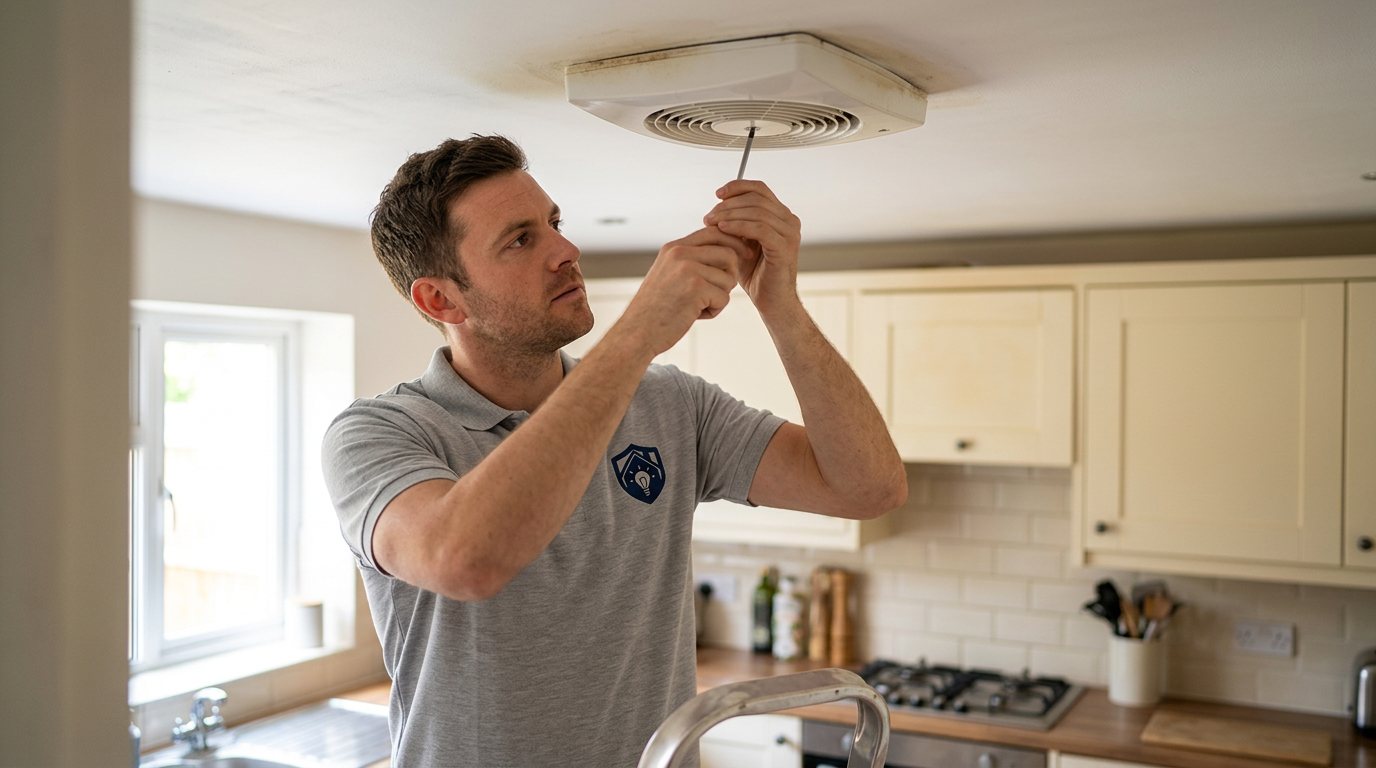
Grinding Noise from Your Extractor Fan? Don't Leave It Running in Dudley
Grinding signals bearing wear or the impeller touching its casing – we diagnose the wear and quote the right repair.
Booking fee plus hourly labour — the price is confirmed before any work starts.
What this costs
| Booked 14+ days ahead | £25 booking fee £85 per hour |
|---|---|
| Booked within 48 hours | £100 booking fee £65 per hour |
| Same-day call-out | £220 booking fee £45 per hour |
The booking fee secures the visit. Labour is then charged by the hour, so you only pay for the time the job actually takes.
Booking fee £25–£220
£25 + £85/hr booked 14+ days ahead, £100 + £65/hr inside 48 hours, £220 + £45/hr same day. Agreed before we arrive.
Covered under Extractor Fan
Home Appliances › Extractor Fan — one of 21 documented jobs in this section.
Same-day grinding noise from fan
Urgent jobs can often be booked for today. Ask when you book and we will confirm the slot before you pay anything.
15 service areas
Birmingham, Coventry, Dorridge and 12 more across the West Midlands.
Of all extractor fan noises, grinding is the one to take most seriously. Unlike a rattle from a loose cover or a hum from an undersized unit, grinding means two surfaces that should never meet are in contact – and every hour the fan runs, the contact does more damage. The sensible approach is to stop using the fan where practical and get it diagnosed promptly.
What actually grinds in a fan
The most common causes, in rough order of likelihood: worn motor bearings, which let the shaft wobble so the impeller drags on the casing or backplate; an impeller that has worked loose on the shaft and is rubbing; grit, debris or a foreign object – a screw, a piece of ducting debris, a wasp nest fragment – caught between the impeller and casing; and in grease-laden kitchen fans, hardened build-up that the blades now plough through. Each has a different fix, and the difference between them is exactly why diagnosis matters. A fan grinding because of trapped debris can be saved cheaply; one grinding on worn bearings usually can't.
Why you shouldn't just ignore it
A grinding motor is a motor under strain. The friction generates heat, the motor draws more current, and the failure mode at the end is either a seized motor that trips the supply or, in a unit heavily loaded with dust and grease, overheating that poses a genuine fire risk. There's also the property angle: a seized impeller can damage the casing and duct connection. Stopping use and arranging a prompt diagnosis is the low-cost route.
How we diagnose the grinding
Our engineer isolates the fan, examines the impeller for foreign objects and free movement by hand, and assesses bearing condition – checking for shaft play, roughness when turned, and signs of overheating. We check whether the impeller is secure on the shaft and whether the casing or duct has been damaged by the contact. We also examine the surrounding build-up, since heavy dust or grease loading both contributes to grinding and adds to the fire risk while the motor runs hot.
The likely outcome
If the cause is trapped debris, clearing it and checking the impeller runs free may be all that's needed. A loose impeller can be refitted securely if the shaft and fixing are sound. Worn bearings, though, are not a practical repair on most domestic extractor fans – the economics favour a replacement fan, and we'll say so plainly. If replacement is the answer, we'll recommend a suitable, appropriately sized and quiet model for the room and quote the unit and fitting separately for your approval. Whatever the diagnosis, you approve the full cost before any work starts.
Safety in the meantime
Don't keep running a grinding fan hoping it will settle down – it won't; it will wear faster. If the fan also smells hot, smells of burning plastic, or has started cutting out intermittently, stop using it entirely and isolate it at the switch until we attend. Please don't open the fan casing to look for the cause yourself: live connections sit behind the cover, and identifying bearing wear needs the unit isolated and properly examined.
Meanwhile, in the bathroom
One practical point: if the fan is in a bathroom, avoid heavy shower use while the fan is off, since moisture will build quickly without extraction. Wipe surfaces down and keep the window open where practical until the fan is back in service.
Getting booked in
Call or message with the room, the fan's make and model if visible, and how long the grinding has been building. Same-day visits may be available depending on the schedule – for a fan in this condition, sooner is better. We'll diagnose it, explain the options, and quote before starting.
How the price works
We charge a booking fee to hold your slot, then an hourly rate for the work itself. The fee changes with how soon you need us; the hourly rate changes with the slot you choose. You approve the price before we start, so there is no surprise on the invoice.
Booked 14+ days ahead
£25 booking fee
then £85 per hour of labour
Best value. Book the slot now, pay the smallest booking fee.
Booked within 48 hours
£100 booking fee
then £65 per hour of labour
For jobs that can wait a day or two but not a fortnight.
Same-day call-out
£220 booking fee
then £45 per hour of labour
Urgent problems: standing water, no heat, no power, leaks.
Book the slot
Choose the window that suits you and pay the booking fee. That holds your place in the diary.
We diagnose on site
The engineer confirms the cause and tells you what the job involves and how long it should take.
You approve, we work
Nothing goes ahead until you agree the price. Labour is then charged per hour at your slot rate.
A grinding extractor fan isn't just irritating – it's the sound of metal or plastic wearing against something it shouldn't touch. Left running, the motor works harder, heats up and eventually fails, sometimes abruptly. We diagnose exactly what's grinding and whether the fan can be saved or should be replaced.
What our customers say about our home appliances service
4.8 out of 5 from 14 reviews
Exactly what was quoted
What I appreciated was being told what was actually wrong before anyone started. Sorted in under 27 minutes and the invoice matched the quote to the penny.
Job: Tumble Dryer Not Starting Cycle
Good job, slightly late
Solid work. Hourly rate feels fair for the amount of work involved and everything was tested before they left. Would book again.
Job: Toaster Not Working
No mess left behind
Really straightforward. It had been bothering us for weeks; diagnosed properly, fixed the same visit, and the price was exactly what was explained when booking. Can not fault it.
Job: Microwave Button Repair
Book Grinding Noise from Fan
Tell us what is happening and choose a slot. If you are not sure this is the right job, use the diagnosis panel — it narrows the problem down before you book.
- Booking fee confirmed up front
- Hourly labour, agreed before work starts
- Same-day slots for urgent problems









Questions people ask about grinding noise from fan
Straight answers to the things customers ask most often before booking.
Is it safe to use a fan that's grinding?
We'd advise against it. Grinding means surfaces are in contact that shouldn't be, so the motor is straining and heating up with every run. If the noise comes with a hot or burning smell or intermittent stopping, switch the fan off at the isolator and leave it off until it's been checked.
Can worn fan bearings be replaced?
On most domestic extractor fans, no – the bearings aren't a separately serviceable part, and a fan grinding on worn bearings is usually best replaced. But grinding doesn't always mean bearings: trapped debris or a loose impeller are common and much cheaper to fix, which is why proper diagnosis comes first.
What will you check during the visit?
We isolate the fan and examine the impeller for trapped debris, security on the shaft and free movement, assess bearing condition for play and roughness, and check for heat damage to the motor, casing and duct connection. We also look at dust and grease build-up, which adds to both the grinding and the fire risk.
If the fan needs replacing, how is that handled?
We recommend suitable models matched to the room size, noise level and duct arrangement, quote the fan and fitting separately, and only proceed once you approve the full cost. Parts are quoted separately from labour, and we'll be clear about availability for your model of ducting and mounting before ordering.
How much does diagnosis and repair cost?
A booking fee is paid when you book, and the hourly labour rate depends on how soon you need the visit. After diagnosis you receive a full written quote covering labour and any parts or replacement fan, and nothing proceeds until you've approved it.
Need grinding noise from fan sorted in Dudley?
Book a slot in the diary and pay only the booking fee up front. We confirm the rest before we start.