
Central Heating Losing Pressure? We Trace the Leak Through the System in Dorridge
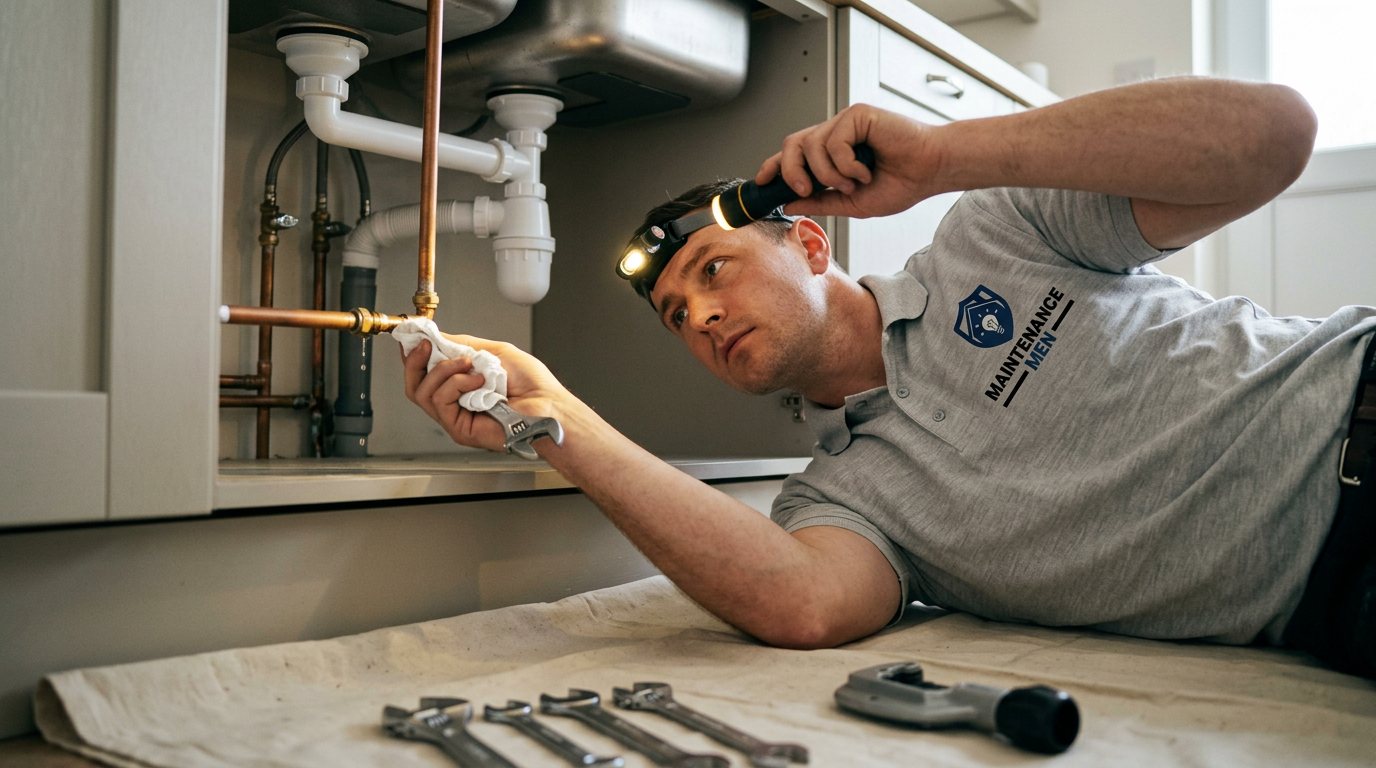
When several radiators need bleeding, the boiler keeps dropping pressure and no leak is visible, the loss is usually in the hidden pipework.
Booking fee plus hourly labour — the price is confirmed before any work starts.
What this costs
| Booked 14+ days ahead | £25 booking fee £85 per hour |
|---|---|
| Booked within 48 hours | £100 booking fee £65 per hour |
| Same-day call-out | £220 booking fee £45 per hour |
The booking fee secures the visit. Labour is then charged by the hour, so you only pay for the time the job actually takes.
Booking fee £25–£220
£25 + £85/hr booked 14+ days ahead, £100 + £65/hr inside 48 hours, £220 + £45/hr same day. Agreed before we arrive.
Covered under Leaks
Plumbing › Leaks — one of 17 documented jobs in this section.
Same-day central heating leak repair
Urgent jobs can often be booked for today. Ask when you book and we will confirm the slot before you pay anything.
15 service areas
Birmingham, Coventry, Dorridge and 12 more across the West Midlands.
What a system-wide leak looks like
A single leaking radiator valve gives you one damp patch. A leak in the central heating pipework behaves differently. The boiler pressure falls slowly, sometimes over days, and each radiator needs bleeding because air is being drawn in as the pressure drops. Radiators run hot at the bottom and cold at the top. You may hear gurgling at the pump or water running when the heating starts. In some houses there is a damp patch at the base of a wall, a lifted skirting board, or a warm patch on a floor that never quite dries.
The leak is usually in the pipework you cannot see: under suspended floors, buried in a solid floor, behind plaster, or in the ceiling void. Older installations add their own risks. Steel pipe corrodes from the inside. Microbore systems have narrow bore and small fittings that block and corrode. Compression joints under floors were often left inaccessible, and thirty years of expansion is enough to make one weep.
Why the pressure keeps falling
A sealed heating system should hold its pressure for years. When it does not, two things happen at once: water leaves, and air enters. Air in the system causes corrosion, corrosion produces sludge, and sludge settles in the lowest and slowest parts of the circuit — usually the downstairs radiators and the boiler's heat exchanger. Cold spots spread, the pump works harder, and efficiency drops.
Products sold to stop heating system leak symptoms rarely hold a corroded pipe for long, and they can restrict narrow passages elsewhere. Some systems hide the problem with a filling loop left open or an automatic top-up valve. That keeps the boiler running while fresh water is constantly added, which dilutes the inhibitor and accelerates the corrosion causing the leak. If your system has an auto-fill device and the pressure never moves, that is worth checking rather than trusting.
How we diagnose it
Diagnosis is a process of elimination. We record the pressure cold, then again after the system has run, and ask how often you have to top up. We isolate the boiler from the circuit to confirm the loss is in the pipework and not the appliance. Zone valves, where fitted, let us test one part of the house at a time, which narrows the search quickly.
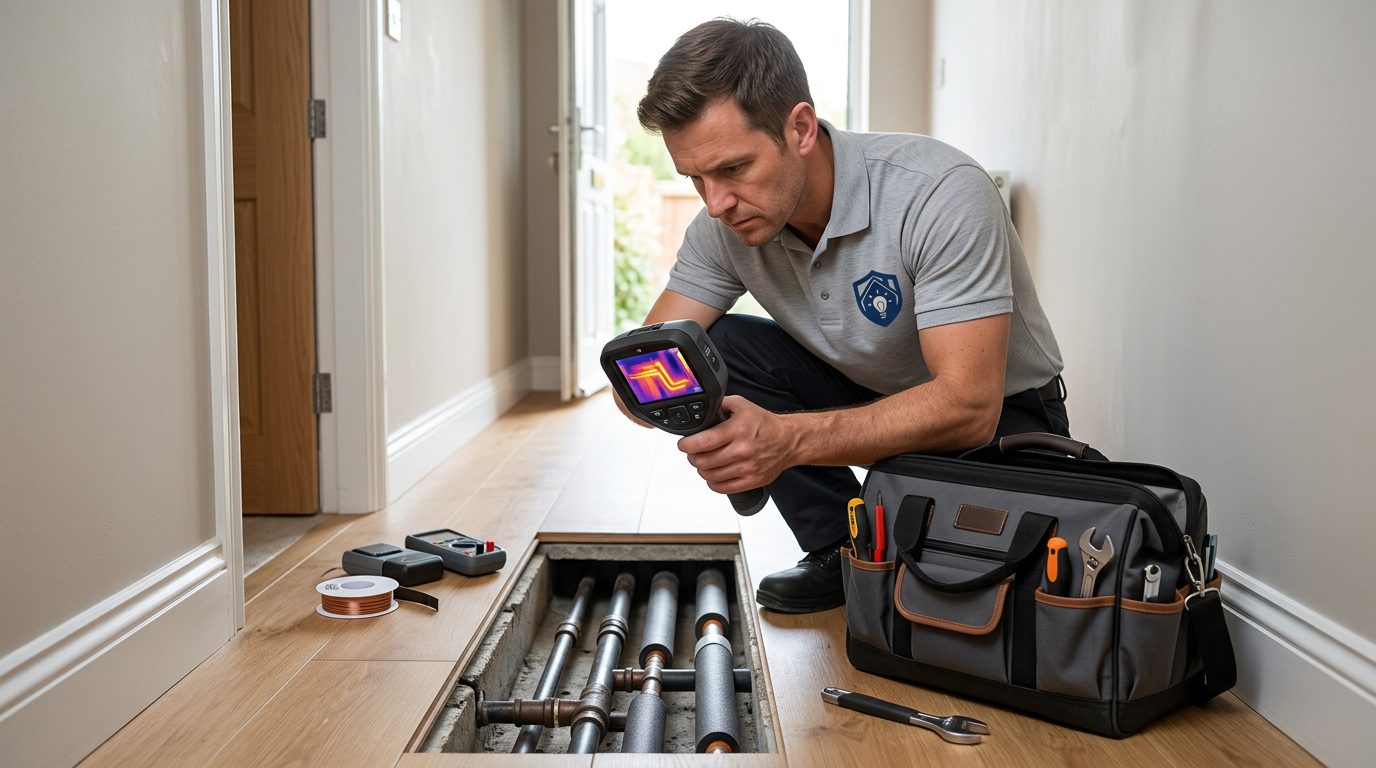
From there we use non-invasive tools before lifting anything: a moisture meter on floors and walls, a thermal camera to spot temperature patterns that suggest a leaking run, and acoustic listening at the pipework. Where the system allows, a pressure test on an isolated section proves whether it holds. Only when the location is narrowed do we lift a floor or open a wall — the point is to cut one hole in the right place rather than several in the wrong ones.
How we fix it
The repair depends on what has failed. A weeping joint under a floor is cut out and remade in a way that can be reached again. A corroded section of pipe is replaced in copper, with the run clipped and protected. A failed valve or manifold connection is renewed. If a buried run has failed repeatedly, re-routing the pipe above floor level or in a service route is often the more sensible long-term answer, and we will say so plainly rather than patching it a third time.
Once the repair is done we refill, add inhibitor, bleed every radiator in sequence, balance the system so the rooms heat evenly, and monitor the pressure hot and cold before we leave.
Prevention
Have the system serviced annually and ask for the pressure and inhibitor level to be checked. Keep a magnetic filter fitted and clean it at service. Do not leave a filling loop connected or an auto-fill valve doing the work silently. If the pressure drops, investigate rather than top up indefinitely — topping up treats the symptom and worsens the cause. In older houses, knowing where the pipework runs saves time and floorboards later.
When to call us
Call when the pressure falls more than once a season, when several radiators need bleeding repeatedly, or when you find damp near a floor or wall with no obvious source. Treat a warm, wet patch on a solid floor as urgent. If water is reaching a ceiling or electrics, isolate the supply and call the same day.
Book a call-out
Where a floor or wall needs opening we will explain the access before we start, and any making good is agreed in advance.
How the price works
We charge a booking fee to hold your slot, then an hourly rate for the work itself. The fee changes with how soon you need us; the hourly rate changes with the slot you choose. You approve the price before we start, so there is no surprise on the invoice.
Booked 14+ days ahead
£25 booking fee
then £85 per hour of labour
Best value. Book the slot now, pay the smallest booking fee.
Booked within 48 hours
£100 booking fee
then £65 per hour of labour
For jobs that can wait a day or two but not a fortnight.
Same-day call-out
£220 booking fee
then £45 per hour of labour
Urgent problems: standing water, no heat, no power, leaks.
Book the slot
Choose the window that suits you and pay the booking fee. That holds your place in the diary.
We diagnose on site
The engineer confirms the cause and tells you what the job involves and how long it should take.
You approve, we work
Nothing goes ahead until you agree the price. Labour is then charged per hour at your slot rate.
A heating system that will not hold pressure is telling you something is escaping, even when you cannot see it. Cold spots at the top of radiators, gurgling, a gauge that falls over a week and a boiler that locks out are all symptoms of the same problem. We isolate sections, test the hidden runs and repair the actual failure rather than guessing.
What our customers say about this job
5 out of 5 from 1 reviews
Turned up when they said
Turned up in the window they promised, walked me through the options (turns out the part had to be sourced locally), then cracked on. Everything was tested before they left. No mess, no drama, no surprise on the bill.
Job: Central Heating Leak Repair
Book Central Heating Leak Repair
Tell us what is happening and choose a slot. If you are not sure this is the right job, use the diagnosis panel — it narrows the problem down before you book.
- Booking fee confirmed up front
- Hourly labour, agreed before work starts
- Same-day slots for urgent problems





Questions people ask about central heating leak repair
Straight answers to the things customers ask most often before booking.
How can water be leaking if I cannot see it?
Most heating pipework runs under floors, in walls or in ceiling voids, so a slow leak soaks into the structure instead of pooling on a visible surface. The clues are pressure loss, repeated bleeding and damp or warm patches rather than a puddle.
Can you find the leak without lifting all the flooring?
That is the aim. We isolate sections and use moisture readings, thermal patterns and acoustic checks to narrow the location, then open only where the evidence points. Some systems need a section test before the exact joint is confirmed.
Why do my radiators keep needing bleeding?
Air enters when the system loses pressure and draws it in, or when the pump pulls air past a weep. Repeated bleeding is one of the clearest signs of an active leak. Bleeding alone will not solve it, because the air will return.
Is a sealant product a sensible first try?
Sealers can hold a small weep temporarily, but they do not repair a corroded pipe and can restrict narrow passages in the boiler and valves. On a system with sludge and pressure loss, they often make the next proper repair harder.
Will you re-fill and treat the system after the repair?
Yes. We refill, add inhibitor, bleed the radiators and check the pressure with the system hot and cold. If the water that comes out is heavily contaminated, we will recommend a flush as a separate piece of work.
Need central heating leak repair sorted in Dorridge?
Book a slot in the diary and pay only the booking fee up front. We confirm the rest before we start.