
Boiler Kettling? We'll Clean the System and Stop the Rumbling in Dorridge
That kettle-like rumbling means scale or sludge is boiling water locally — we restore clean circulation with flushing, descaling and flow repairs, on the water side only.
Booking fee plus hourly labour — the price is confirmed before any work starts.
What this costs
| Booked 14+ days ahead | £25 booking fee £85 per hour |
|---|---|
| Booked within 48 hours | £100 booking fee £65 per hour |
| Same-day call-out | £220 booking fee £45 per hour |
The booking fee secures the visit. Labour is then charged by the hour, so you only pay for the time the job actually takes.
Booking fee £25–£220
£25 + £85/hr booked 14+ days ahead, £100 + £65/hr inside 48 hours, £220 + £45/hr same day. Agreed before we arrive.
Covered under Boilers
Heating & Radiators › Boilers — one of 22 documented jobs in this section.
Same-day boiler kettling noise
Urgent jobs can often be booked for today. Ask when you book and we will confirm the slot before you pay anything.
15 service areas
Birmingham, Coventry, Dorridge and 12 more across the West Midlands.
What Kettling Actually Is
Kettling happens when water cannot move through the boiler's heat exchanger quickly enough to carry heat away. In the slow-moving pockets, water overheats and forms steam bubbles, which collapse noisily — the rumbling, cracking and kettle-boil sound you hear. The restriction causing it is usually:
- Limescale — in hard-water areas, dissolved minerals plate out onto the heat exchanger's hot surfaces and narrow the waterways. The West Midlands has plenty of hard-water postcodes, so this is a frequent cause.
- Sludge and corrosion debris — rust particles from aging radiators circulate and settle in the exchanger, pumps and valves, gradually choking flow.
- Restricted circulation elsewhere — a failing pump, a partially closed or stuck valve, an airlock or a choked filter can slow flow enough for local boiling even with a clean exchanger.
- Incorrect system settings — an oversised boiler or poorly balanced system can contribute, though the physical restriction is usually the main driver.
Why Kettling Gets Worse If Left
Scale and sludge do not stabilise — they accumulate. Every kettling episode deposits a little more, further slowing the flow and raising the surface temperature, which accelerates the next deposit. The heat exchanger works harder to deliver the same heat, efficiency drops, fuel bills rise, and the boiler's overheat protection trips more often. Left long enough, an exchanger that could have been cleaned becomes one that needs replacing — a far bigger job, and on many boilers an economic write-off. Early descaling and flushing is by far the cheaper path.
Recognising It Early
The classic sign is rumbling or cracking from the boiler during a heating run, settling when it cools. Supporting signs include radiators that need bleeding repeatedly, discoloured water when bleeding, a pump that whines, hot water that fluctuates, and pressure that swings unusually with temperature. If your boiler also locks out during heavy heating demand, kettling may be reaching the stage where it is tripping the overheat protection.
How We Confirm Kettling
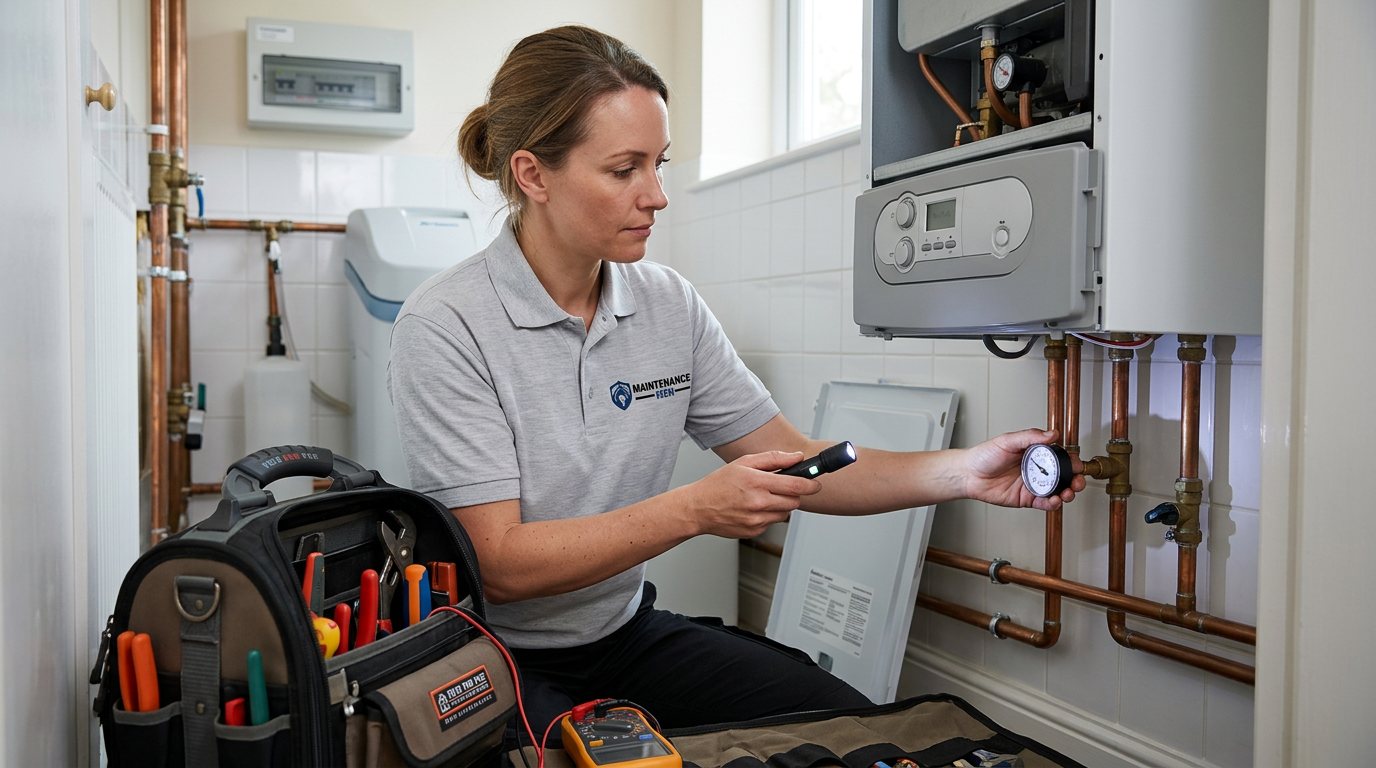
We confirm the noise pattern first — kettling has a recognisable signature during heating runs. We check circulation by comparing flow and return temperatures, test the pump, examine valves and filters for restriction, and draw a sample of system water to gauge sludge and inhibitor condition. On combi boilers in hard-water areas, scale is high on the list from the outset. All of this stays on the water side; as we are not Gas Safe registered we never open the casing to the gas side of the boiler.
How We Fix It
The repair is to restore free circulation. That typically means power flushing the system to strip sludge from radiators, pipework and the exchanger, with a magnetic filter catching debris during and after the flush; chemical descaling of the heat exchanger where limescale is the cause; replacing or reworking whatever was choking flow — pumps, valves or filters; and dosing inhibitor plus fitting a scale reducer in hard-water areas to keep the problem from rebuilding. Where our findings point to the exchanger or other gas-side components rather than water quality and flow, we explain what we found and recommend one of the trusted Gas Safe registered engineers we work closely with for that work.
Keeping It Quiet Afterwards
After flushing, clean water dosed with inhibitor is what keeps a system quiet, so we will recommend a maintenance routine — periodic water checks, top-ups after any system changes, and never draining and refilling with plain water casually. We will also show you what to listen for, so a returning rumble gets caught in its first week rather than its fifth month.
Arranging a Flushing Visit
Tell us your boiler's make and model, your postcode — it tells us how hard your water is — and when the rumbling occurs. Same-day visits may be available but are never promised. A booking fee is paid when you book, labour is charged hourly at a rate depending on how soon you need the visit, and the full cost of flushing or repairs is quoted and approved before we start. Parts and chemicals are quoted separately. We cover the West Midlands.
How the price works
We charge a booking fee to hold your slot, then an hourly rate for the work itself. The fee changes with how soon you need us; the hourly rate changes with the slot you choose. You approve the price before we start, so there is no surprise on the invoice.
Booked 14+ days ahead
£25 booking fee
then £85 per hour of labour
Best value. Book the slot now, pay the smallest booking fee.
Booked within 48 hours
£100 booking fee
then £65 per hour of labour
For jobs that can wait a day or two but not a fortnight.
Same-day call-out
£220 booking fee
then £45 per hour of labour
Urgent problems: standing water, no heat, no power, leaks.
Book the slot
Choose the window that suits you and pay the booking fee. That holds your place in the diary.
We diagnose on site
The engineer confirms the cause and tells you what the job involves and how long it should take.
You approve, we work
Nothing goes ahead until you agree the price. Labour is then charged per hour at your slot rate.
A boiler that sounds like a kettle coming to the boil is telling you that water is overheating in pockets instead of flowing freely — almost always because scale or sludge has narrowed the passages it should run through. Kettling is very treatable when caught early. We will restore clean, unrestricted circulation on the water side, and if the evidence points to gas-side components we will refer you to a trusted Gas Safe registered engineer we work closely with.
What our customers say about our heating & radiators service
5 out of 5 from 10 reviews
Fast, tidy and friendly
Booked the £220 booking-fee slot on Tuesday and got a message confirming the time the same morning. The cause was explained, the price agreed before any work started, and the job was done in about 46 minutes. Clean and tidy when they left.
Job: No Heating from Boiler
Turned up when they said
What I appreciated was being told what was actually wrong before anyone started. Sorted in under 46 minutes and the invoice matched the quote to the penny.
Job: Expansion Vessel Fault
Exactly what was quoted
I had put off sorting this for months because I expected a runaround. Quoted the booking fee plus hourly rate upfront, stuck to it, and actually found the underlying cause rather than just clearing the symptom. Worked neatly and hoovered up afterwards.
Job: Airlock in Hot Water System
Book Boiler Kettling Noise
Tell us what is happening and choose a slot. If you are not sure this is the right job, use the diagnosis panel — it narrows the problem down before you book.
- Booking fee confirmed up front
- Hourly labour, agreed before work starts
- Same-day slots for urgent problems




Questions people ask about boiler kettling noise
Straight answers to the things customers ask most often before booking.
Is kettling dangerous?
The boiler's safety limits will shut it down before it becomes hazardous, so kettling is more damaging than dangerous — it steadily cooks scale onto the heat exchanger and stresses components. Do not ignore it, but there is no need to panic. If you ever smell gas as well, that is different: ventilate if safe, leave and call 0800 111 999 from outside.
Why is my boiler kettling only in cold weather or heavy use?
During heavy demand the boiler runs at full power, so any restriction in water flow bites hardest then. A mild restriction may be silent on short cycles and audible on long winter runs. It usually means the build-up is early — a good time to flush before it worsens.
Will a power flush cure kettling completely?
When sludge is the cause, a thorough power flush with a magnetic filter usually cures it. When limescale is the cause — common on combi boilers in hard-water areas — chemical descaling of the exchanger is needed, plus a scale reducer to prevent regrowth. We diagnose which applies before quoting, and parts or chemicals are quoted separately.
Can I do anything about kettling myself?
Bleeding radiators and checking pressure are safe with the system cool, and they rule air in or out. But kettling needs chemical treatment and flushing equipment, and nothing inside the boiler casing should ever be opened by a homeowner — that includes any gas-side parts, which only a Gas Safe engineer may touch.
How much does a kettling repair cost?
A booking fee is paid when you book, and the hourly labour rate depends on how soon you need us. A power flush or descaling is quoted as a full price for your approval before work starts, and any pump, filter or chemicals are identified and quoted separately. Nothing proceeds without your agreement to the quote.
Need boiler kettling noise sorted in Dorridge?
Book a slot in the diary and pay only the booking fee up front. We confirm the rest before we start.