
Blocked Soakaway? We'll Find It and Get It Working in Dorridge
We locate your soakaway, test whether it is silted or blocked, and clear or restore it where that is the right fix.
Booking fee plus hourly labour — the price is confirmed before any work starts.
What this costs
| Booked 14+ days ahead | £25 booking fee £85 per hour |
|---|---|
| Booked within 48 hours | £100 booking fee £65 per hour |
| Same-day call-out | £220 booking fee £45 per hour |
The booking fee secures the visit. Labour is then charged by the hour, so you only pay for the time the job actually takes.
Booking fee £25–£220
£25 + £85/hr booked 14+ days ahead, £100 + £65/hr inside 48 hours, £220 + £45/hr same day. Agreed before we arrive.
Covered under Soakaways & Surface Water
Drainage › Soakaways & Surface Water — one of 20 documented jobs in this section.
Same-day blocked soakaway system
Urgent jobs can often be booked for today. Ask when you book and we will confirm the slot before you pay anything.
15 service areas
Birmingham, Coventry, Dorridge and 12 more across the West Midlands.
Soakaways rarely block dramatically; they fade. Over years, silt, soil fines, root fibres and roof debris settle into the pit and fill the void that used to hold water. Eventually the soakaway accepts nothing, and everything upstream — gullies, channels, the drain run — starts to back up. The good news is that many blocked soakaways can be brought back to useful life; the bad news is that some have simply reached the end of their working life.
Signs your soakaway is blocked
Water standing around gullies or channel drains for hours after rain, gurgling or slow emptying from external drains, water surging back up at the lowest grate during heavy rain, a persistently damp patch over the suspected soakaway location, and water that used to disappear quickly now lingering near the house. If several of these are happening together, the drainage system downstream of your gullies is not accepting water, and the soakaway is the usual suspect.
How we diagnose it
First we locate the soakaway — not always obvious, especially on older properties where it may be some distance from the house under lawn or gravel. We rod the drain run from the gully towards the soakaway to find where the resistance is, and check the run itself for silt, roots or a collapsed section, because a blocked pipe and a blocked soakaway feel identical from the surface. Once we reach the pit, we assess it: how full of silt, whether the structure — brick, precast rings, crates or a rubble-filled pit — is intact, and whether the surrounding ground still drains. Trial digging or careful excavation may be needed, and we always check for buried services before digging; a detector helps but no scan guarantees what is below, and utility plans are yours to provide.
Clearing and restoring
Where the run is silted, jetting or rodding restores flow. Where the soakaway itself is choked, clearing silt out of the pit — and often replacing the surrounding filter media — can restore capacity, provided the structure and the ground are sound. Where the soakaway is undersized for the roof and paved area it serves, or the ground no longer accepts water, cleaning only buys time and we will say so. A new, correctly calculated soakaway is a quoted project after survey, sized from the area it serves and the ground's infiltration rate rather than guessed.
One honest limit: if a soakaway serves an old system that predates separation of foul and surface water, we stop and check carefully before disturbing anything, and on very old pipework we are alert to fragile or asbestos-cement materials — those are left undisturbed and referred for specialist handling if found.
Preventing a repeat
Keep gutters and roof valleys clean so debris does not wash down into the run, fit or maintain a silt trap where the drainage allows, and avoid paving over or driving on the ground above a soakaway — compaction and covering both shorten its life. A soakaway that empties a driveway benefits enormously from the gully's silt bucket being emptied regularly.
Booking
Book a visit and tell us where the water stands, roughly when the system was last working well, and any idea you have of the soakaway's location — old plans, a dip in the lawn, or where a previous owner mentioned it. Access to the affected gullies is the main thing we need on the day. Clearing work within the visit is charged at our standard rates; replacement or new soakaways are quoted after survey and approved by you before any digging starts.
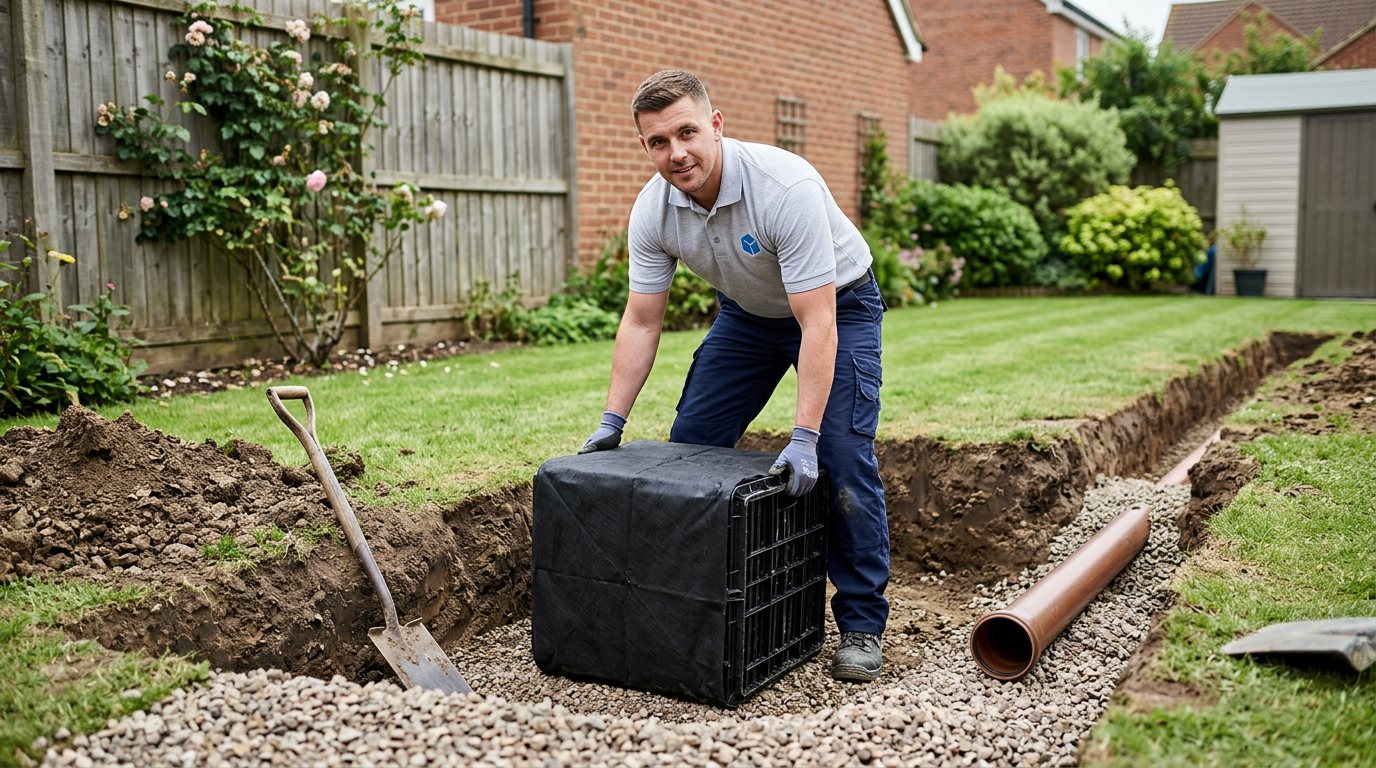
It helps to know what a soakaway actually is before we arrive: a buried pit or chamber — brick, rubble-filled, precast rings or modern crates — that collects surface water and lets it seep into the surrounding soil. Nothing in it is self-cleaning; whatever arrives in the water stays behind. That is why every soakaway silts eventually, and why the honest question is not whether it will block but how far through its life it is when it does.
How the price works
We charge a booking fee to hold your slot, then an hourly rate for the work itself. The fee changes with how soon you need us; the hourly rate changes with the slot you choose. You approve the price before we start, so there is no surprise on the invoice.
Booked 14+ days ahead
£25 booking fee
then £85 per hour of labour
Best value. Book the slot now, pay the smallest booking fee.
Booked within 48 hours
£100 booking fee
then £65 per hour of labour
For jobs that can wait a day or two but not a fortnight.
Same-day call-out
£220 booking fee
then £45 per hour of labour
Urgent problems: standing water, no heat, no power, leaks.
Book the slot
Choose the window that suits you and pay the booking fee. That holds your place in the diary.
We diagnose on site
The engineer confirms the cause and tells you what the job involves and how long it should take.
You approve, we work
Nothing goes ahead until you agree the price. Labour is then charged per hour at your slot rate.
A soakaway that has stopped working shows itself slowly — water backing up gullies, puddles that outstay the rain, a smell of stagnant water near the drain run. We locate the soakaway, work out why it has stopped accepting water and restore it where restoration is possible. Where the structure itself has failed or the ground has changed, we tell you honestly what the realistic options are.
What our customers say about this job
4 out of 5 from 1 reviews
Does what it says on the tin
Solid work. Hourly rate feels fair for the amount of work involved and everything was tested before they left. Would book again.
Job: Blocked Soakaway System
Book Blocked Soakaway System
Tell us what is happening and choose a slot. If you are not sure this is the right job, use the diagnosis panel — it narrows the problem down before you book.
- Booking fee confirmed up front
- Hourly labour, agreed before work starts
- Same-day slots for urgent problems



Questions people ask about blocked soakaway system
Straight answers to the things customers ask most often before booking.
Can I unblock a soakaway myself?
Clearing leaves from gully gratings and rodding an accessible drain run is reasonable DIY. But locating and excavating a buried soakaway, digging out silt safely and assessing the structure is not — old pits can be deep, unstable and a genuine collapse hazard, and buried services may be close by. We check for services before any digging and work with the right equipment.
How do you find and test a blocked soakaway?
We trace the drain run from the gullies, rodding to find where flow stops, then locate and carefully open the soakaway pit. We assess how much silt has filled it, whether the structure is intact, and whether the surrounding ground still accepts water. Trial holes and service checks come before any digging — no scan guarantees what is below, so we work carefully.
Is an old soakaway pit dangerous to open?
Deep or ageing pits can be a collapse risk, which is why we open them properly rather than leaning in. On very old systems we are also alert to fragile or asbestos-cement materials in old pipework and chambers — if we find anything like that we stop, leave it undisturbed and point you towards specialist testing and removal. Safety comes before clearing.
Will clearing the soakaway fix my standing water permanently?
Clearing restores what the soakaway used to do, which fixes the backup. But if the soakaway is undersized for today's roof and paved areas, or the ground has become less permeable with age, the same problem will return — and we will tell you if that is the case rather than sell you a clean-out that disappoints. A properly sized replacement is quoted after survey.
What does soakaway clearing cost?
You pay a booking fee when you book, and labour is charged hourly at a rate that depends on how soon you need the visit. The full cost of the clearing work is quoted before we start, so you approve it first, and any parts or materials are quoted separately. A replacement or new soakaway is a surveyed project quoted after we have assessed the ground.
Need blocked soakaway system sorted in Dorridge?
Book a slot in the diary and pay only the booking fee up front. We confirm the rest before we start.