
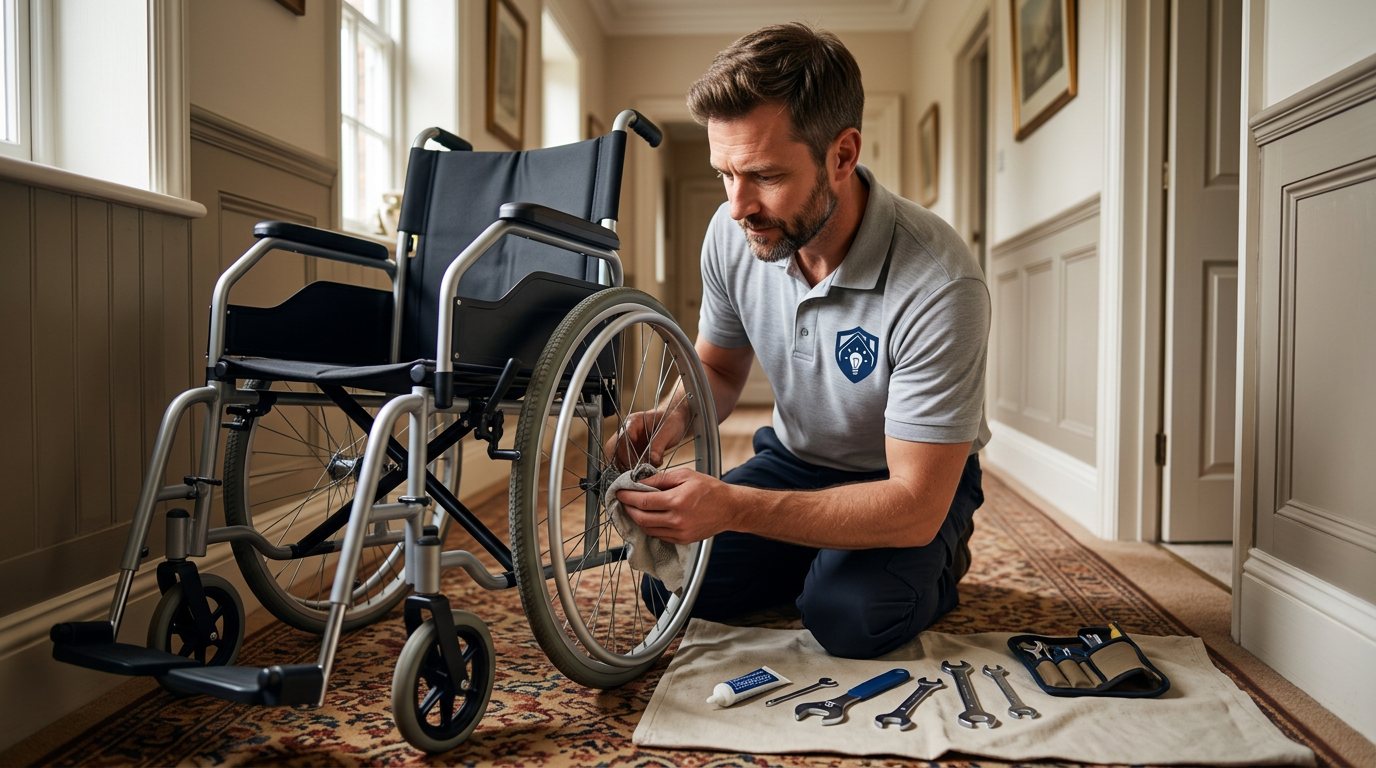
Worn Wheelchair Tyres Replaced Before They Let You Down in Coventry
We assess tyre wear on manual and powered wheelchairs, replace with correctly sized tyres or solid alternatives, and set pressures for easy, safe rolling.
Booking fee plus hourly labour — the price is confirmed before any work starts.
What this costs
| Booked 14+ days ahead | £25 booking fee £85 per hour |
|---|---|
| Booked within 48 hours | £100 booking fee £65 per hour |
| Same-day call-out | £220 booking fee £45 per hour |
The booking fee secures the visit. Labour is then charged by the hour, so you only pay for the time the job actually takes.
Booking fee £25–£220
£25 + £85/hr booked 14+ days ahead, £100 + £65/hr inside 48 hours, £220 + £45/hr same day. Agreed before we arrive.
Covered under Wheelchairs & Accessories
Mobility & Accessibility › Wheelchairs & Accessories — one of 23 documented jobs in this section.
Same-day worn wheelchair tyres
Urgent jobs can often be booked for today. Ask when you book and we will confirm the slot before you pay anything.
15 service areas
Birmingham, Coventry, Dorridge and 12 more across the West Midlands.
Tyres are the wheelchair's only contact with the ground, so when they wear out the whole chair suffers: more effort to push, less grip on wet pavements, a wander to one side, and on powered chairs a measurable loss of range as the motors fight soft, deformed rubber. Worn tyres are also the hidden cause of repeated punctures — thin rubber lets in objects that a healthy tyre would shrug off. This page explains how tyres wear, how to spot it, and what a proper replacement involves.
How wheelchair tyres wear
Pneumatic tyres on manual chairs wear in the centre of the tread first, where the push rim drives them, and they flatten across the crown with use until the tyre looks square-edged rather than rounded. Sidewalls crack with age, especially on chairs stored in sheds or sunlight. Under-inflation accelerates all of it — a soft tyre flexes, overheats its casing and wears far faster than one kept at the pressure printed on the sidewall.
Solid tyres, common on casters and on some powered chairs, wear differently: they shed material, develop flat spots from pivoting turns on the spot, and can loosen on the hub. A flat-spotted caster gives a jolting, clattering ride and makes the chair shudder on slightly uneven ground. Powered chairs also chew tyres faster than you would expect, because the driven wheels break traction on slopes and hard corners.
The symptoms worth acting on
The chair needs noticeably more push than it used to. It drifts left or right on flat ground. Grip feels uncertain on wet or painted surfaces. There is a jolt or clatter from the casters. The tread is visibly flattened, cracked or bald in patches, or the tyre sits unevenly on the rim. Repeated punctures are themselves a wear symptom — the third puncture in a season is the tyre telling you it is finished.
What the visit covers
We inspect every tyre on the chair — the driven wheels matter most, but worn casters cause plenty of trouble too. We check tread condition, cracking, flat spots, pressure and true running, and look at the rims and bearings while the wheels are in our hands, because replacing a tyre on a wheel with a worn bearing or a damaged rim wastes the new rubber. Then we give you an honest verdict: what needs replacing now, what is fine for a while, and what options exist.
Where pneumatic tyres are worn we replace them with the correct size and type, fit them properly without pinching tubes, and inflate to the specified pressure. Where solid or puncture-proof options exist for your model, we explain the trade-off plainly — no punctures ever, at the cost of a slightly firmer ride — and let you decide; we will not claim a solid tyre suits every user, only that it ends flats. On powered chairs we confirm the replacement tyres match the manufacturer's specification for the driven wheels.
What we will not claim
Tyre grip is a safety-relevant property, and we make no promises about performance in particular conditions — wet leaves defeat every tyre. We also make no claims about a chair's suitability for anyone's medical needs; that stays with you, your carers and the manufacturer's specifications. What we can promise is correct fitment, correct pressures and an honest assessment of the rest of the wheel while we are there.
Prevention after the visit
Keep a suitable pump by the chair and check pressures weekly; it is the single highest-value habit in wheelchair upkeep. Watch for the wear signs above rather than waiting for a blowout or a run of punctures. Replace tyres in good time — a new tyre costs less in every sense than the effort and risk of running one bald. And if the chair lives outdoors or in a cold shed, expect faster sidewall ageing and check more often.
Booking a visit
Tell us the make and model of the chair, which tyres worry you, and whether you have had punctures or notice pulling or juddering. If you know the tyre size printed on the sidewall, mention it — if not, we will measure. You pay a booking fee when you book, labour is hourly at a rate depending on how soon you need the visit, and the full cost including tyres is quoted and approved before we start.
How the price works
We charge a booking fee to hold your slot, then an hourly rate for the work itself. The fee changes with how soon you need us; the hourly rate changes with the slot you choose. You approve the price before we start, so there is no surprise on the invoice.
Booked 14+ days ahead
£25 booking fee
then £85 per hour of labour
Best value. Book the slot now, pay the smallest booking fee.
Booked within 48 hours
£100 booking fee
then £65 per hour of labour
For jobs that can wait a day or two but not a fortnight.
Same-day call-out
£220 booking fee
then £45 per hour of labour
Urgent problems: standing water, no heat, no power, leaks.
Book the slot
Choose the window that suits you and pay the booking fee. That holds your place in the diary.
We diagnose on site
The engineer confirms the cause and tells you what the job involves and how long it should take.
You approve, we work
Nothing goes ahead until you agree the price. Labour is then charged per hour at your slot rate.
Tyre wear is easy to ignore on a wheelchair because it happens gradually — a little less grip, a little more effort, a slight pull to one side. We inspect all the tyres honestly, tell you which genuinely need replacing and which can wait, and fit the right sizes properly. You approve the full cost before anything is ordered.
What our customers say about our mobility & accessibility service
4.5 out of 5 from 8 reviews
Proper job, no upselling
Turned up in the window they promised, walked me through the options (turns out the old fitting was seized and needed careful removal), then cracked on. Everything was tested before they left. No mess, no drama, no surprise on the bill.
Job: Loose or Faulty Brakes
Fine in the end
The problem is fixed, which is the main thing, and the engineer clearly knew what they were doing. It took a fair bit longer than the estimate on the phone and I had to ask twice for a breakdown of the hours.
Job: Stair Lift Service
Would use again
What I appreciated was being told what was actually wrong before anyone started. Sorted in under 70 minutes and the invoice matched the quote to the penny.
Job: Control Panel Fault
Book Worn Wheelchair Tyres
Tell us what is happening and choose a slot. If you are not sure this is the right job, use the diagnosis panel — it narrows the problem down before you book.
- Booking fee confirmed up front
- Hourly labour, agreed before work starts
- Same-day slots for urgent problems






Questions people ask about worn wheelchair tyres
Straight answers to the things customers ask most often before booking.
How do I know when wheelchair tyres genuinely need replacing?
Look for a flattened or bald tread, cracks in the sidewall, flat spots or clattering from the casters, and the chair pulling or needing more push. Repeated punctures are also a wear sign. If you are unsure, we will inspect and give you an honest verdict on each tyre.
What happens during a tyre replacement visit?
We inspect all tyres, pressures and wheels, check the rims and bearings while we are there, and replace only what needs replacing with correctly sized tyres. New tyres are fitted without pinching tubes, inflated to spec, and the wheels are confirmed running true before we leave.
Is tyre wear a safety issue I should worry about?
Worn tyres mainly cost you effort and grip, and badly worn or cracked tyres puncture repeatedly, which can leave you stranded. We would not describe it as an emergency, but grip on wet surfaces does suffer, so worn tyres are worth replacing promptly rather than eventually.
Can I get puncture-proof tyres for my chair?
Often yes — solid or puncture-proof options exist for many models, particularly casters and some driven wheels. They end flats but give a firmer ride, and whether that suits you is your call. We will fit whatever correct option you choose and tell you honestly what exists for your model.
How is the cost worked out?
There is a booking fee paid when you book, and hourly labour at a rate that depends on how soon you need the visit. The full cost, including the tyres, is quoted and approved before any work starts, with the parts itemised separately from labour.
Need worn wheelchair tyres sorted in Coventry?
Book a slot in the diary and pay only the booking fee up front. We confirm the rest before we start.