
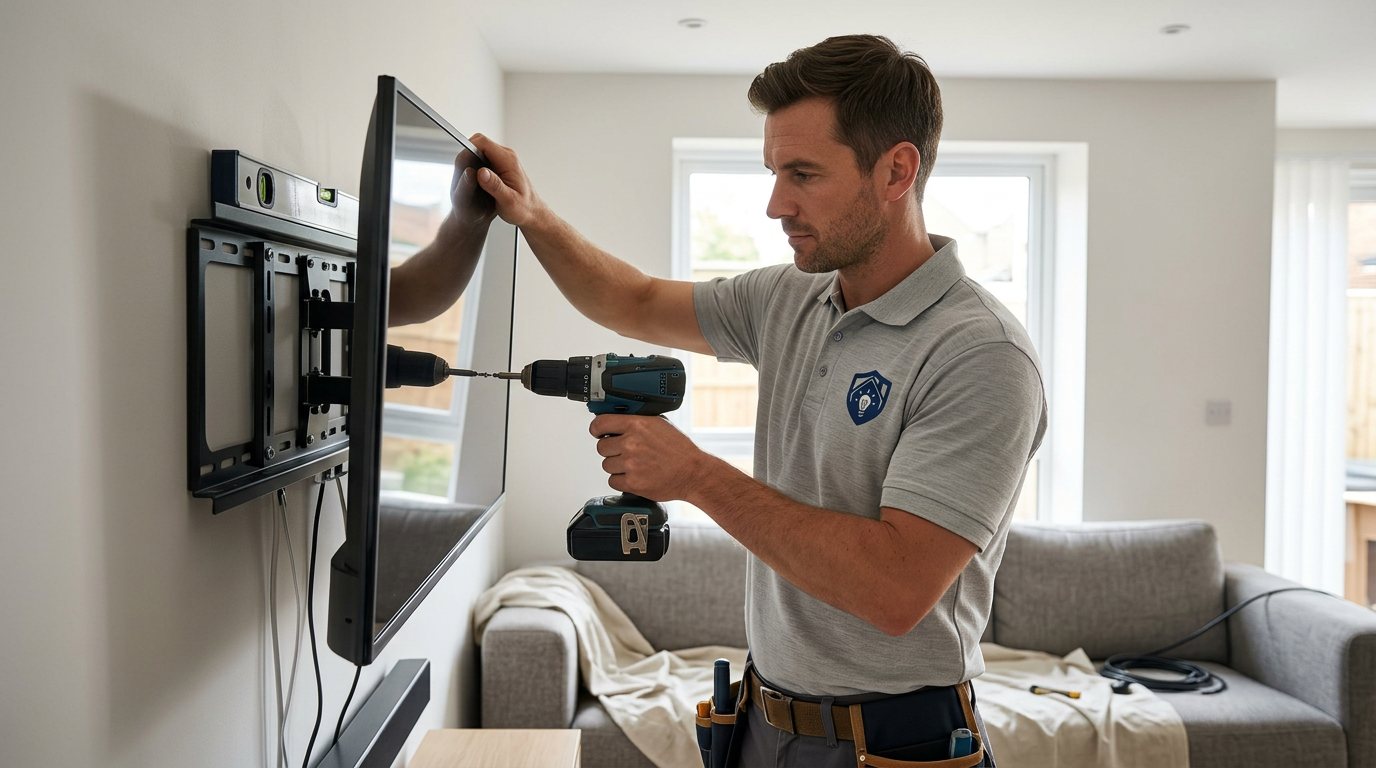
TV Cable Concealing Done Neatly, With No Electrical Work in Coventry
Surface trunking or agreed access routing — your TV leads hidden without touching the wiring.
Booking fee plus hourly labour — the price is confirmed before any work starts.
What this costs
| Booked 14+ days ahead | £25 booking fee £85 per hour |
|---|---|
| Booked within 48 hours | £100 booking fee £65 per hour |
| Same-day call-out | £220 booking fee £45 per hour |
The booking fee secures the visit. Labour is then charged by the hour, so you only pay for the time the job actually takes.
Booking fee £25–£220
£25 + £85/hr booked 14+ days ahead, £100 + £65/hr inside 48 hours, £220 + £45/hr same day. Agreed before we arrive.
Covered under TV & Wall Mounting
Handyman › TV & Wall Mounting — one of 21 documented jobs in this section.
Same-day TV Cable Concealing
Urgent jobs can often be booked for today. Ask when you book and we will confirm the slot before you pay anything.
15 service areas
Birmingham, Coventry, Dorridge and 12 more across the West Midlands.
The visible-cable problem
Wall-mounted screens look best with nothing hanging below them, yet a typical setup needs mains power, an aerial or satellite feed, a soundbar link, and whatever boxes or consoles you use. That is a lot of cable, and the usual result is a bundle strapped to the wall or draped over a media unit. Concealing it is one of the most satisfying small jobs in the house — but it is also a job where the honest options are narrower than most people assume, so it is worth understanding them before you book.
Option one: slim surface trunking
The standard, non-invasive answer is trunking — a slim channel that runs down the wall carrying the leads, finished to blend in. Modern trunking is a long way from the ugly plastic strips people remember: it comes in small profiles, can be painted to match the wall, and corners and joins can be cut neatly so the route looks deliberate rather than stuck on. It holds the cables safely away from the screen's heat, keeps them accessible for future changes, and can be removed later without damaging the wall. For most rooms, it is the quickest route to a clean finish, and it is what we will usually recommend first.
Option two: routing behind or through surfaces, where agreed
Where the wall and the situation allow, cables can be routed through a small agreed access point or behind dry surfaces so they do not show at all — for example, dropping behind plasterboard between the screen and a lower outlet. This is only done where access has been agreed with you beforehand, where the routing stays non-invasive, and where it does not involve cutting into structural material or disturbing anything we cannot see behind. Cables routed this way should still be suitable for the environment and, where the lead is a fixed appliance cable, the manufacturer's guidance applies.
The line we do not cross
We do not alter, extend or rewire electrical installations — no new sockets, no burying mains cable in the wall, no changes to circuits. That work legally belongs to a qualified electrician, and a handyman visit does not cover it. What we can do is manage the leads themselves: signal cables, HDMI and audio leads, and the accessible ends of power leads routed neatly on the surface. If your ideal setup needs a socket moved or added behind the screen, we will say so plainly and you can arrange an electrician for that part — our work and theirs combine neatly.
What we assess first
Every wall is different, so we look before we route. That includes what the wall is made of, what lies behind the planned route — pipes, existing cables and socket spurs all change where a fixing or access point can safely go — and the size of the cable bundle, because a thick lead bunch may need a larger profile than you were picturing. A detector helps narrow down hidden services, but no scan guarantees absence, so we verify before fixing anything and never drill blind. If the planned route crosses something unsafe, we will suggest an alternative path rather than press on.
Preparing and aftercare
Before the visit, have the TV and any connected kit in its final position, because routes are planned around where cables actually need to run. Decide roughly where you want the leads to disappear — down to a media unit, a socket, or an outlet below — and tell us if you plan to paint, so we can recommend a paintable trunking profile. After fitting, the cables stay accessible inside the trunking, so adding or replacing a lead later is straightforward. Keep a little spare length coiled where the trunking allows it, rather than pulling cables taut.
Booking
Same-day slots may be available for a simple run, and planned visits suit bigger routes or several rooms. You pay a booking fee on booking, labour is charged hourly at a rate that depends on how soon you need the visit, and the full cost is quoted and approved before work starts. Trunking and any fixings are materials, identified and quoted separately — we will advise on the profile that suits your wall and cables.
How the price works
We charge a booking fee to hold your slot, then an hourly rate for the work itself. The fee changes with how soon you need us; the hourly rate changes with the slot you choose. You approve the price before we start, so there is no surprise on the invoice.
Booked 14+ days ahead
£25 booking fee
then £85 per hour of labour
Best value. Book the slot now, pay the smallest booking fee.
Booked within 48 hours
£100 booking fee
then £65 per hour of labour
For jobs that can wait a day or two but not a fortnight.
Same-day call-out
£220 booking fee
then £45 per hour of labour
Urgent problems: standing water, no heat, no power, leaks.
Book the slot
Choose the window that suits you and pay the booking fee. That holds your place in the diary.
We diagnose on site
The engineer confirms the cause and tells you what the job involves and how long it should take.
You approve, we work
Nothing goes ahead until you agree the price. Labour is then charged per hour at your slot rate.
A wall-mounted TV with five leads dangling beneath it spoils the tidy picture you paid for. Cable concealing sorts that out — and it can be done without chasing walls or touching electrics. We will show you the realistic options for your wall and what each involves before any work starts.
What our customers say about our handyman service
5 out of 5 from 8 reviews
Fast, tidy and friendly
Booked the £100 booking-fee slot on Saturday and got a message confirming the time the same morning. The cause was explained, the price agreed before any work started, and the job was done in about 77 minutes. Clean and tidy when they left.
Job: Heavy Picture Wall Mounting
Exactly what was quoted
Third time we have used Maintenance Men, and the same experience each time: agreed price, proper explanation, job done in one visit. The hourly rate is fair for the standard of work.
Job: Plaster Wall Repair
Worth the booking fee
Booked online, paid the booking fee, and the engineer rang ahead. Job done in about 43 minutes, plus straightforward advice on stopping it happening again. Will use them for the rest of the house now.
Job: Soundbar Installation
Book TV Cable Concealing
Tell us what is happening and choose a slot. If you are not sure this is the right job, use the diagnosis panel — it narrows the problem down before you book.
- Booking fee confirmed up front
- Hourly labour, agreed before work starts
- Same-day slots for urgent problems





Questions people ask about tv cable concealing
Straight answers to the things customers ask most often before booking.
Can I hide the cables myself?
Surface trunking is genuinely DIY-friendly — measure, cut, stick or screw, and clip the cables in. What people tend to get wrong is the route: drilling an access hole without knowing what is behind the wall, or underestimating the cable bundle and buying the wrong profile. If your route involves any drilling, having the wall assessed first is the safer path.
What do you check before routing cables?
We establish what the wall is made of, plan a route that avoids concealed pipes, cables and socket spurs, and measure the cable bundle so the trunking profile fits. Any fixing or access point is verified before we cut or drill — and never on the strength of a scan alone, because a detector cannot promise what is hidden.
Why can't you bury the mains cable in the wall?
Because altering a mains electrical installation is not handyman work — adding, moving or burying power circuits legally requires a qualified electrician. What we can do is route the leads neatly on the surface or through agreed access points. If a socket needs to move behind the screen, arrange an electrician for that part and we will make the rest blend in.
Will the trunking be visible?
It is visible up close but can be unobtrusive: slim profiles, cut corners and a coat of paint to match the wall make most runs look deliberate. We will show you profile options and be honest about how a route on your particular wall will look, rather than promising an invisible result that surface trunking cannot deliver.
How much does cable concealing cost?
You pay a booking fee on booking, and hourly labour at a rate that depends on how soon you need the visit. The full job is quoted and approved before work starts, and the trunking itself is a material quoted separately — the price depends on the profile and length your route needs, which we confirm after assessing the wall.
Need tv cable concealing sorted in Coventry?
Book a slot in the diary and pay only the booking fee up front. We confirm the rest before we start.