
Driveway Draining Wrong? We'll Fix the Fall Before the Surface in Birmingham
Pooling water on a driveway means falls and drainage are wrong — we assess where water collects and why, then correct the drainage so the surface lasts.
Booking fee plus hourly labour — the price is confirmed before any work starts.
What this costs
| Booked 14+ days ahead | £25 booking fee £85 per hour |
|---|---|
| Booked within 48 hours | £100 booking fee £65 per hour |
| Same-day call-out | £220 booking fee £45 per hour |
The booking fee secures the visit. Labour is then charged by the hour, so you only pay for the time the job actually takes.
Booking fee £25–£220
£25 + £85/hr booked 14+ days ahead, £100 + £65/hr inside 48 hours, £220 + £45/hr same day. Agreed before we arrive.
Covered under Driveways & Pathways
Outdoor & Exterior › Driveways & Pathways — one of 22 documented jobs in this section.
Same-day poor driveway drainage
Urgent jobs can often be booked for today. Ask when you book and we will confirm the slot before you pay anything.
15 service areas
Birmingham, Coventry, Dorridge and 12 more across the West Midlands.
Driveways are drainage devices as much as surfaces. Every hard, impervious area of ground has to shed water somewhere, and a driveway's long-term health depends less on the surface material than on whether that water leaves promptly. When it does not — when puddles sit for hours, when water reaches the house or the neighbour's garden, when the surface near the low point always seems to be failing first — the falls and drainage have gone wrong, and the fix is about water before it is about the surface. This page explains how driveways are meant to drain, why they stop doing it, and what we can do about it.
How a driveway should drain
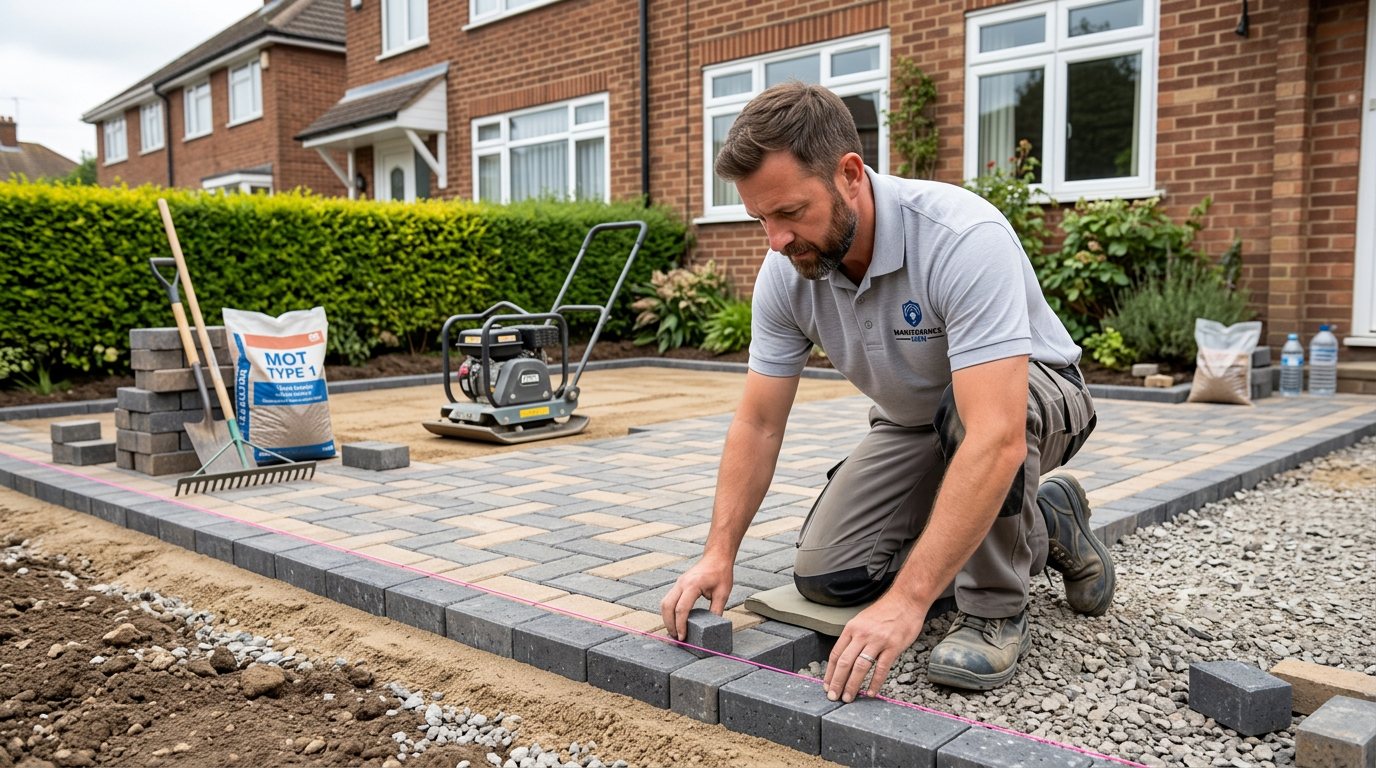
A properly built driveway has a deliberate fall — a gentle slope — that carries rainwater to an edge, a drainage channel, a gully or a permeable area, so nothing pools. Water is directed away from the house, off the surface, and the base beneath stays dry. Driveways stop doing this for a handful of reasons: they were laid without enough fall in the first place, which shows up as persistent puddles from day one; the surface has settled in places, creating dips that gather water; a drainage channel or gully that once took the water has silted up or been damaged; or a previous repair has created a dam that water cannot cross. Sometimes the cause sits outside the drive — a neighbouring surface or blocked highway gully changing where the water ends up.
How we assess the drainage
We watch the drive with water in mind: where does it pool, how long does it sit, and where does the low point actually sit relative to the house and the boundaries. We check falls with a level across the affected areas, examine channels, gullies and their outlets for blockage or damage, look at how the drive meets paths, lawns and the highway, and consider what happens in the worst weather — a drive that copes with drizzle but floods in a downpour tells us the capacity, not just the falls, is the issue.
Fixing the water, not just the puddle
The honest sequence is water first, surface second. Where a channel or gully is blocked or damaged, clearing or repairing it is often the whole job and we do that at visit rates. Where a dip has formed and holds water, correcting it means re-levelling that section — lifting and relaying blocks, or excavating and rebuilding where the base has failed. Where the drive simply lacks fall, the options range from adding or adjusting drainage channels and gullies at the low points, to re-profiling sections of the surface, to rebuilding with proper falls where the original construction was wrong — and that rebuild is a quoted project after survey. We will also talk through what happens to the water once it leaves the surface, because discharging it onto the highway or a neighbour's land is a boundary matter and the customer remains responsible for permissions around that.
Why it matters more than it looks
Standing water is the engine of nearly every other driveway problem on this site. It softens subbase, feeds frost damage, widens cracks, grows moss and algae on the surface, and turns a cosmetic issue into a structural one. Fixing drainage early is the cheapest driveway money you will spend; leaving it is how potholes, sinking and collapse follow.
What we cannot promise
Ground, weather and surrounding surfaces all influence where water ends up, and we do not guarantee a completely dry drive in every storm — extreme rainfall overwhelms any domestic surface. What we do is correct the falls and drainage so your drive sheds ordinary rain promptly and copes sensibly with heavy weather, and explain what to expect in extremes.
Booking
You pay a booking fee when you book, and labour is charged hourly at a rate that depends on how soon you need the visit. The full cost of any drainage or levelling work is quoted and approved before we start, with materials quoted separately; larger re-profiling or rebuild work is quoted after survey. When you book, tell us where water pools, how long it sits, and whether the problem is worse after heavy rain or melting snow.
How the price works
We charge a booking fee to hold your slot, then an hourly rate for the work itself. The fee changes with how soon you need us; the hourly rate changes with the slot you choose. You approve the price before we start, so there is no surprise on the invoice.
Booked 14+ days ahead
£25 booking fee
then £85 per hour of labour
Best value. Book the slot now, pay the smallest booking fee.
Booked within 48 hours
£100 booking fee
then £65 per hour of labour
For jobs that can wait a day or two but not a fortnight.
Same-day call-out
£220 booking fee
then £45 per hour of labour
Urgent problems: standing water, no heat, no power, leaks.
Book the slot
Choose the window that suits you and pay the booking fee. That holds your place in the diary.
We diagnose on site
The engineer confirms the cause and tells you what the job involves and how long it should take.
You approve, we work
Nothing goes ahead until you agree the price. Labour is then charged per hour at your slot rate.
Water that sits on a driveway is quietly destroying it: softening the base, freezing in winter and feeding every crack and pothole you have. Our visit maps where the water gathers and what is causing it — falls, channels, edges or blocked gullies — and sets out the corrections that will actually move it on.
What our customers say about our outdoor & exterior service
4.6 out of 5 from 10 reviews
Sorted the same day
Rang in the morning and they got to us in Wolverhampton by early afternoon. Very clear about what needed doing, what it would cost and what could wait. No pressure to add extras. Exactly the sort of tradesperson you want.
Job: Uneven Shed Base
Turned up when they said
Turned up in the window they promised, walked me through the options (turns out the previous installer had left the pipework awkward to get to), then cracked on. Everything was tested before they left. No mess, no drama, no surprise on the bill.
Job: Water-Damaged Patio
Good work, poor communication
Work itself was fine and tidy. Communication beforehand was patchy — I did not get the confirmation message and had to ring to check the slot. Would still use again.
Job: Sinking Driveway
Book Poor Driveway Drainage
Tell us what is happening and choose a slot. If you are not sure this is the right job, use the diagnosis panel — it narrows the problem down before you book.
- Booking fee confirmed up front
- Hourly labour, agreed before work starts
- Same-day slots for urgent problems







Questions people ask about poor driveway drainage
Straight answers to the things customers ask most often before booking.
Can I fix driveway drainage myself?
Clearing a silted channel or gully is a reasonable DIY job and we will say so if that is your whole problem. Beyond that, drainage work involves understanding falls, where water can lawfully be directed and what lies under the surface — and errors there either move the water onto a neighbour or create a bigger dip. A DIY fix that ends up discharging water onto the highway or next door can create a real dispute, so assessment first is worth it.
What do you check when assessing driveway drainage?
We map where water pools and how long it sits, measure the falls across the surface, check channels, gullies and their outlets, and look at how the drive meets the house, boundaries and highway. We are working out whether the problem is a blockage, a dip, a missing fall or something outside the drive — because each has a different fix.
Is standing water on a driveway a real problem?
Yes — it is the start of most driveway failures. Standing water softens the base, freezes into ice in winter, widens cracks into potholes and grows slippery algae. It is also a slipping and splash risk at the front door. We would treat persistent pooling as worth fixing promptly, not as a cosmetic annoyance.
Can you guarantee the driveway will never pool water again?
No honest contractor can — extreme rainfall overwhelms any domestic surface, and water behaviour depends on surrounding ground and weather too. What we do is correct falls and drainage so your drive sheds ordinary rain promptly, and we will explain realistically what to expect in a serious downpour before you commit to the work.
How much does it cost to fix driveway drainage?
You pay a booking fee when you book, and labour is charged hourly at a rate that depends on how soon you need the visit. Clearing or repairing a channel is quoted and approved before we start, with materials quoted separately. Where the fix means re-profiling or rebuilding sections with new falls, that is a bigger project priced after survey rather than guessed at.
Need poor driveway drainage sorted in Birmingham?
Book a slot in the diary and pay only the booking fee up front. We confirm the rest before we start.