
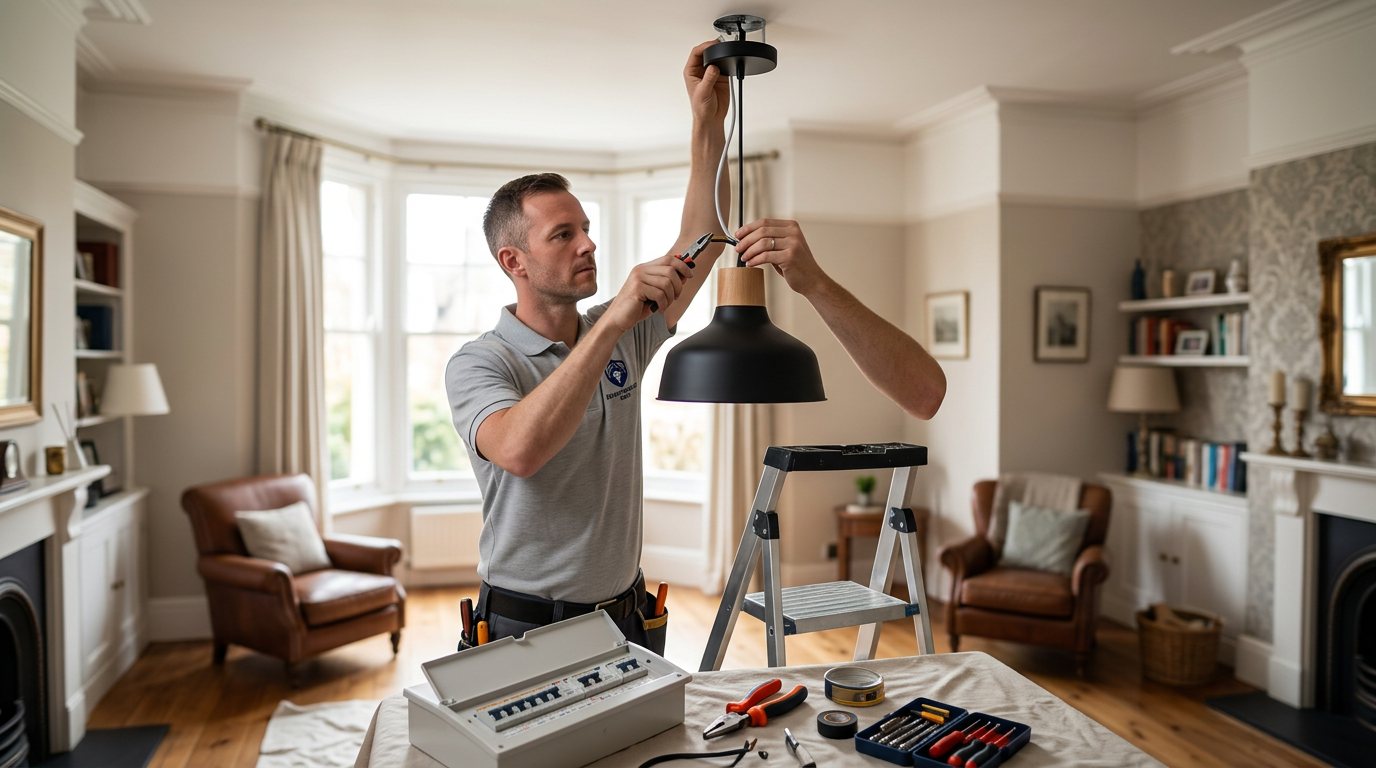
Light Fixture Hanging Loose? Let's Secure It Before It Drops in Birmingham
A fitting that sways, sags or sits at an angle is a fitting working its way out of the ceiling — we refix it properly, not just tighten a screw.
Booking fee plus hourly labour — the price is confirmed before any work starts.
What this costs
| Booked 14+ days ahead | £25 booking fee £85 per hour |
|---|---|
| Booked within 48 hours | £100 booking fee £65 per hour |
| Same-day call-out | £220 booking fee £45 per hour |
The booking fee secures the visit. Labour is then charged by the hour, so you only pay for the time the job actually takes.
Booking fee £25–£220
£25 + £85/hr booked 14+ days ahead, £100 + £65/hr inside 48 hours, £220 + £45/hr same day. Agreed before we arrive.
Covered under Lighting
Electrical › Lighting — one of 20 documented jobs in this section.
Same-day loose light fixture
Urgent jobs can often be booked for today. Ask when you book and we will confirm the slot before you pay anything.
15 service areas
Birmingham, Coventry, Dorridge and 12 more across the West Midlands.
You notice it gradually: the pendant sits slightly off-level, or the whole fitting moves when you pull the cord, or there's a fresh gap where the fitting's base plate meets the ceiling. A light fixture that moves is telling you its anchor is failing — and because everything above it is wiring and live connections, it's worth sorting well before gravity sorts it for you.
Why Fittings Come Loose
The most common cause is the ceiling itself. Standard plasterboard is simply not structural — a fitting screwed into plasterboard alone is held by plaster, not by the building. Light shades tolerate that for years; heavier fittings work their fixings into an enlarging hole, and one day the base plate pulls free. Older properties add their own twists: lath and plaster ceilings that crumble around fixings, or previous installations that left a mess of oversized holes patched with nothing.
The second cause is the fitting's own mountings working loose — screws that have backed out over years of vibration, or a bracket that was never quite right for the fitting that hangs on it. And the third is the one that matters most: where the fitting hangs by its flex, or where movement has stressed the connections above, a loose fixture can be the visible symptom of wiring being pulled at — and pulled wiring eventually becomes a dead light, or worse.
Why It's More than Cosmetic
Three reasons to act promptly. First, a dropping fitting is a hazard in itself — a heavy shade over a sofa or a stairwell is not a theory problem. Second, every bit of movement works on the connections at the ceiling rose: conductors flex, terminals loosen, and intermittent faults and arcing start exactly this way. Third, the hole in the ceiling only ever gets bigger — plaster doesn't re-grip, so the fitting gets easier to pull out with every month that passes.
How We Approach It
The engineer isolates the circuit first — a fitting that's coming loose may already have stressed its connections, and we don't work under assumed safety. We lower the fitting carefully, inspecting the wiring as it comes down: scorched or brittle insulation, loose terminations, a flex that's been taking the weight it was never meant to take. Whatever we find gets dealt with before the refix, because a secure fitting on damaged wiring is the wrong half of the job solved.
Then the structural side. Depending on what the ceiling is and what the fitting weighs, that means fixing into the joist or noggin above, fitting a proper anchor plate spread across sound plasterboard, or rebuilding a ruined fixing point with the right backing before remounting. We don't just drive a longer screw and hope.
The Repair and the Ceiling Afterwards
Once the fitting is back up on a sound anchor, with connections remade and the flex carrying no load it shouldn't, we test the light and its switching and then give the whole assembly an honest tug — the same test gravity will apply for the next twenty years. If the old fixing holes need filling, we do the making-good neatly and tell you honestly whether it's decorating-ready or needs a touch of paint. Heavy fittings get an explicit conversation about future limits, so you know what that ceiling will comfortably hold next time.
When to Call Us
Book a visit when any fitting moves, sags or sits off-level, when a base plate has pulled away leaving a gap, when you're hanging a new heavy fitting and doubt the ceiling point, or when a fitting that was previously solid has developed movement after any ceiling work upstairs. Movement plus any flickering or smell from the fitting is an urgent combination.
Book Your Loose Fixture Repair Today
One visit to end the sway. Call Maintenance Men or book online — qualified, fully insured electricians across the West Midlands, and refixings done into something that will genuinely hold, with the wiring checked along the way.
How the price works
We charge a booking fee to hold your slot, then an hourly rate for the work itself. The fee changes with how soon you need us; the hourly rate changes with the slot you choose. You approve the price before we start, so there is no surprise on the invoice.
Booked 14+ days ahead
£25 booking fee
then £85 per hour of labour
Best value. Book the slot now, pay the smallest booking fee.
Booked within 48 hours
£100 booking fee
then £65 per hour of labour
For jobs that can wait a day or two but not a fortnight.
Same-day call-out
£220 booking fee
then £45 per hour of labour
Urgent problems: standing water, no heat, no power, leaks.
Book the slot
Choose the window that suits you and pay the booking fee. That holds your place in the diary.
We diagnose on site
The engineer confirms the cause and tells you what the job involves and how long it should take.
You approve, we work
Nothing goes ahead until you agree the price. Labour is then charged per hour at your slot rate.
A light that moves when it shouldn't is easy to dismiss as cosmetic, but movement means the fixing — or the ceiling itself — is failing. Left alone, fittings work themselves further loose until they drop. We refix the fitting into something solid, repair any ceiling damage, and make sure the wiring isn't being stressed in the meantime.
What our customers say about this job
5 out of 5 from 1 reviews
Would use again
Rang in the morning and they got to us in Solihull by early afternoon. Very clear about what needed doing, what it would cost and what could wait. No pressure to add extras. Exactly the sort of tradesperson you want.
Job: Loose Light Fixture
Book Loose Light Fixture
Tell us what is happening and choose a slot. If you are not sure this is the right job, use the diagnosis panel — it narrows the problem down before you book.
- Booking fee confirmed up front
- Hourly labour, agreed before work starts
- Same-day slots for urgent problems








Questions people ask about loose light fixture
Straight answers to the things customers ask most often before booking.
What does securing a loose light cost?
You pay a booking fee when you book, then labour is hourly at a rate that depends on how soon we can attend. The engineer assesses the fixing and the ceiling, quotes the complete job including any making-good, and you approve the price before work starts.
Can I just tighten the screws myself?
Tightening screws into the same failing hole achieves nothing lasting — the problem is what the screws are gripping, not how tight they are. Worse, working on a fitting means its connections above may be live, and a fixture that's coming loose may already have stressed its wiring. If you do nothing else, stop using the fitting and keep everyone from tugging at it.
How will you fix it?
Circuit isolated first, fitting lowered and its wiring inspected for stress damage, then the structural work: anchoring into the joist or a proper spreader plate depending on the ceiling type and the fitting's weight, connections remade, and the refitted assembly pull-tested. Any hole damage is made good before we leave.
How dangerous is a loose light fixture?
Two ways. The obvious one — a fitting that drops, which matters most over beds, sofas and stairs. The less obvious one is the wiring: movement stresses the connections at the ceiling rose, and that stress is a well-trodden path to intermittent faults and arcing. It's worth booking promptly rather than when the fitting is visibly hanging.
Can I hang a heavy chandelier on my existing ceiling point?
Not without checking. Standard plasterboard ceilings need the weight taken into the joist structure or spread across proper anchor plates, and lath-and-plaster ceilings have their own limits. Tell us the fitting's weight when you book — it's far easier to prepare the right fixing in advance than to improvise one mid-installation.
Need loose light fixture sorted in Birmingham?
Book a slot in the diary and pay only the booking fee up front. We confirm the rest before we start.