
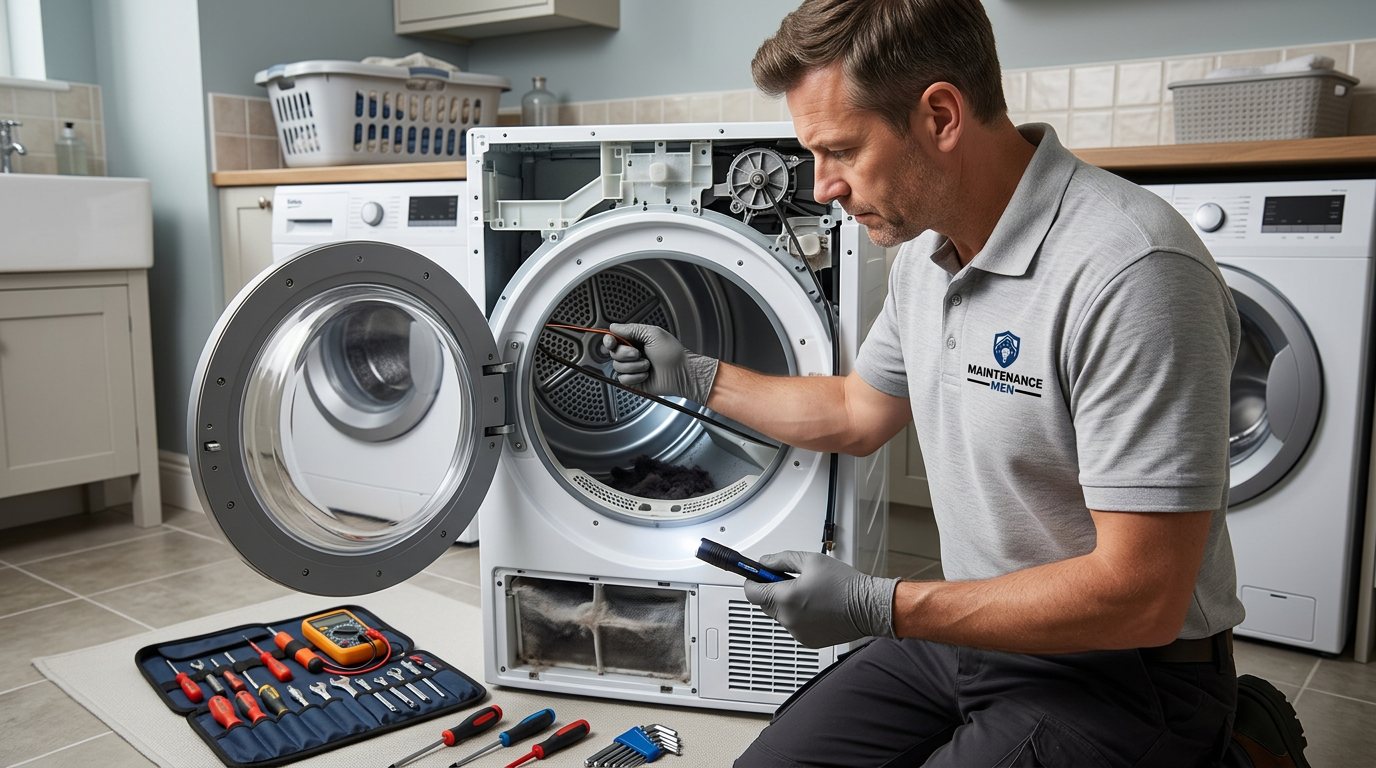
Tumble Dryer Fire Risk: Act Now, Not After the Next Load
We inspect lint, venting, heater and thermal protection to reduce fire risk, but an active fire means leave and call 999.
Booking fee plus hourly labour — the price is confirmed before any work starts.
What this costs
| Booked 14+ days ahead | £25 booking fee £85 per hour |
|---|---|
| Booked within 48 hours | £100 booking fee £65 per hour |
| Same-day call-out | £220 booking fee £45 per hour |
The booking fee secures the visit. Labour is then charged by the hour, so you only pay for the time the job actually takes.
Booking fee £25–£220
£25 + £85/hr booked 14+ days ahead, £100 + £65/hr inside 48 hours, £220 + £45/hr same day. Agreed before we arrive.
Covered under Tumble Dryer
Home Appliances › Tumble Dryer — one of 23 documented jobs in this section.
Same-day tumble dryer fire risk
Urgent jobs can often be booked for today. Ask when you book and we will confirm the slot before you pay anything.
15 service areas
Birmingham, Coventry, Dorridge and 12 more across the West Midlands.
A tumble dryer is one of the few appliances in a home that combines a heat source, a moving air stream and a continuous supply of dry, highly flammable lint. That is why manufacturers fit thermal cut-outs, specify vent cleaning and warn against certain loads. When any of those protections is compromised, the risk rises quietly and then very quickly.
If there is a fire right now
Leave the property immediately, closing the door behind you, and get everyone out. Call 999. Do not open the dryer door wide, because the rush of air can intensify the fire. Do not throw water on the appliance. Do not re-enter the building until the fire service says it is safe. Once the fire is out, do not reconnect or use the dryer; it needs to be assessed or replaced, and the cause should be established so it is not repeated.
If there is no fire but the risk signs are present
Stop using the machine and unplug it only if the plug is accessible, undamaged and your hands are dry. Signs that matter include a burning or acrid smell, a cabinet that becomes very hot, laundry coming out unusually hot, repeated tripping of a thermal cut-out, visible lint around the heater area, a vent flap that no longer opens, scorching at the plug or socket, and a machine that has previously cut out and restarted on its own.
How dryer fires start
The most common route is lint accumulating on or near the heater, often because airflow has been restricted for a long time by a clogged filter, a blocked condenser or a crushed vent. Heat that cannot be carried away raises the temperature of everything around it. A second route is a mechanical fault: a seized bearing or pulley causing the belt to slip and overheat, or a motor drawing excessive current. A third is electrical: a loose terminal, damaged cable or failing relay creating localised heat. A fourth is the load itself, where items contaminated with oil, solvent, wax or cooking residue self-heat in a warm drum.
What we inspect
We examine the heater and its housing for lint and scorching, the drum seal and the space behind the drum for accumulated fibre, the fan and internal ducting for obstruction, and the entire vent route to its outside termination. We test the cycling thermostat and thermal cut-out at operating temperature, check the heater relay for sticking, inspect the wiring and terminal block for heat damage, and confirm the plug and socket are sound. Airflow is measured before and after any cleaning so the improvement is verified.
What can be put right
Clearing lint, cleaning or replacing ducting, fitting a new seal, thermostat or thermal cut-out, and repairing damaged wiring are all achievable, provided the underlying cause is corrected. Where the heater housing, loom or drum assembly has been heat damaged, replacement is often the honest recommendation. We will not carry out a partial clean-up and describe the machine as safe if the cause remains.
What cannot be promised
No inspection can guarantee a machine will never be involved in a fire. What we can do is identify and remove the conditions that cause most of them, confirm the safety devices work, and tell you plainly if the appliance is beyond economic repair. Regular filter cleaning and periodic vent cleaning remain the most effective things you can do yourself.
Loads to avoid
Never dry items that have been in contact with cooking oil, massage oil, solvent, paint thinner, wax or petrol, even after washing, because residues can ignite. Avoid drying foam rubber, rubber-backed mats or anything with a plastic component that could melt. Do not overload the drum, and never run the dryer unattended overnight or when you leave the house.
Booking an inspection
If there is no fire and the machine is isolated, book a visit and describe exactly what you have noticed: the smell, the heat, the cut-outs, the state of the vent. Give the brand, model and age. If a thermal cut-out has already tripped, say so, because that is a machine that has told you something is wrong.
How the price works
We charge a booking fee to hold your slot, then an hourly rate for the work itself. The fee changes with how soon you need us; the hourly rate changes with the slot you choose. You approve the price before we start, so there is no surprise on the invoice.
Booked 14+ days ahead
£25 booking fee
then £85 per hour of labour
Best value. Book the slot now, pay the smallest booking fee.
Booked within 48 hours
£100 booking fee
then £65 per hour of labour
For jobs that can wait a day or two but not a fortnight.
Same-day call-out
£220 booking fee
then £45 per hour of labour
Urgent problems: standing water, no heat, no power, leaks.
Book the slot
Choose the window that suits you and pay the booking fee. That holds your place in the diary.
We diagnose on site
The engineer confirms the cause and tells you what the job involves and how long it should take.
You approve, we work
Nothing goes ahead until you agree the price. Labour is then charged per hour at your slot rate.
Dryer fires rarely start without warning. Lint build-up, restricted venting, a heater that keeps running and thermal protection that has already failed are the usual combination, and the warning signs are often dismissed for months. If your machine is showing them, stop using it now and have it inspected. If there is fire, this is not a booking, it is an emergency.
What our customers say about our home appliances service
4.8 out of 5 from 14 reviews
Exactly what was quoted
What I appreciated was being told what was actually wrong before anyone started. Sorted in under 27 minutes and the invoice matched the quote to the penny.
Job: Tumble Dryer Not Starting Cycle
Good job, slightly late
Solid work. Hourly rate feels fair for the amount of work involved and everything was tested before they left. Would book again.
Job: Toaster Not Working
No mess left behind
Really straightforward. It had been bothering us for weeks; diagnosed properly, fixed the same visit, and the price was exactly what was explained when booking. Can not fault it.
Job: Microwave Button Repair
Book Tumble Dryer Fire Risk
Tell us what is happening and choose a slot. If you are not sure this is the right job, use the diagnosis panel — it narrows the problem down before you book.
- Booking fee confirmed up front
- Hourly labour, agreed before work starts
- Same-day slots for urgent problems






Questions people ask about tumble dryer fire risk
Straight answers to the things customers ask most often before booking.
Should I book a repair or call the fire service?
If there is fire, smoke or flames, leave the property and call 999 immediately. A booking is only appropriate once the machine is isolated and there is no active fire.
What are the warning signs of a dryer fire risk?
A burning or acrid smell, a very hot cabinet and laundry coming out unusually hot are the main warning signs. Repeated thermal cut-out trips, lint around the heater, a vent flap that no longer opens, and scorching at the plug or socket also matter.
Can you make my dryer safe again?
In many cases yes, by clearing lint and blockages, replacing seals and thermal protection, and repairing damaged wiring, provided the underlying cause is corrected. If there is heat damage to the housing or loom, replacement may be the honest answer.
Which loads should never go in a dryer?
Anything contaminated with cooking oil, solvent, wax, paint thinner or petrol, even after washing. Foam rubber and rubber-backed items should also be avoided, and the machine should not be run unattended overnight.
How is the inspection priced?
The booking fee is paid when you book, and the hourly labour rate depends on how soon you need the visit. The full cost is quoted and approved before work starts, with any parts identified and priced separately.
Need tumble dryer fire risk sorted?
Book a slot in the diary and pay only the booking fee up front. We confirm the rest before we start.